- Shopping, made easy.
- /
- Get the app!
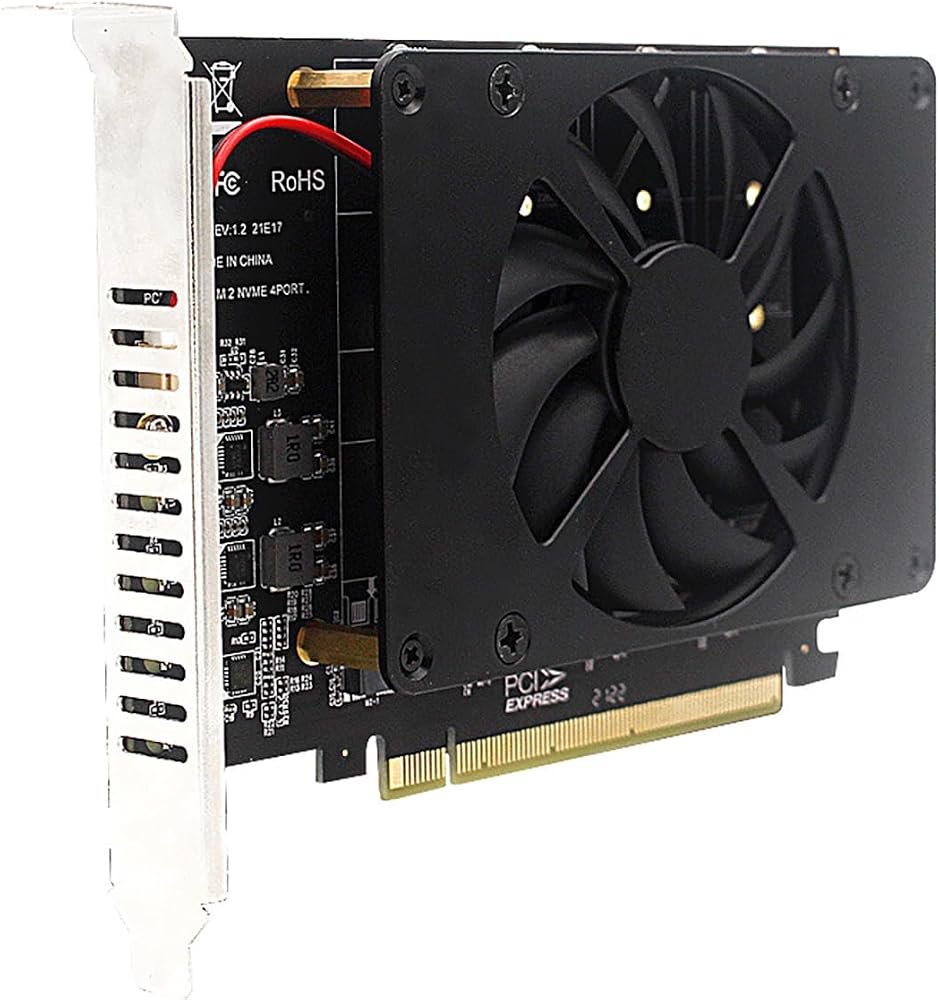
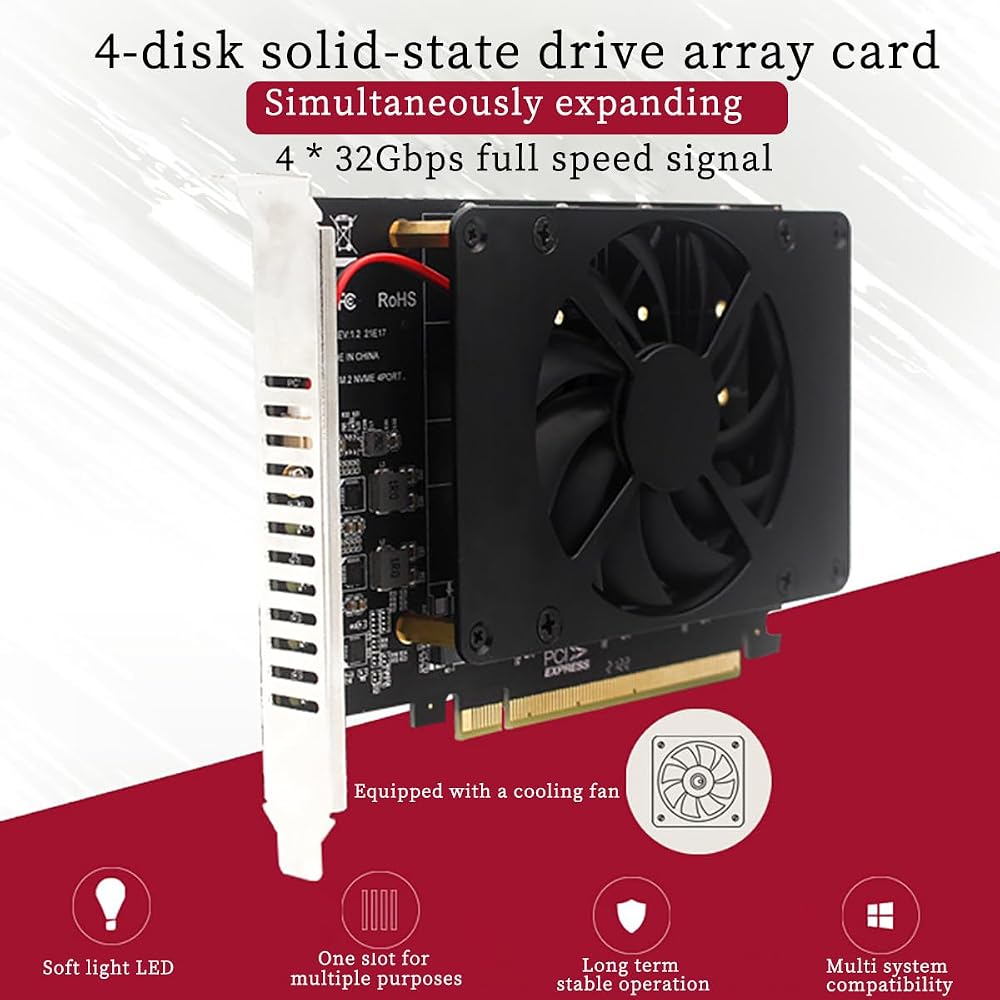
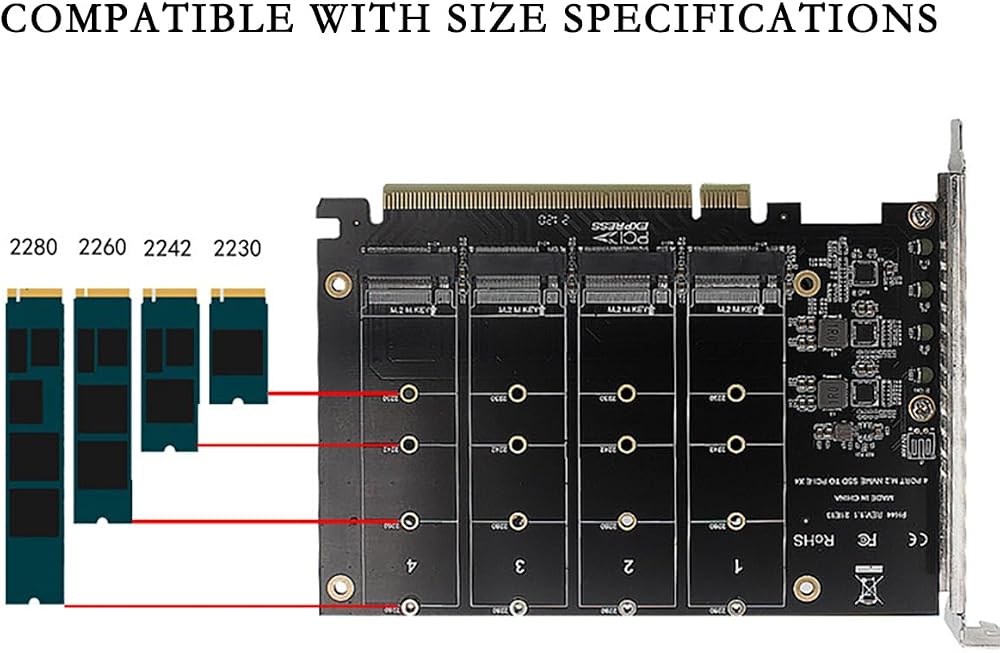
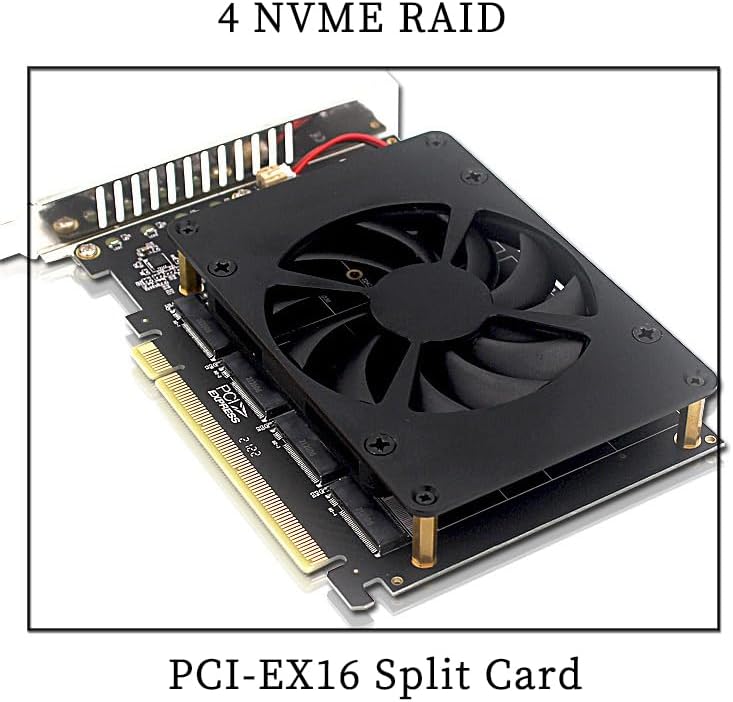
PH44F 4*NVMe PCIE X16 Split Card 4*32Gbps Motherboard PCIE RAID Splitter Expansion Controller Card Compatible with M.2 M KEY SSD 2230 2242 2260 2280
Product parameters
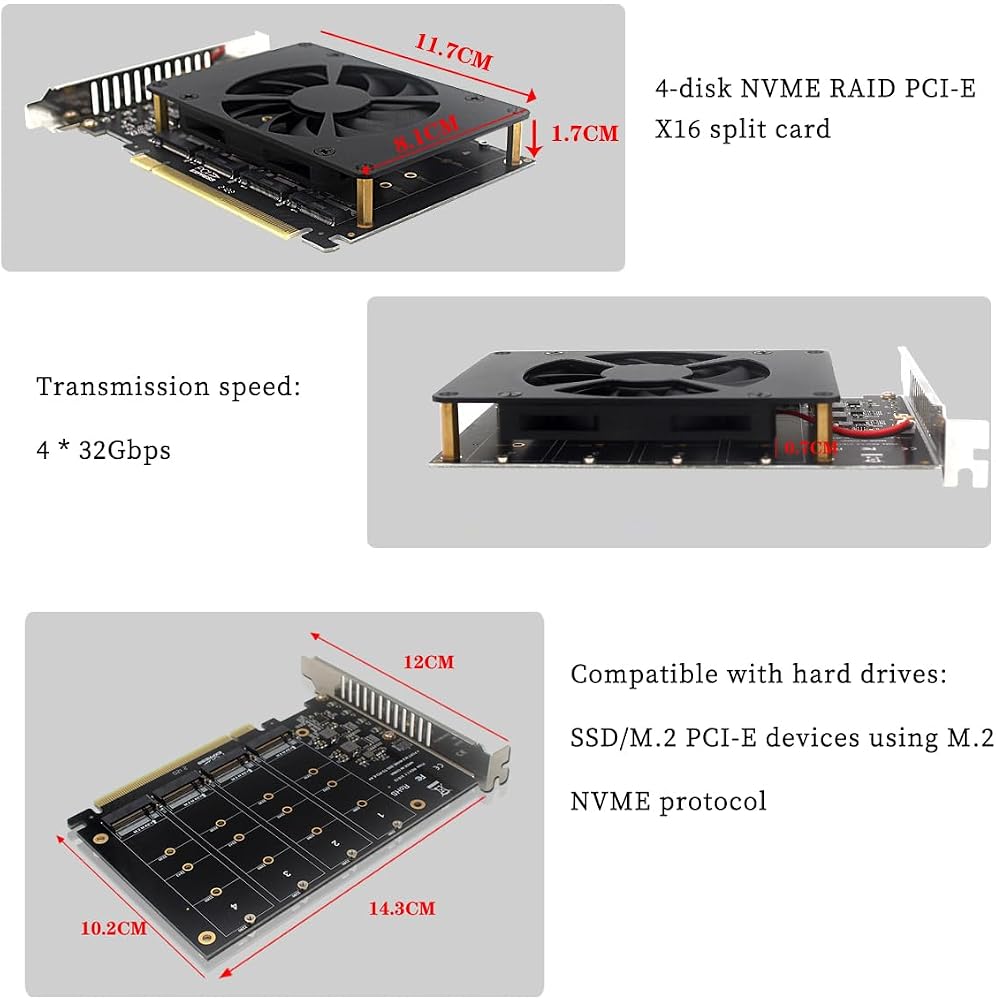
Name:4 Disk NVME RAID PCI-E X16 Split Card
Model: PH44F
Supported hard disk: M.2 NVME protocol SSD/M.2 PCI-E devices
Transfer speed:4*32Gbps
Packing Size:19.5*13*3.2CM
Product weight: product + fan + baffle 148.8G
Tips:The safe distance between PCB and fan is 0.7CM, SSD installation height is only 0.45CM.
Product Details
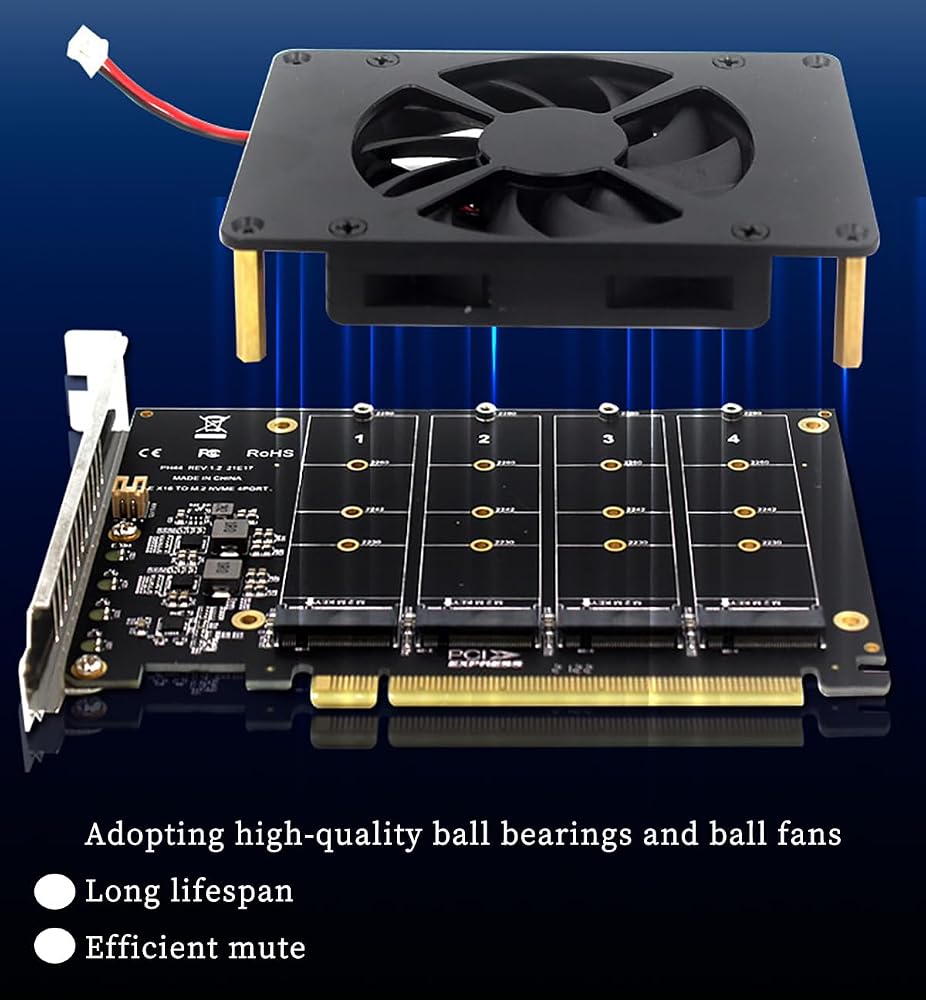
Utilizes high quality ball bearing ball bearing fans
Long life, efficient and silent
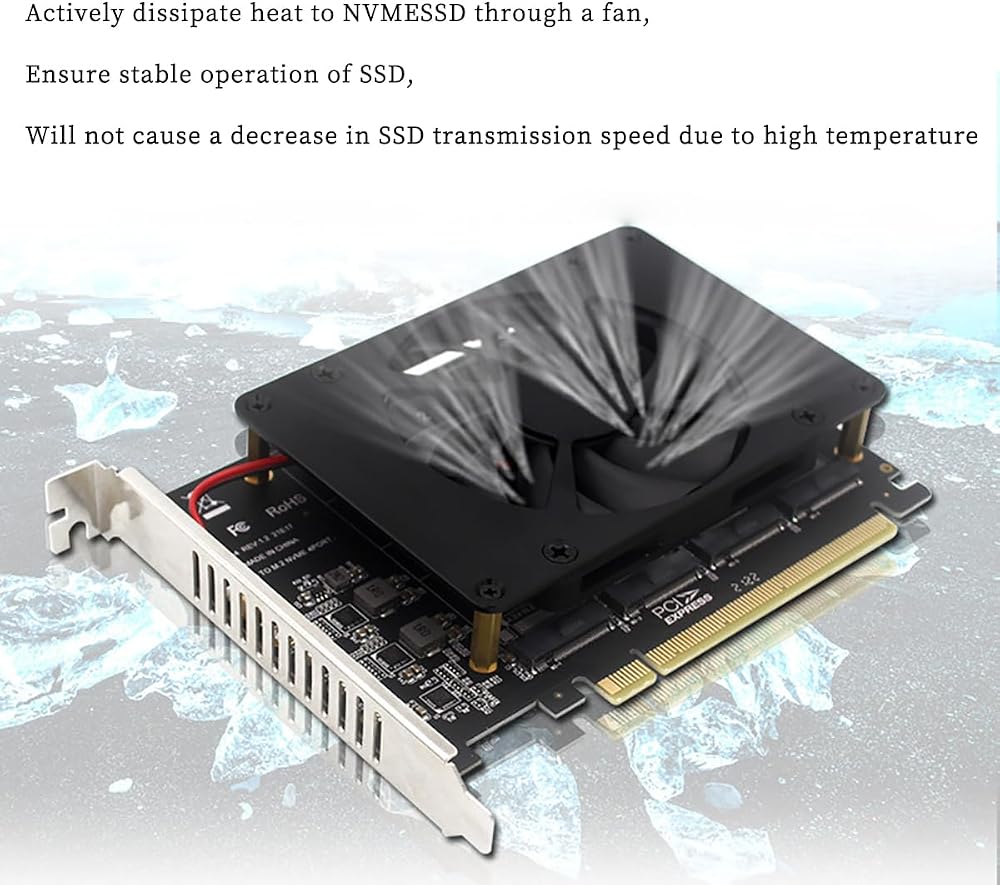
Active cooling of NVME SSDs through the fan ensures stable operation of SSDs.
The NVME SSD will not lose transmission speed due to high temperature.
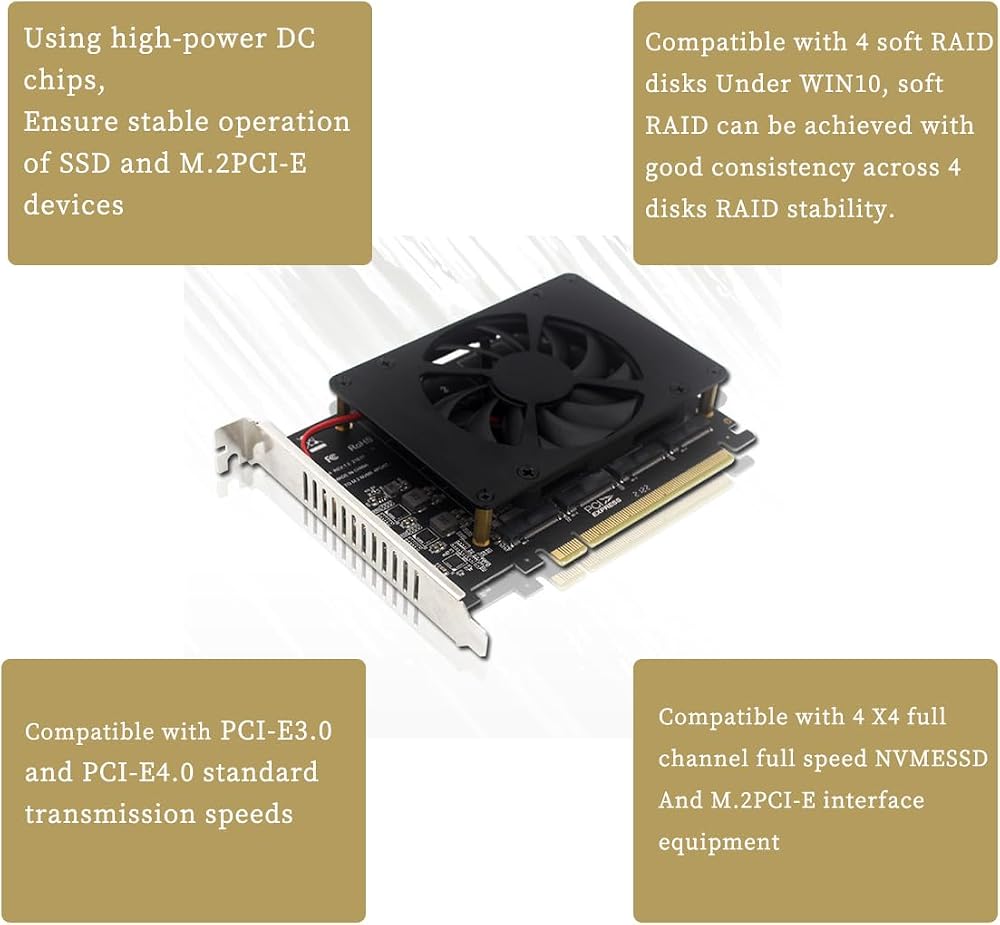
Support disk 4 soft RAID
WIN10 can realize soft RAID, 4-disk consistency and RAID stability.
Full speed experience
Adopt imported high power DC chip to ensure stable operation of SSD and M.2 PCI-E devices.
Support PCI-E 3.0, PCI-E4.0 standard transmission speed.
Support 4* X4 full channel full speed NVME SSD and M.2 PCI-E interface devices.
High-end PCB circuit board with gold-plated surface, good conductivity, strong wear resistance, anti-oxidation and high fire rating.
Instructions for use:
1. The motherboard must support
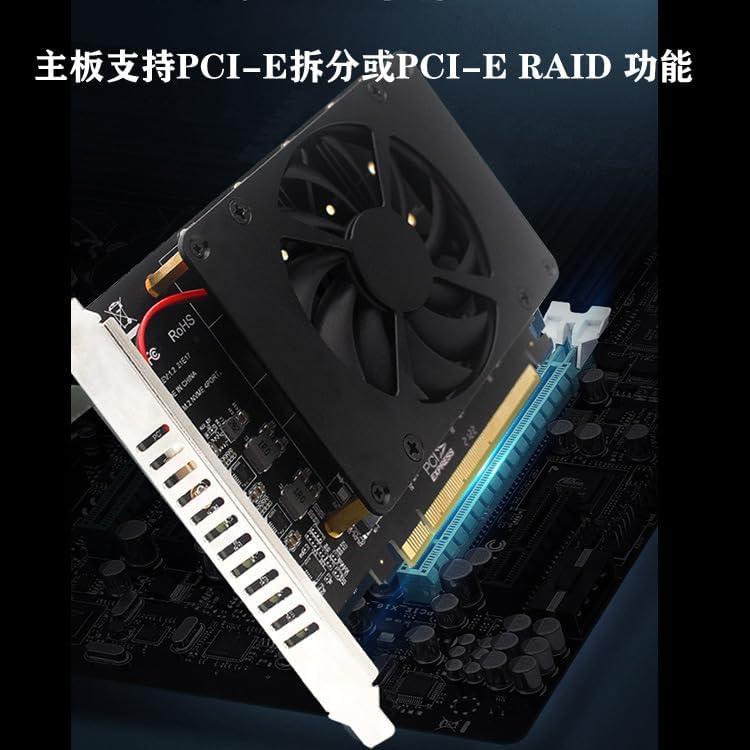
The motherboard supports PCI-E split function, able to set up PCI-E X4X4X4 or 4X4 mode.
The motherboard supports PCI-E RAID function.
Compatible with-AS US motherboards support the Hy per M.2X16 expansion card function.
Different motherboards PCI-E split channel number is different, some motherboards PCI-E RAID is X8+X4+X4, this kind of motherboard 4-bit M.2 card can only support 3 M.2 SSDs or devices, 2-bit M.2 card can only support 1 M.2 SSDs or devices,such as the need for normal use of this product, please select the correct motherboard;
Many motherboards share PCI-E lanes, make sure the motherboard can support the function of PCI-E split, but can't recognize so many M.2 SSDs or devices, please remove or replace the other PCI-E devices in the slot, such as graphics cards,expansion cards, on-board NVME SSDs and so on.
2. CPU support is required, the CPU should have enough lanes, usually low-end CPUs do not have enough PCI-E lanes. So it may not be able to support it either.
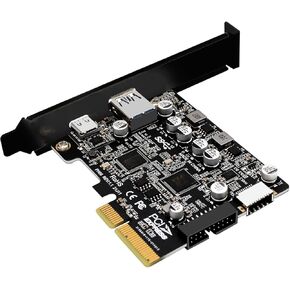 PH68 PCIe3.0 X4 to USB3.2 Expansion Card 10G USBC Front TypeE 19P20P Full Interface Adapter Rear A Port for Desktop
SAR 180
PH68 PCIe3.0 X4 to USB3.2 Expansion Card 10G USBC Front TypeE 19P20P Full Interface Adapter Rear A Port for Desktop
SAR 180
 PH57 M.2 NGFF Bkey to 5Ports SATA III Expansion Card 6Gbps with LED Indicator Support Computer with SATA PM Function
SAR 100
PH57 M.2 NGFF Bkey to 5Ports SATA III Expansion Card 6Gbps with LED Indicator Support Computer with SATA PM Function
SAR 100
 PCIE3.0 M.2 M Key to 5Ports SATA III Expansion Card 6Gbps with LED Indicator Compatible with JMB585
SAR 129
PCIE3.0 M.2 M Key to 5Ports SATA III Expansion Card 6Gbps with LED Indicator Compatible with JMB585
SAR 129
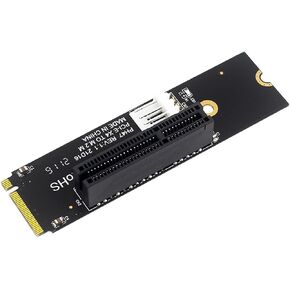 PH47 M.2 M-Key to PCI-E X4 Expansion Card LED Indicator with SATA 15pin Power Riser for Desktop Computer X1 X4 X8 X16
SAR 55
PH47 M.2 M-Key to PCI-E X4 Expansion Card LED Indicator with SATA 15pin Power Riser for Desktop Computer X1 X4 X8 X16
SAR 55

 Saudi Arabia