- Shopping, made easy.
- /
- Get the app!
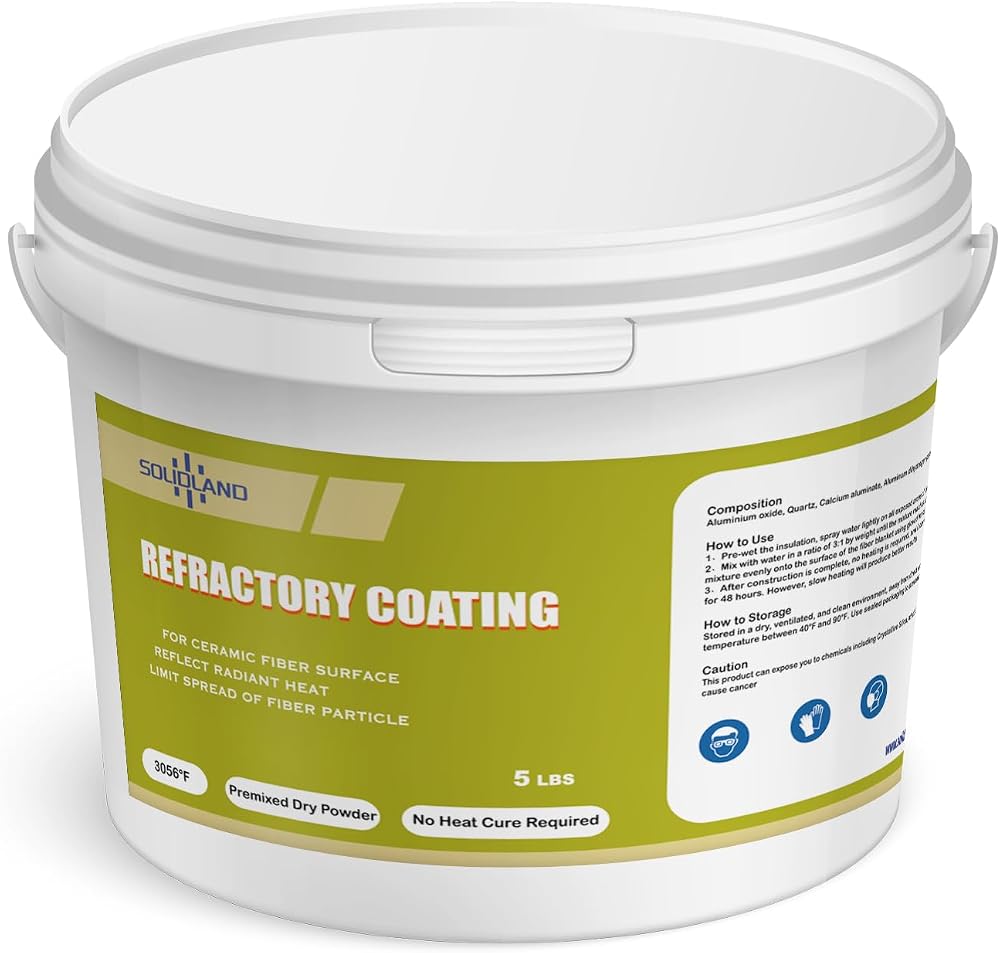
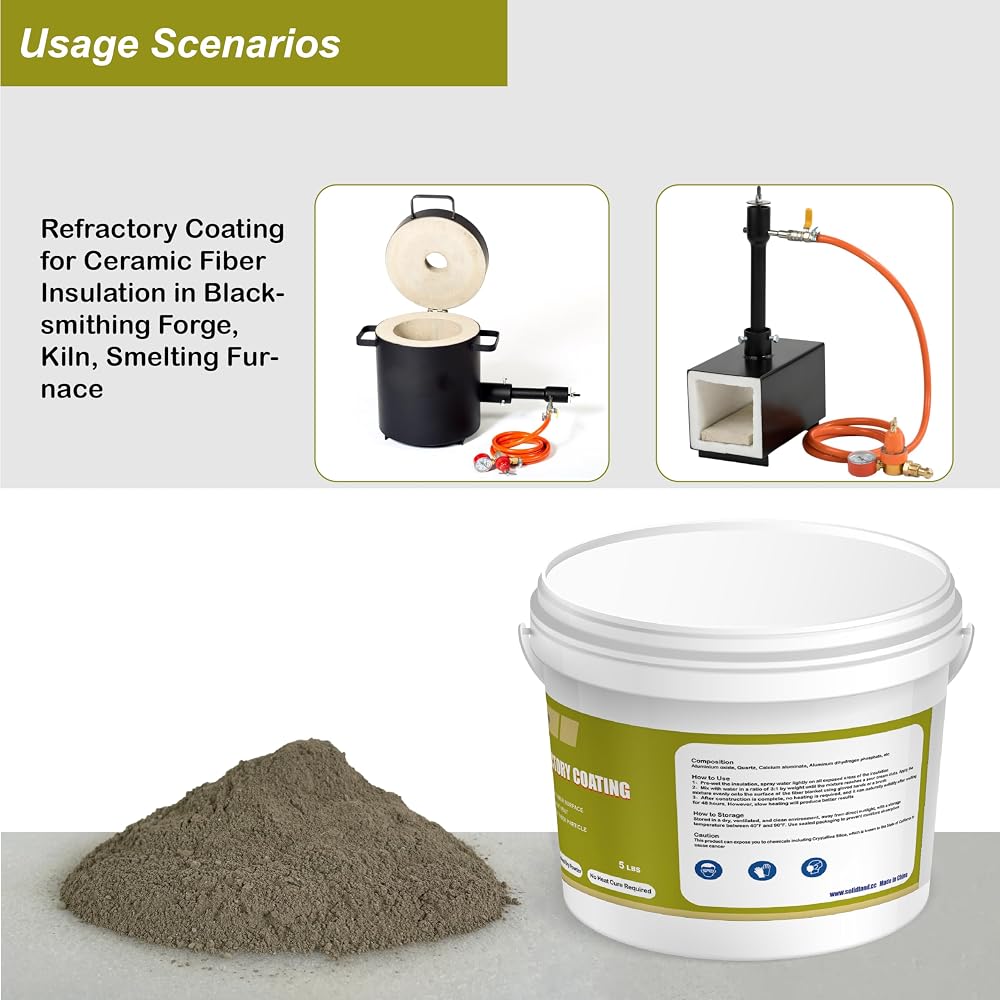
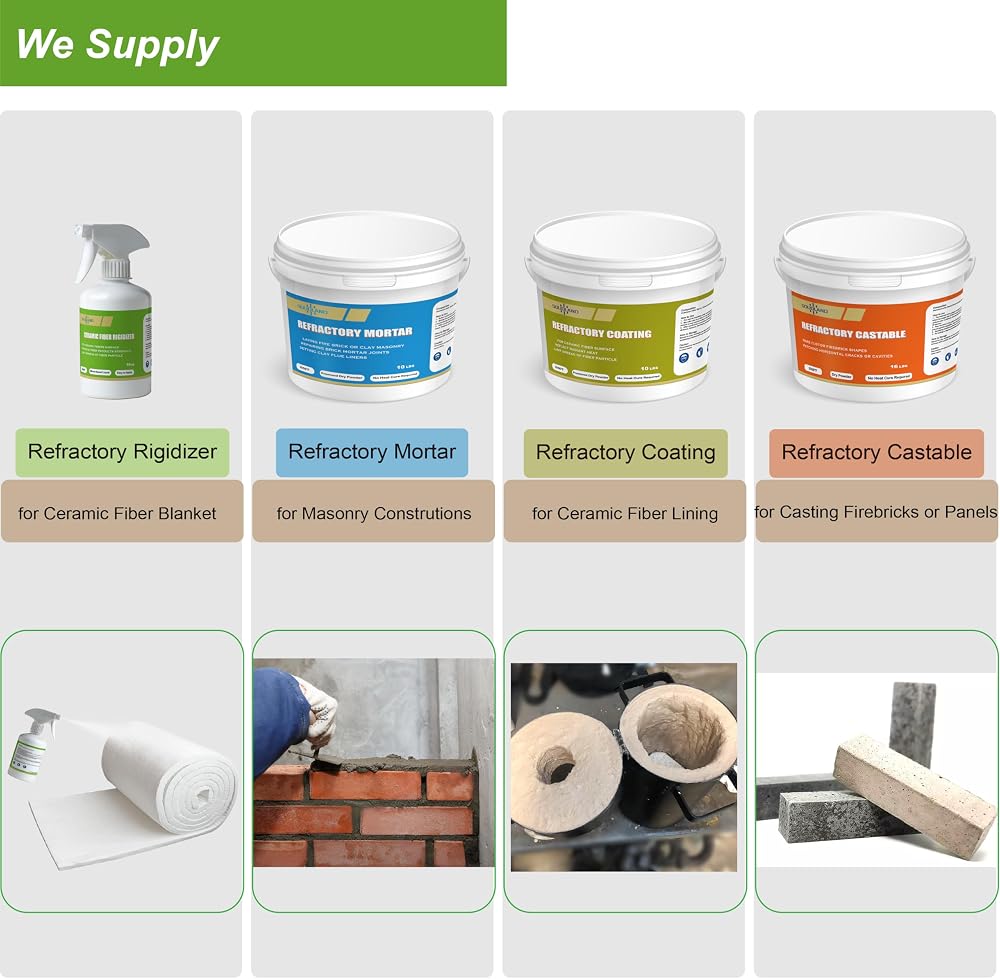
This refractory coating is a blend of fine, high-ppurity refractory aggregates and a powerful chemical binder. When applied to the porous ceramic fiber, it fills the surface voids and air-dries to form a semi-cured layer.
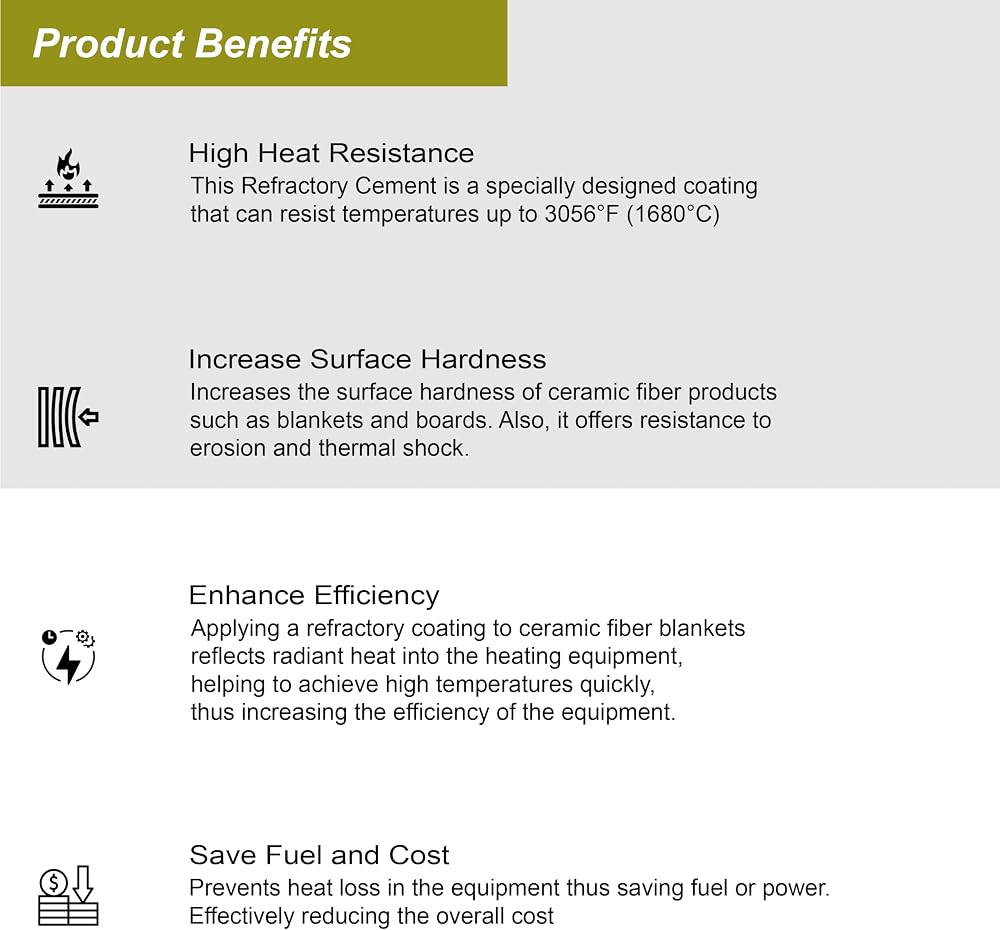
Upon initial heat-up, the coating sinters and fuses with the fibers below, creating a monolithic, ceramic bond. The finished surface acts as both a protective barrier and a radiant heat reflector, sealing the insulation and preventing thermal degradation, while its reflective properties bounce energy back into your workspace, maximizing efficiency.
Insulation Application Best Practices --
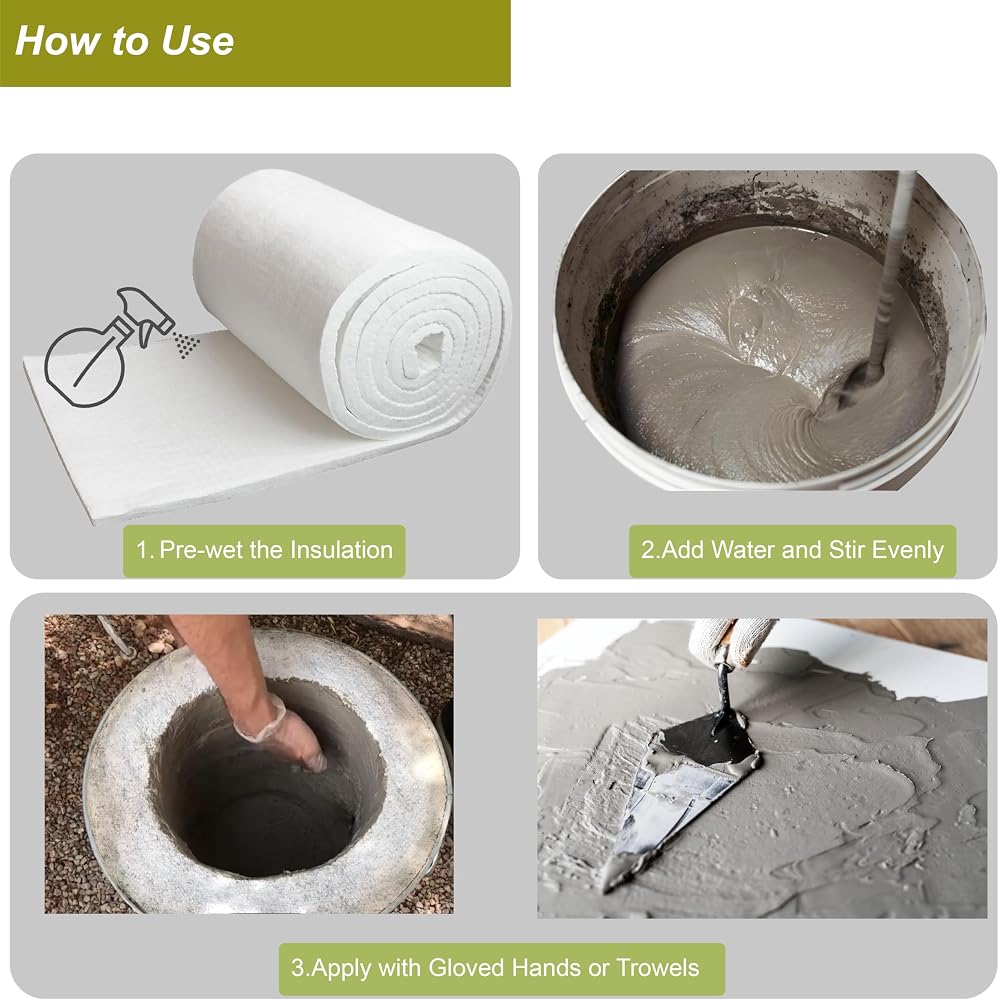
Pre-wetting
Lightly spray water on all exposed insulation surfaces
Avoid dry spots (they absorb refractory mixture too quickly, causing cracks)
Avoid excessive water (prolongs drying time)
Layering Technique
Apply multiple thin layers instead of one thick layer
Add slightly more water than minimum for better results
Allow each layer to dry completely before applying the next
Thick/heavy applications tend to trap air bubbles, leading to cracks during drying and heat treatment
Heat Treatment Process
Always heat-treat cement before full operation
Start with small wood fires inside smelter
Gradually increase temperature over 1-2 hours
Switch to propane to reach 500°F
Follow this cycle: heat → cool → repeat
Increase temperature by a few hundred degrees each cycle until reaching optimal operating temperature
 340 Silicone Heat Sink Compound 5oz 142g (Dow Corning 340 Non Flowing) Suitable for Thermal Coupling of Electrical Devices and PCB Assemblies to Heat Sinks, Compliant with MIL-DTL-47113
SAR 209
340 Silicone Heat Sink Compound 5oz 142g (Dow Corning 340 Non Flowing) Suitable for Thermal Coupling of Electrical Devices and PCB Assemblies to Heat Sinks, Compliant with MIL-DTL-47113
SAR 209
 Molykote 4 Electrical Insulating Compound 150g, Moisture Proof Seal Dielectric Lubricant Industrial and Seal for Valve O-Rings, Good Adhesion Chemical Resistance Translucent White
SAR 141
Molykote 4 Electrical Insulating Compound 150g, Moisture Proof Seal Dielectric Lubricant Industrial and Seal for Valve O-Rings, Good Adhesion Chemical Resistance Translucent White
SAR 141
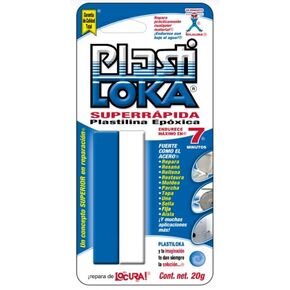 PlastiLoka Super Rapida Epoxy Plasticine, 20g, Fast Setting
SAR 60
PlastiLoka Super Rapida Epoxy Plasticine, 20g, Fast Setting
SAR 60
 3M Neoprene High Performance Contact Adhesive 1357, Gray-Green, 1 Gallon Can
SAR 843
3M Neoprene High Performance Contact Adhesive 1357, Gray-Green, 1 Gallon Can
SAR 843

 Saudi Arabia