- Shopping, made easy.
- /
- Get the app!
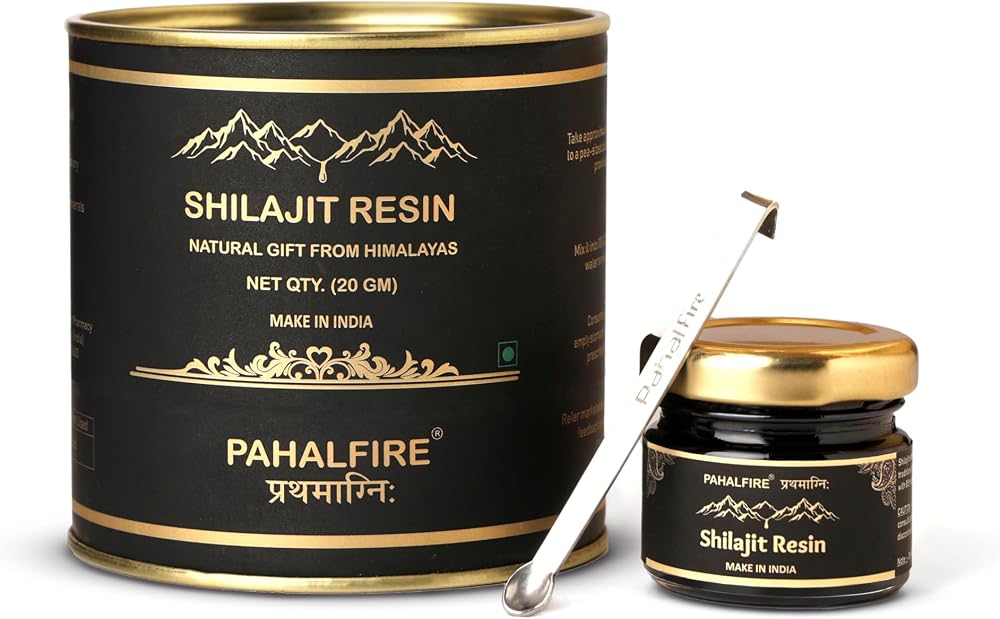
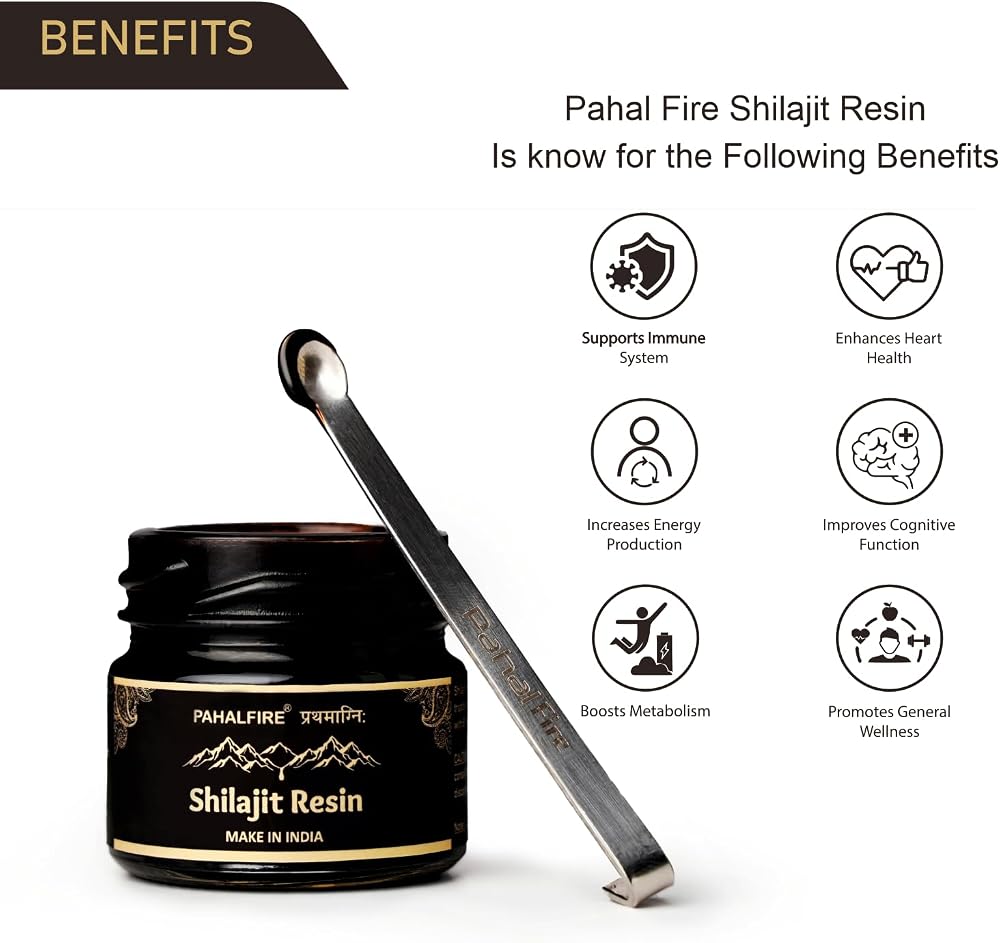
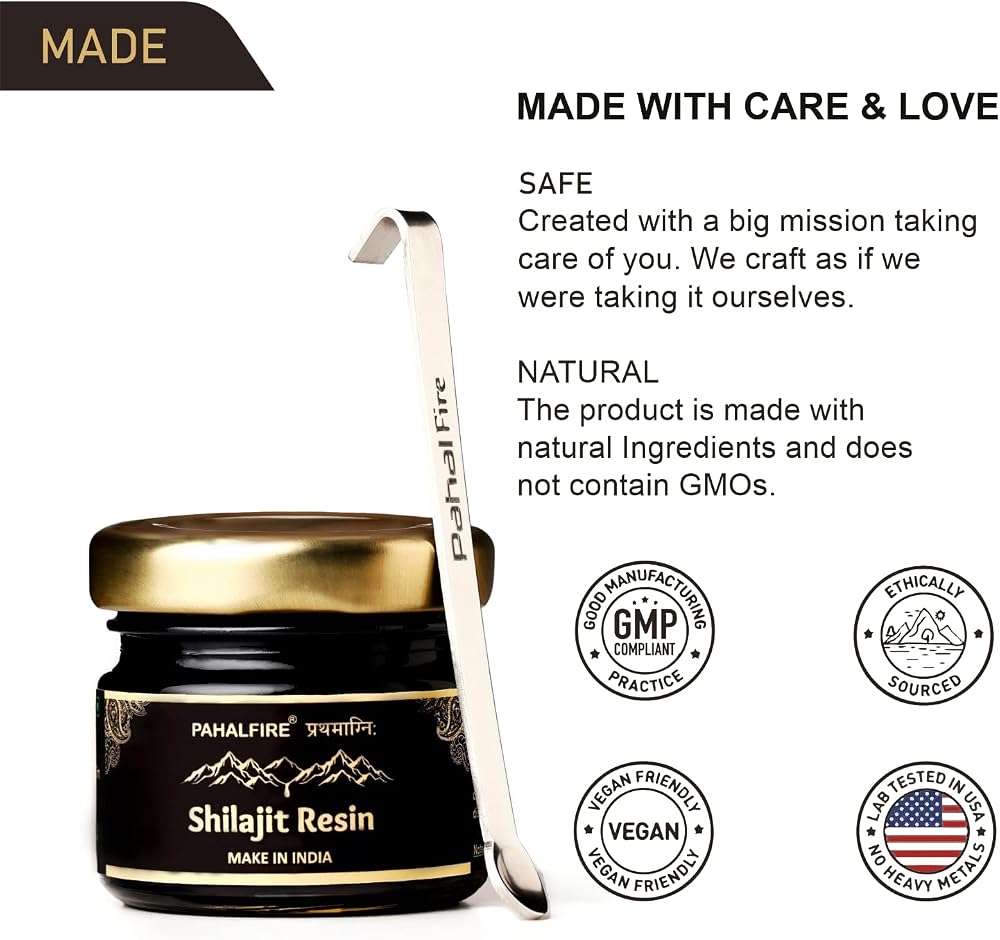
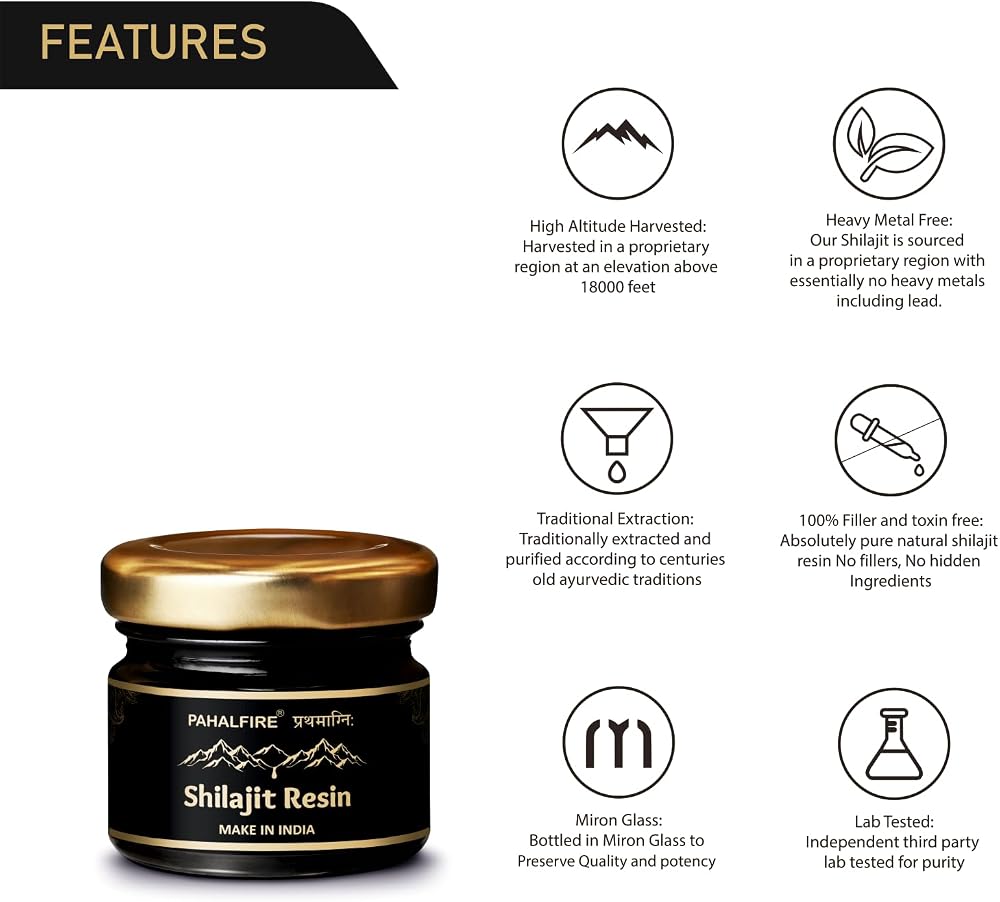
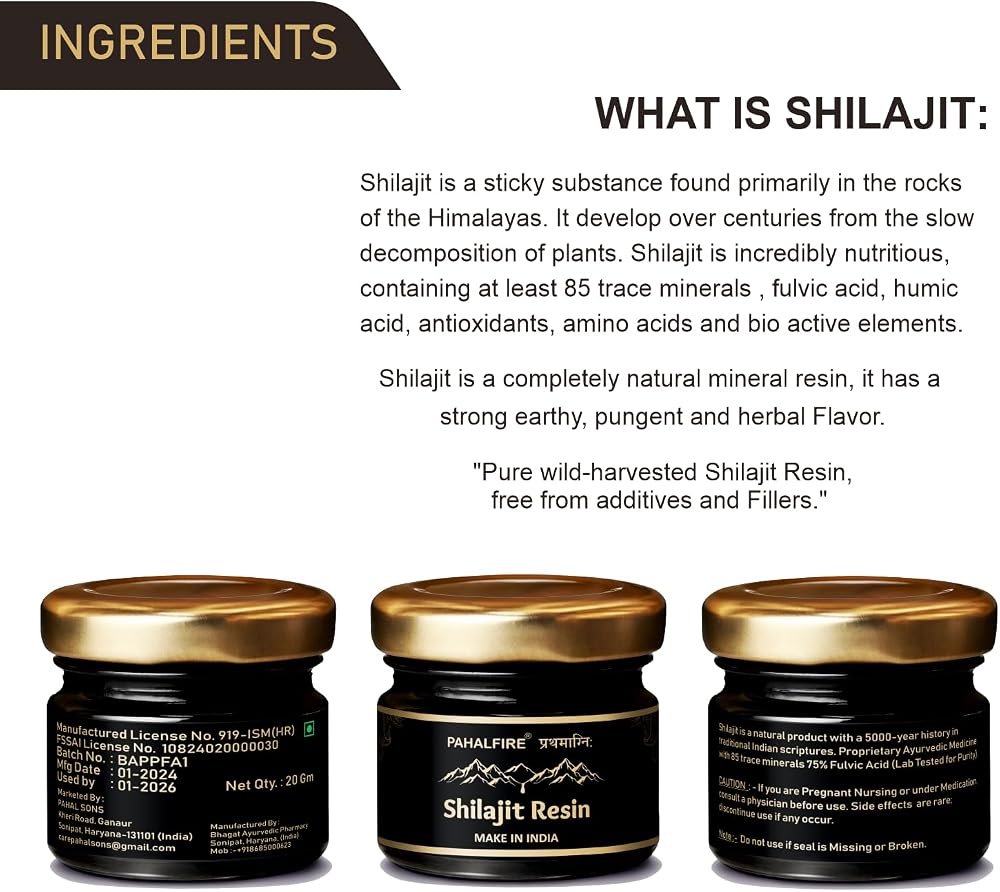
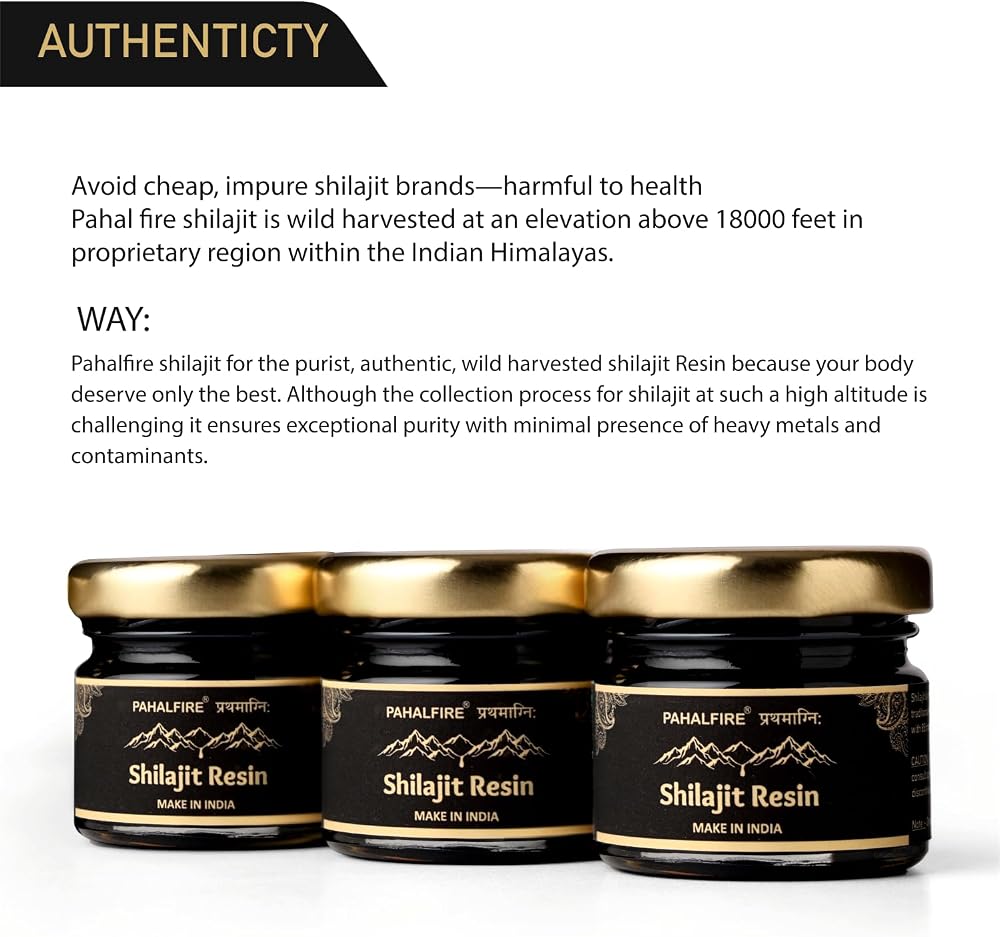
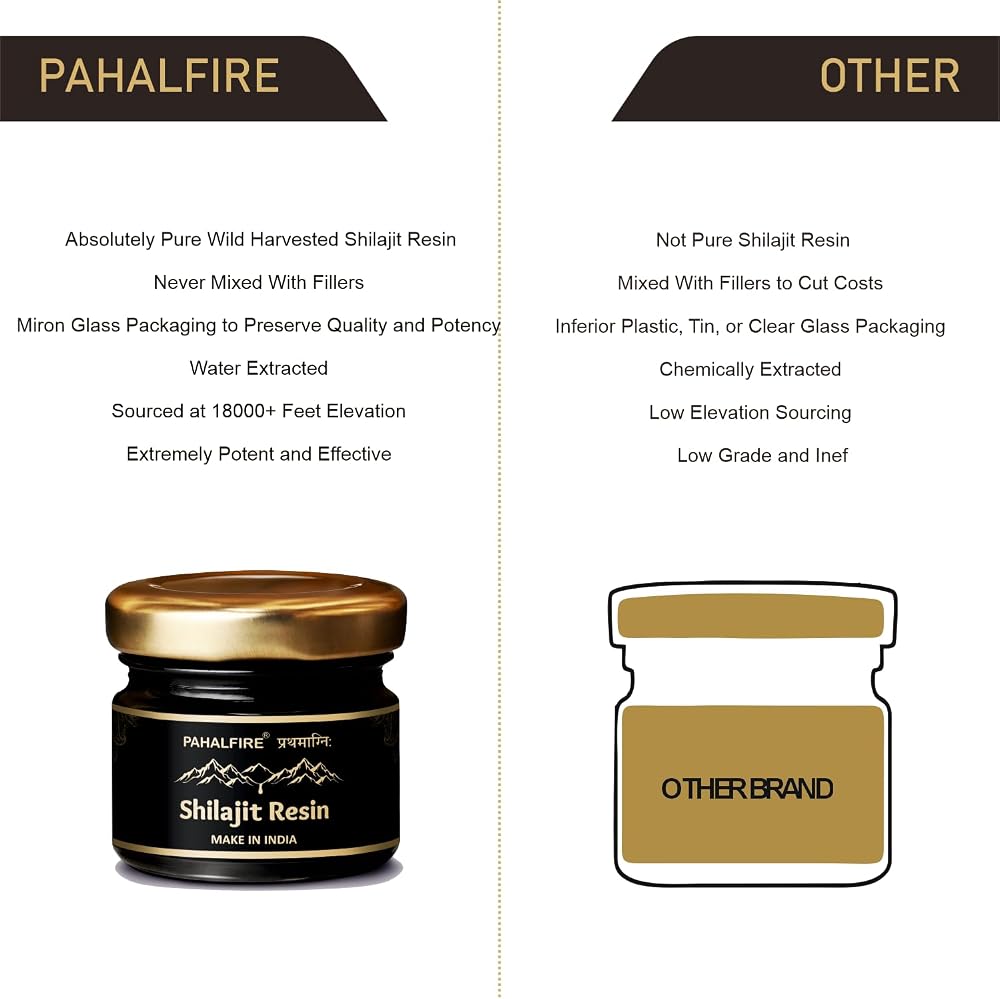
Shilajit is a pale-brown to blackish-brown exudate obtained from the layers of rocks across various mountain ranges, predominantly in the Himalayas. This tarry, solid, or elastic natural substance typically appears in shapeless pieces, which may have either a porous or smooth surface. Shilajit is celebrated for enhancing the activity of the body's seven constituents: chyle, blood, muscle, fat, bone, bone marrow, and marrow. It is recognized as a potent rejuvenator and anti-aging compound, composed of humus and organic plant material that has been compressed by rock layers mixed with microbial metabolites. It contains more than 85 minerals in ionic form along with significant amounts of humic substances, primarily fulvic and humic acids. The ancient Charka Samhita describes four varieties of Shilajit: gold (Savrana), copper (Tamra), silver (Rajat), and iron (Lauha). Each type is differentiated by color, ranging from red to blue, white, and brownish-black, respectively. While Savrana and Tamra Shilajit are rare, Lauha Shilajit is more commonly found in the Himalayas. In the heart of the majestic Annapurna Mountains, at an astonishing altitude of 18,000 feet, lies a hidden treasure with a captivating history. Generations ago, an esteemed healer named Padma, possessing mystical knowledge of herbs, made an astonishing discovery in the mountains. She found a dark, resin-like substance oozing from a crevice in a colossal boulder—shilajit. Recognizing its potential, she harvested this precious, mineral-rich resin. This shilajit soon revealed remarkable properties attributed to the extreme altitude and the pristine environment of the Annapurnas, along with its unique mineral composition. The villagers experienced increased vitality, endurance, and mental clarity, making it highly sought after. Today, the legacy of Padma and her extraordinary discovery continues. Our pure Himalayan Shilajit is celebrated as a unique and extraordinary natural supplement, connecting people to the ancient wisdom of the Himalayas.
 HADJOD - CISSUS 120 Tablets | Cissus Quadrangularis (Hadjod) | USDA Organic Certified | Organic and Natural 120tab
SAR 92
HADJOD - CISSUS 120 Tablets | Cissus Quadrangularis (Hadjod) | USDA Organic Certified | Organic and Natural 120tab
SAR 92
 Aloe Life - Whole Leaf Aloe Vera Juice, Certified Organic with Trace Minerals, Gluten-Free (Aloe Gold, 16 oz)
SAR 125
Aloe Life - Whole Leaf Aloe Vera Juice, Certified Organic with Trace Minerals, Gluten-Free (Aloe Gold, 16 oz)
SAR 125
 LevelUp Biohack Mind - Nootropic Brain Supplement for Men & Women | Balanced Energy, Focus, Mood & Stress Optimization with Ashwagandha, Lion's Mane, Alpha GPC, Ginseng and More - 60 Count
SAR 298
LevelUp Biohack Mind - Nootropic Brain Supplement for Men & Women | Balanced Energy, Focus, Mood & Stress Optimization with Ashwagandha, Lion's Mane, Alpha GPC, Ginseng and More - 60 Count
SAR 298
 Youngevity Bone and Tissue Support - Organic & Wild Crafted Herbs - White Oak Bark, Skullcap, Oatstraw, Hydrangea, Marshmallow, Mullein, Wormwood, Lobelia - Good Herbs - (4 Fl Oz)
SAR 219
Youngevity Bone and Tissue Support - Organic & Wild Crafted Herbs - White Oak Bark, Skullcap, Oatstraw, Hydrangea, Marshmallow, Mullein, Wormwood, Lobelia - Good Herbs - (4 Fl Oz)
SAR 219