- التسوق ، اصبح سهلا.
- /
- احصل على التطبيق!
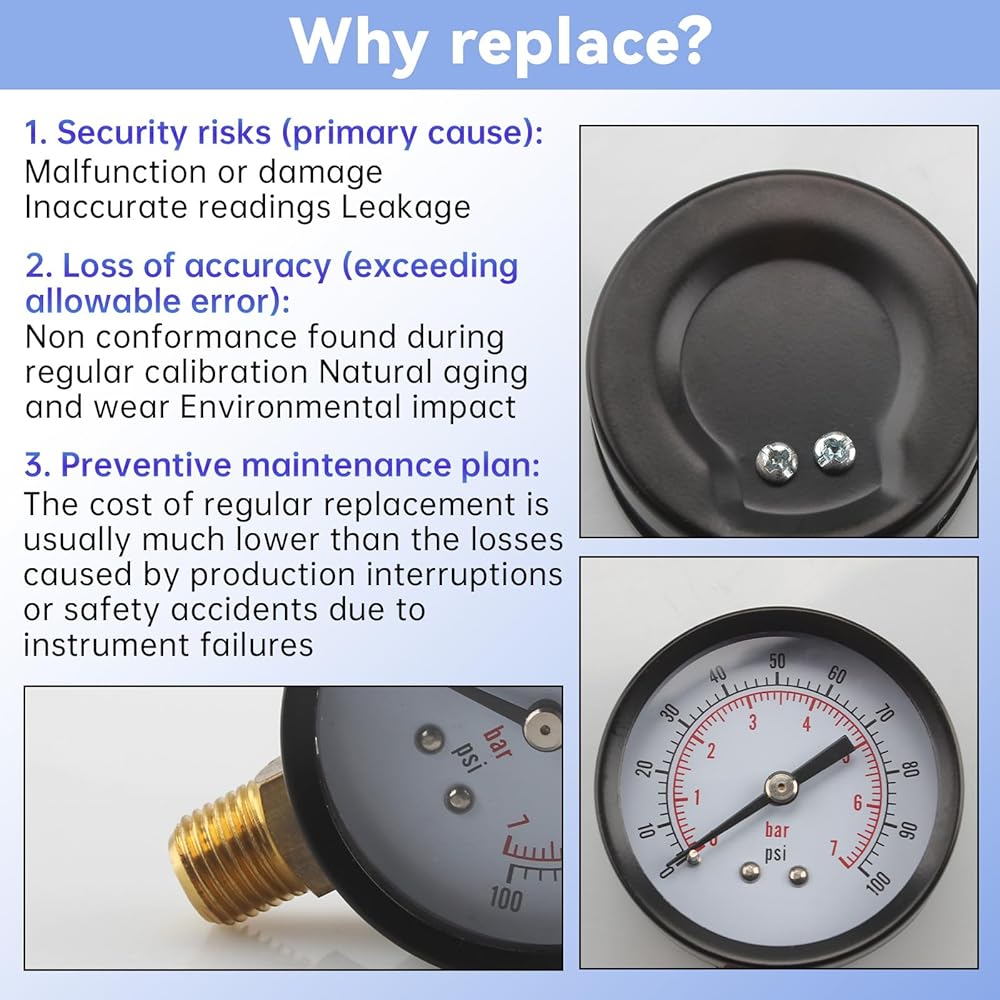
Why replace?
1. Security risks (primary cause):
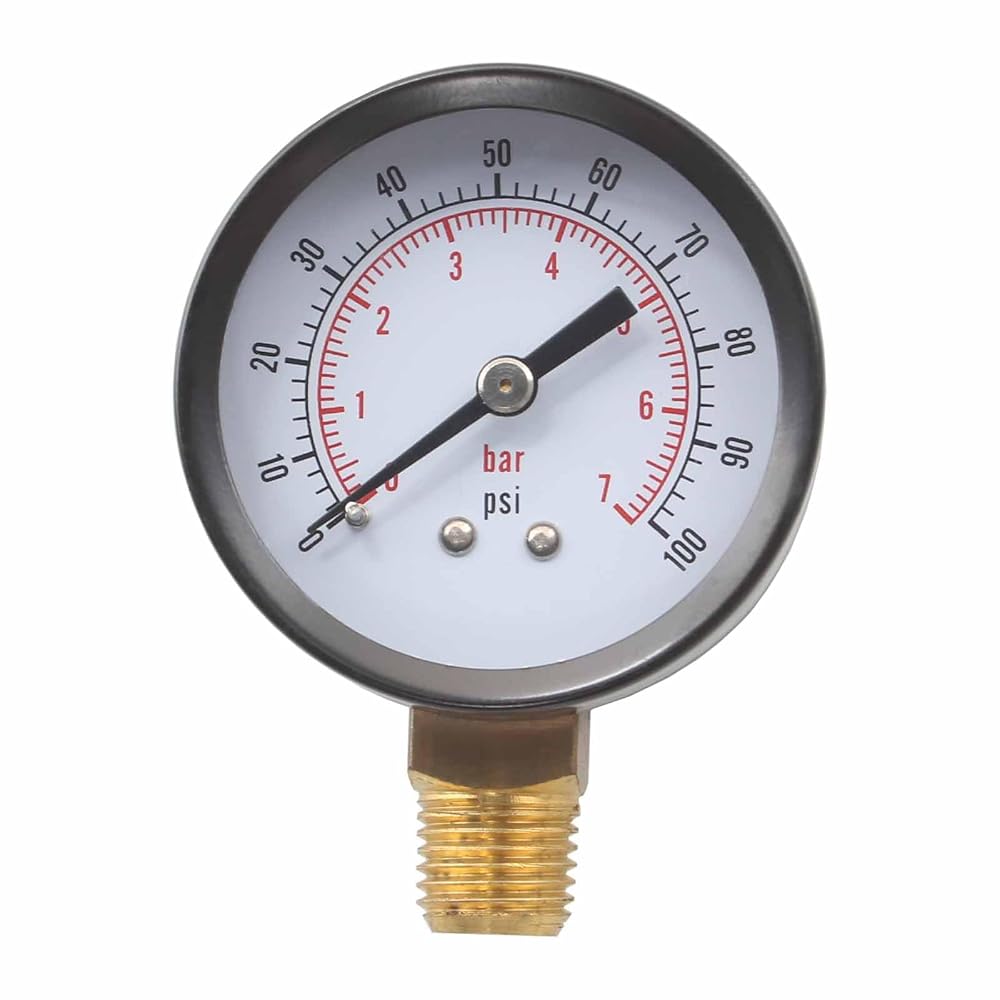
Malfunction or damage: This is the most urgent cause. Pressure gauges may be damaged due to overpressure, vibration, mechanical shock, extreme temperature, or corrosion (such as cracked dial, bent or stuck pointer, leaking joints, deformed case, etc.). A damaged pressure gauge cannot provide reliable readings, which may lead to operators misjudging the system pressure and causing serious accidents such as equipment overpressure explosion, pipeline rupture, medium leakage (especially hazardous media), etc.
Inaccurate readings: Even if the watch body is intact, internal mechanisms (such as Bourdon tubes, gear mechanisms, and balance springs) may fatigue, wear, or become stuck, resulting in significant deviations between the pressure value indicated by the pointer and the actual pressure (exceeding the allowable error). This can also mislead operations and pose security risks.
Leakage: There may be leakage at the pressure gauge joint, housing, or internal seal. This not only leads to inaccurate readings, but also poses a significant safety threat if the leaked medium is dangerous, flammable, or toxic.
2. Loss of accuracy (exceeding allowable error):
Non conformance found during regular calibration: The pressure gauge needs to be calibrated regularly to verify its accuracy meets the required standards (such as ± 1% FS, ± 1.6% FS, etc.). If the calibration result shows that the error exceeds the acceptable range (whether it is too large or too small), it must be replaced or repaired (but usually replacement is more economical and reliable).
Natural aging and wear: Even without obvious damage, the elastic components inside the pressure gauge (such as the Bourdon tube) will undergo permanent deformation (fatigue) under long-term repeated pressure cycles, and the transmission mechanism will wear out, resulting in a gradual decrease in accuracy. This is an unavoidable natural process.
Environmental impact: The characteristics of the medium (corrosiveness, viscosity, crystallization), process temperature fluctuations, strong vibrations, pulsating pressure, etc. can accelerate the wear and accuracy drift of the pressure gauge.
3. Preventive maintenance plan:
Many factory and equipment managers develop preventive maintenance plans, which include regularly replacing pressure gauges based on the importance of the equipment, the severity of the operating environment, and the manufacturer's recommendations (even if they appear to be functional and barely calibrated). This is to avoid unexpected failures during the interval between two calibrations, reduce risks, and ensure the continuous and reliable operation of the system. The cost of regular replacement is usually much lower than the losses caused by production interruptions or safety accidents due to instrument failures.
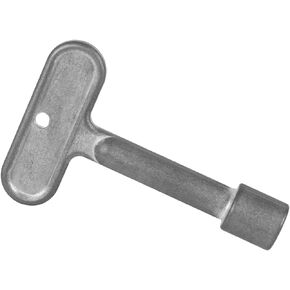 ترقية مفتاح الهيدرانت P1300-PART-13-KEY المتوافق مع ZURN| مفتاح حنفية الماء لصمامات الحنفية الجدارية والصنابير
SAR 30
ترقية مفتاح الهيدرانت P1300-PART-13-KEY المتوافق مع ZURN| مفتاح حنفية الماء لصمامات الحنفية الجدارية والصنابير
SAR 30
 محول شفرة 692496002 يناسب أداة Ridgid JobMax المتعددة R8223404 ويناسب Ryobi، MT100، MT100G، PSL1MT01، NT1MT، P570، P343
SAR 40
محول شفرة 692496002 يناسب أداة Ridgid JobMax المتعددة R8223404 ويناسب Ryobi، MT100، MT100G، PSL1MT01، NT1MT، P570، P343
SAR 40
 Nailer Springs N233943 N386480 يناسب DeWalt DCN21PLB، DCN21PLM1، BCF30PTB، CMCN621PLB، إلخ. أجزاء زنبركية إرجاع المسامير لمسدس تثبيت الإطارات من Dewalt
SAR 85
Nailer Springs N233943 N386480 يناسب DeWalt DCN21PLB، DCN21PLM1، BCF30PTB، CMCN621PLB، إلخ. أجزاء زنبركية إرجاع المسامير لمسدس تثبيت الإطارات من Dewalt
SAR 85
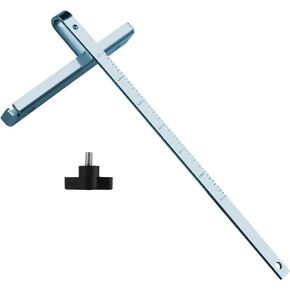 49-22-1001 سياج التمزق يناسب ميلووكي 6310-20 منشار دائري لاسلكي ومنشار دائري 6391-21
SAR 67
49-22-1001 سياج التمزق يناسب ميلووكي 6310-20 منشار دائري لاسلكي ومنشار دائري 6391-21
SAR 67