- Shopping, made easy.
- /
- Get the app!
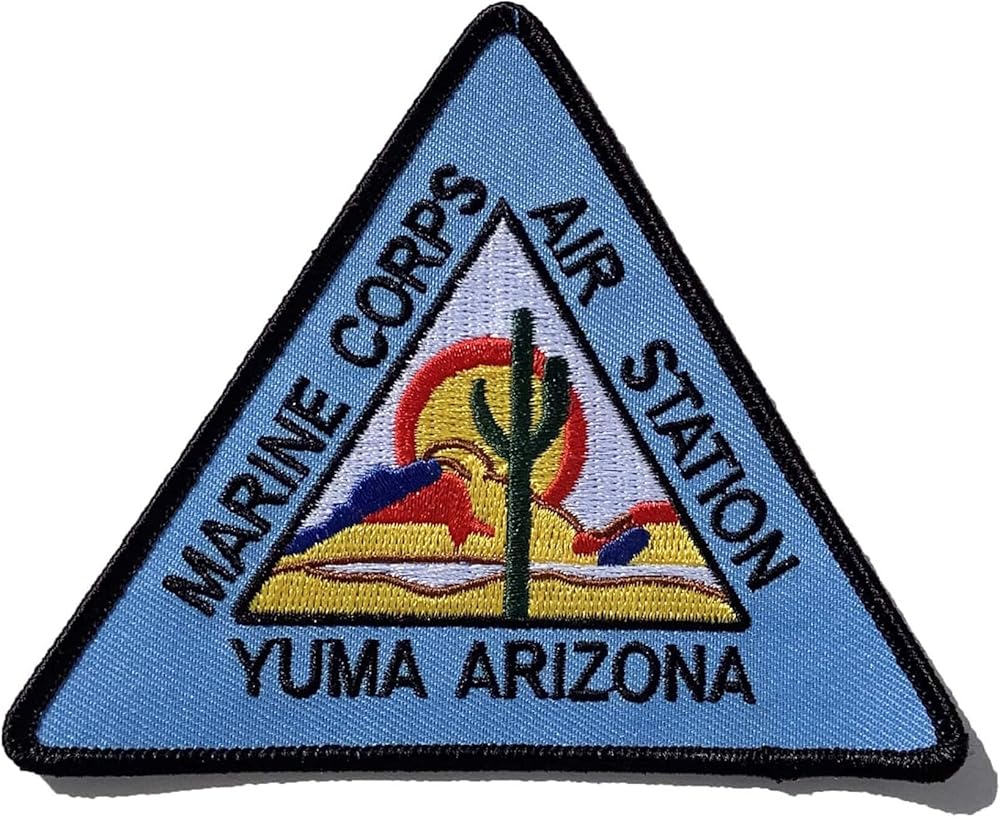
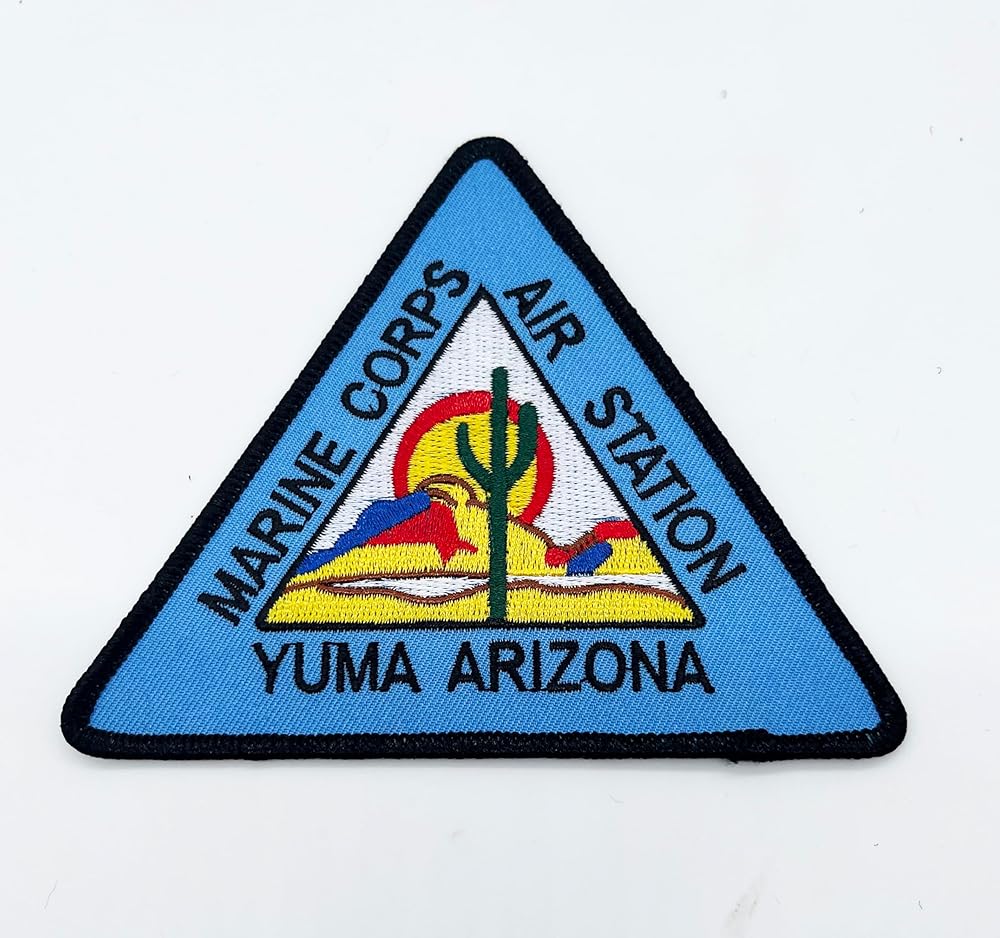
MCAS Yuma Patch - No Hook and Loop
A 4" wide x 3.5" tall patch of the MCAS Yuma Patch - No Hook and Loop.
Marine Corps Air Station Yuma or MCAS Yuma (ICAO: KNYL, FAA LID: NYL) is a United States Marine Corps air station. It is the home of multiple squadrons of AV-8B Harrier IIs and F-35B Lightning IIs of the 3rd Marine Aircraft Wing, Marine Aviation Weapons and Tactics Squadron 1 (MAWTS-1), Marine Operational Test and Evaluation Squadron 1 (VMX-1) and Marine Fighter Training Squadron 401 (VMFT-401), an air combat adversary squadron of the 4th Marine Aircraft Wing of the Marine Corps Reserve. It is a designated Superfund site due to a number of soil and groundwater contaminants, including asbestos.
The station is 2 miles (1.7 nmi; 3.2 km) from the city of Yuma, Arizona. A joint use civilian-military airport, MCAS Yuma shares airfield facilities with Yuma International Airport and occupies approximately 3,000 acres (1,200 ha), most of which is flat desert.
History
Air Force use
In 1928, the federal government purchased 640 acres (260 ha) near Yuma at the recommendation of Colonel Benjamin F. Fly. Temporary dirt runways were installed for usage by military and civilian planes. It was called Fly Field.
The outbreak of World War II transformed the civilian airport into the Yuma Army Airfield. Construction of facilities began on 1 June 1942 and was activated on 15 December
Yuma AAF was a single-engine flight training school, operated by the Army Air Forces Flying Training Command, West Coast Training Center, later Western Flying Training Command. Flying training began in January 1943. Its training unit was the 307th Single Engine Flying Training Group which operated AT-6 Texans, reporting to the 37th Flying Training Wing. The base operating unit was the 403d Army Air Force Base Unit. In 1944, the unit was upgraded to multi-engine flight training, operating B-26 Marauders. In addition to the flying training, a Flexible