- Shopping, made easy.
- /
- Get the app!
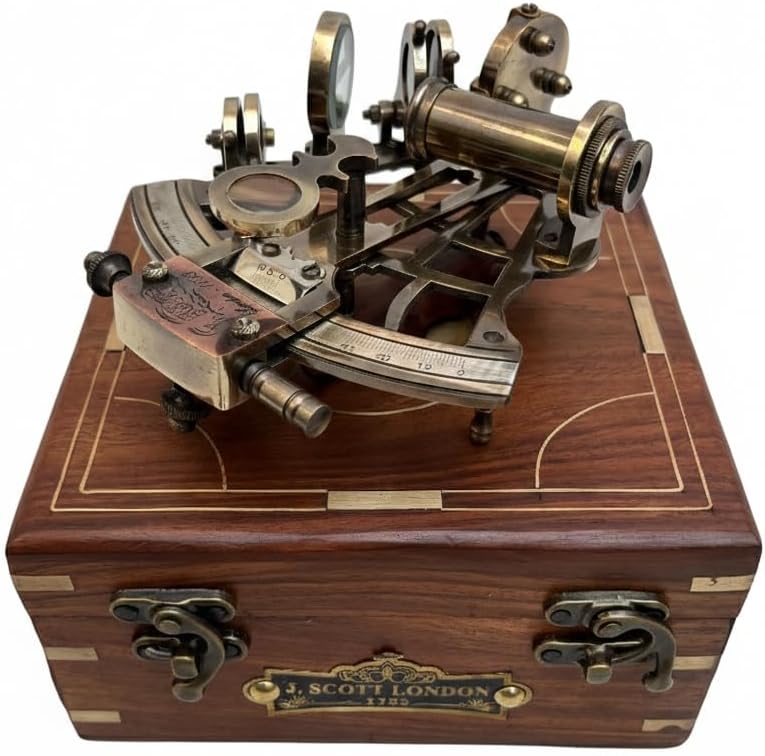
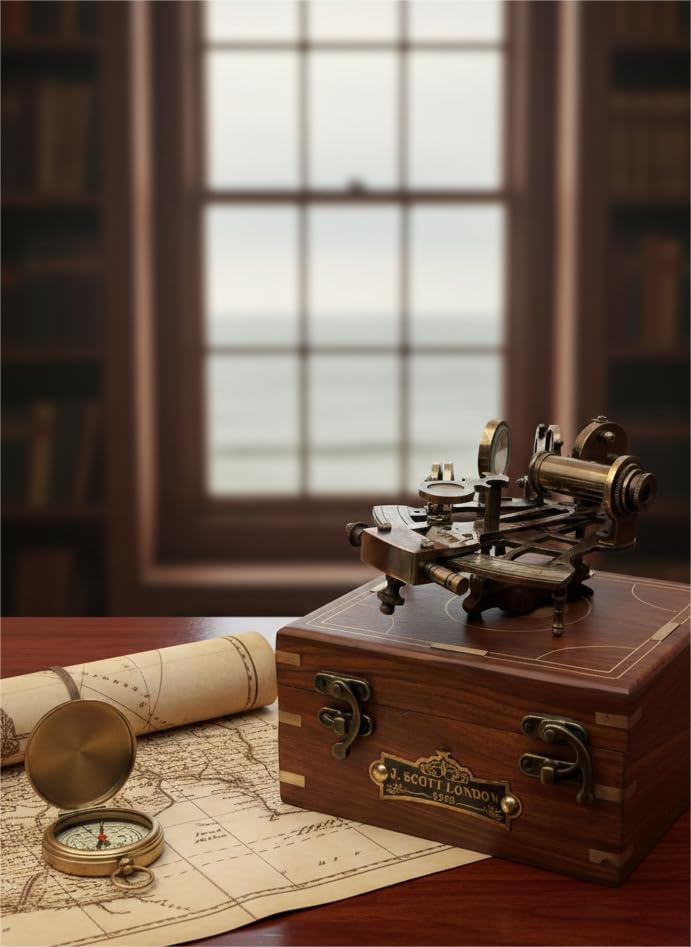
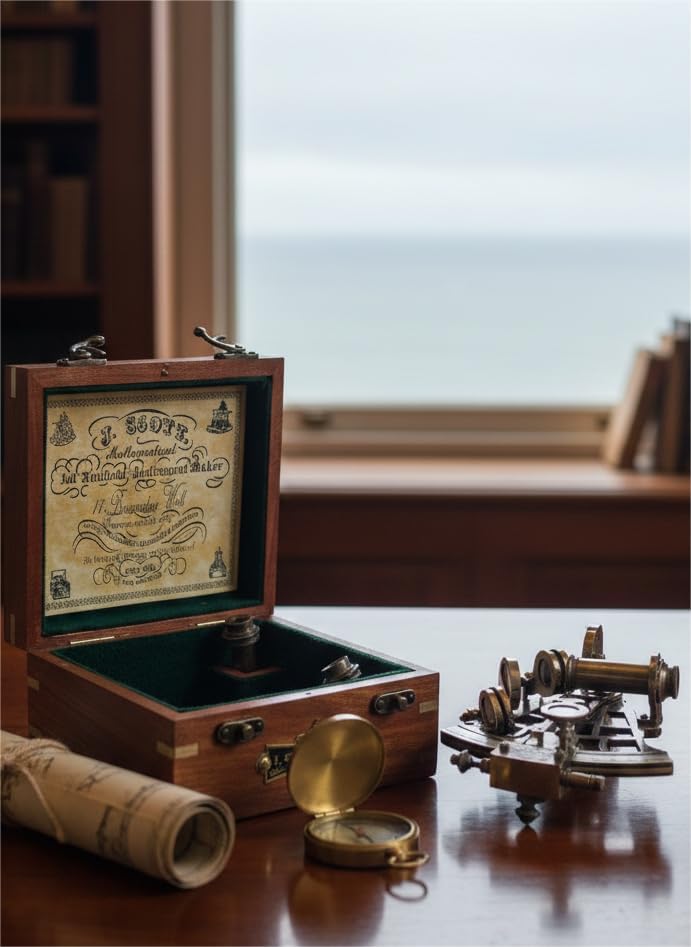
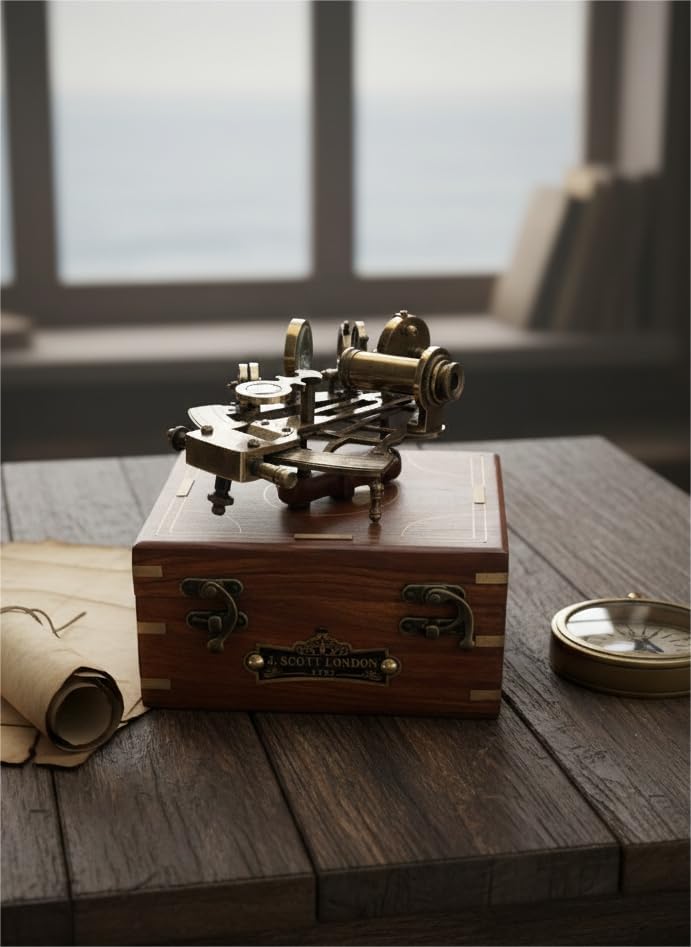
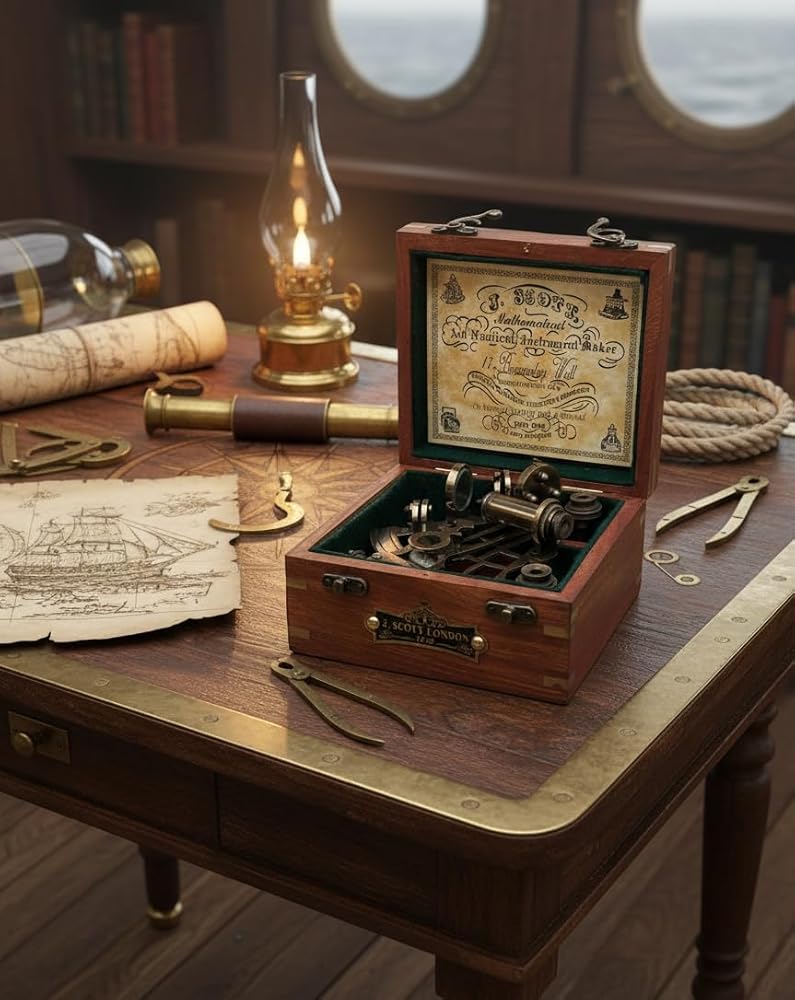
A sextant is a precision navigational instrument used to measure the angle between a celestial object—such as the Sun, Moon, planet, or a star—and the visible horizon. This measurement, called an altitude allows navigators to determine their **latitude** and, with accurate timekeeping, their **longitude**, making the sextant a cornerstone of maritime and astronomical navigation for centuries. The instrument typically consists of a **rigid frame** shaped like one-sixth of a circle (60 degrees), from which it gets its name. Along the curved edge is a finely engraved **graduated arc**, marked in degrees and minutes. A movable arm, known as the **index arm**, pivots from the center of the arc and carries an **index mirror**. Opposite this is a **horizon mirror**, which is partially silvered, allowing the user to see both the horizon directly and the reflected image of the celestial body at the same time. At the top of the frame is a small **telescope or sighting tube**, which improves accuracy by magnifying the horizon and the celestial object. The sextant also includes **sun filters or shades** to protect the observer's eyes when measuring the Sun. Fine adjustment screws, called **micrometer drums**, allow extremely precise angle readings, often accurate to within a fraction of a minute of arc. To use a sextant, the navigator aligns the reflected image of the celestial object with the horizon as seen through the horizon mirror. The angle between the two is then read from the arc and micrometer. This measurement, combined with the exact time (from a marine chronometer) and reference tables such as the **Nautical Almanac**, enables the calculation of the observer's position on Earth. Historically, the sextant replaced earlier instruments like the astrolabe and octant due to its **greater accuracy, durability, and ease of use at sea**. It was essential for long-distance ocean voyages from the 18th century onward and played a critical role in global exploration, trade, and naval navigation. Even in the modern era of GPS, the sextant remains valued as a **reliable, non-electronic backup** and as a symbol of classical navigation skill. Overall, the sextant represents a blend of **optics, geometry, and craftsmanship**, embodying humanity's long-standing effort to understand position and direction by observing the sky.
 Antique Brass Sundial Compass with Leather Case – Vintage Nautical Maritime Navigation Tool – Gilbert & Sons London Replica – Working Collectible Gift
SAR 157
Antique Brass Sundial Compass with Leather Case – Vintage Nautical Maritime Navigation Tool – Gilbert & Sons London Replica – Working Collectible Gift
SAR 157
 -8%
Peryiter Spider Web Curtain with 2 Tiebacks Spider Bedroom Room Decor 42 x 84 Inch Red Blue Blackout Thermal Insulated Window Drapes Curtain for Bathroom Nursery Home Decoration, 2 Panels
SAR 120
-8%
Peryiter Spider Web Curtain with 2 Tiebacks Spider Bedroom Room Decor 42 x 84 Inch Red Blue Blackout Thermal Insulated Window Drapes Curtain for Bathroom Nursery Home Decoration, 2 Panels
SAR 120
 Mail Holder Magazine Basket - 1 Pack Black Wall Mount File Organizer Rack of Wooden Style with Adhesive Mounting - Metal Wire Hanging Sorter for Document Folders Newspaper Clipboard Brochure Display
SAR 115
Mail Holder Magazine Basket - 1 Pack Black Wall Mount File Organizer Rack of Wooden Style with Adhesive Mounting - Metal Wire Hanging Sorter for Document Folders Newspaper Clipboard Brochure Display
SAR 115
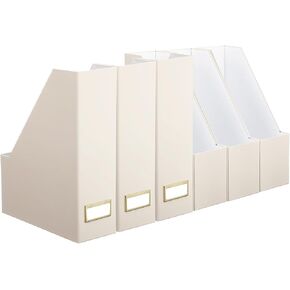 Magazine File Holder Set of 6 Stylish Sturdy Cardboard File Boxes Desk Organizer Beautiful Magazine Holder Rack with Gold Label Holder for Home Office Desktop Bookshelf Classroom(Beige)
SAR 0
Magazine File Holder Set of 6 Stylish Sturdy Cardboard File Boxes Desk Organizer Beautiful Magazine Holder Rack with Gold Label Holder for Home Office Desktop Bookshelf Classroom(Beige)
SAR 0