- Shopping, made easy.
- /
- Get the app!
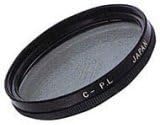
ight rays which are reflected become polarized%2E Polarizing filters are used to select which light rays enter your camera lens%2E They can remove unwanted reflections from non%2Dmetallic surfaces such as water or glass and also saturate colors providing better contrast%2E The effect can be seen through the viewfinder and changed by rotating the filter%2E The filter factor varies according to how the filter is rotated and its orientation to the sun%2E Filter factor is between 2%2E3 and 2%2E8 %28approx%2E %2B1%2E3 stops%29%2E %0D%0A%3CP%3E%0D%0ACircular polarizers are specifically designed for use with auto%2Dfocus SLR cameras %28They will also work on manual systems and video cameras without problems%29%2E %0D%0AThis filter is a must for all outdoor sunny or snowy high glare situations%2E It will cut out the extra bright glare and allow you to get the true blue colors%2C not washed out%2E Most photographers view this filter as %22sunglasses%22 for your camera lens%2E%0D%0A%3CP%3E%0D%0ACircular Polarizing Filters are used to increase color saturation%2C like darkening blue skies so that white clouds stand out%2E It eliminates reflections from non%2Dmetallic surfaces like glass and water%2E It helps reduce softness in scenery caused by atmospheric haze%2E This filter will not change the overall color balance of a photograph%2E %0D%0A%3CP%3E%0D%0APolarizers are commonly used to control glare on water and to allow the camera to see below the surface%2E They are also used to reduce glare on car bumpers and to control reflections on plate%2Dglass windows%2E Polarizers are so versatile that they can perform the opposite functions as well%2E Some cinematographers use polarizers to increase or enhance reflections%2C simply by changing the filter%92s setting%2E %22Circular%22 refers not to the shape%2C but a special design that does not interfere with metering of auto exposure or auto focus systems
 Margaritaville Folding Chair with Wireless Speakers, Beach Chair with Waterproof Wireless Speakers, 5 Hour Playback Time, 20 Foot Bluetooth Range, Cup Holder, Backpack, Padded Head and Neck Rest
SAR 314
Margaritaville Folding Chair with Wireless Speakers, Beach Chair with Waterproof Wireless Speakers, 5 Hour Playback Time, 20 Foot Bluetooth Range, Cup Holder, Backpack, Padded Head and Neck Rest
SAR 314
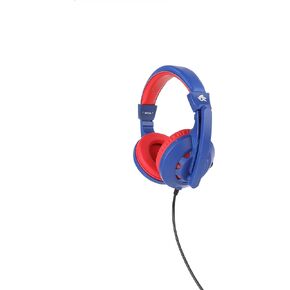 Sonic The Hedgehog Gaming Headset with Communication Mic, Crystal Clear Voice Clarity, Cushioned Ear Cups for All Day Comfort, Quality Boom Mic, for Sonic Fans
SAR 97
Sonic The Hedgehog Gaming Headset with Communication Mic, Crystal Clear Voice Clarity, Cushioned Ear Cups for All Day Comfort, Quality Boom Mic, for Sonic Fans
SAR 97
 Digital Concepts Compact Camcorder Bag
SAR 51
Digital Concepts Compact Camcorder Bag
SAR 51
 55mm 2X Tele Photo Lens for Digital Cameras & Camcorders
SAR 120
55mm 2X Tele Photo Lens for Digital Cameras & Camcorders
SAR 120