- Shopping, made easy.
- /
- Get the app!
“𝐖𝐚𝐭𝐞𝐫 𝐢𝐬 𝐭𝐡𝐞 𝐦𝐨𝐬𝐭 𝐜𝐫𝐢𝐭𝐢𝐜𝐚𝐥 𝐫𝐞𝐬𝐨𝐮𝐫𝐜𝐞 𝐢𝐬𝐬𝐮𝐞 𝐨𝐟 𝐨𝐮𝐫 𝐥𝐢𝐟𝐞𝐭𝐢𝐦𝐞 𝐚𝐧𝐝 𝐨𝐮𝐫 𝐜𝐡𝐢𝐥𝐝𝐫𝐞𝐧'𝐬 𝐥𝐢𝐟𝐞𝐭𝐢𝐦𝐞. 𝐓𝐡𝐞 𝐡𝐞𝐚𝐥𝐭𝐡 𝐨𝐟 𝐨𝐮𝐫 𝐰𝐚𝐭𝐞𝐫𝐬 𝐢𝐬 𝐭𝐡𝐞 𝐩𝐫𝐢𝐧𝐜𝐢𝐩𝐚𝐥 𝐦𝐞𝐚𝐬𝐮𝐫𝐞 𝐨𝐟 𝐡𝐨𝐰 𝐰𝐞 𝐥𝐢𝐯𝐞 𝐨𝐧 𝐭𝐡𝐞 𝐥𝐚𝐧𝐝.” – Luna Leopold
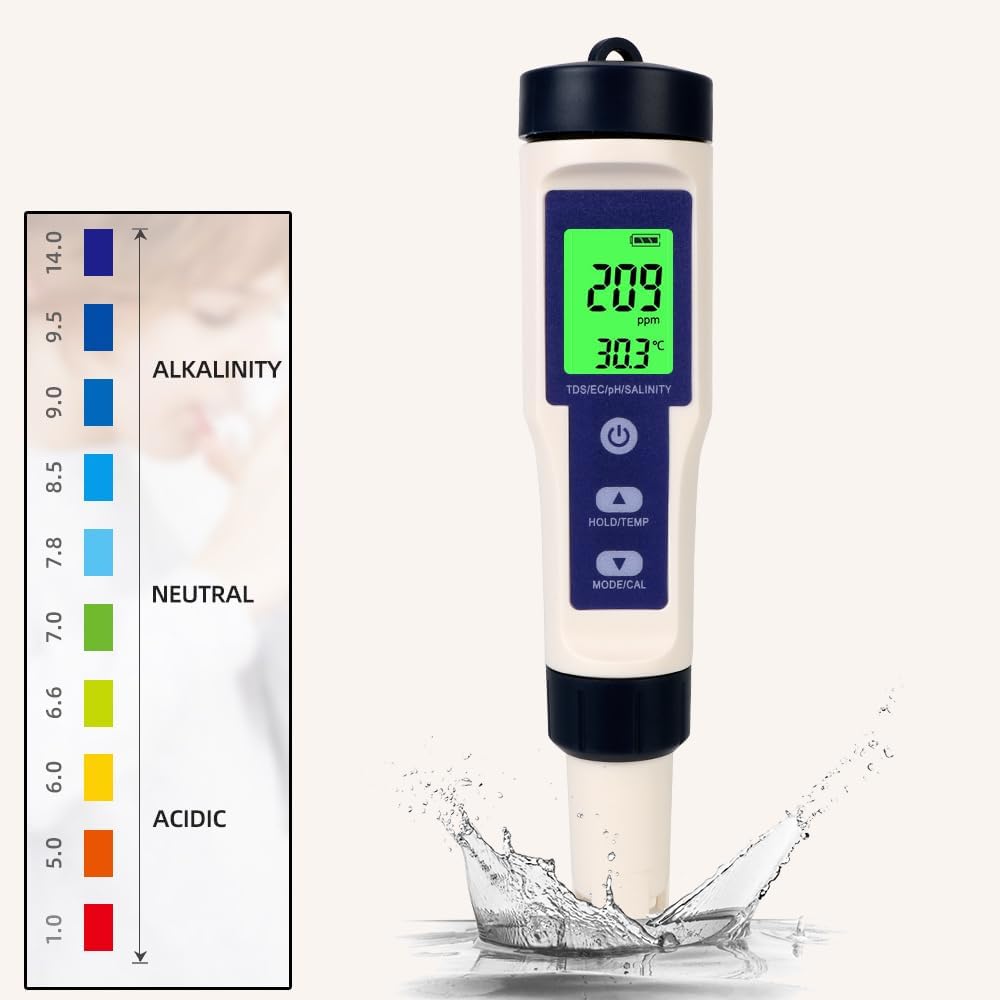
According to the US Environmental Protection Agency drinking water standard stipulates that the pH range of drinking water is 6.5~8.5;
and the TDS of drinking water should be controlled below 500 mg/L(500ppm), while for non-drinking water such as spring water and bottled water, the TDS should not exceed 1000 mg/L(1000ppm).
𝐓𝐡𝐞 𝐩𝐇 𝐚𝐧𝐝 𝐭𝐝𝐬 𝐨𝐟 𝐰𝐚𝐭𝐞𝐫 𝐮𝐬𝐮𝐚𝐥𝐥𝐲 𝐡𝐚𝐬 𝐧𝐨 𝐝𝐢𝐫𝐞𝐜𝐭 𝐢𝐦𝐩𝐚𝐜𝐭 𝐨𝐧 𝐭𝐡𝐞 𝐡𝐞𝐚𝐥𝐭𝐡 𝐚𝐧𝐝 𝐬𝐚𝐟𝐞𝐭𝐲 𝐨𝐟 𝐜𝐨𝐧𝐬𝐮𝐦𝐞𝐫𝐬. 𝐘𝐞𝐭 𝐏𝐇 𝐚𝐧𝐝 𝐓𝐃𝐒 𝐰𝐞𝐫𝐞 𝐨𝐧𝐞 𝐨𝐟 𝐭𝐡𝐞 𝐦𝐨𝐬𝐭 𝐢𝐦𝐩𝐨𝐫𝐭𝐚𝐧𝐭 𝐩𝐚𝐫𝐚𝐦𝐞𝐭𝐞𝐫𝐬 𝐨𝐟 𝐰𝐚𝐭𝐞𝐫 𝐪𝐮𝐚𝐥𝐢𝐭𝐲 𝐭𝐡𝐚𝐭 𝐡𝐚𝐬 𝐭𝐨 𝐛𝐞 𝐦𝐨𝐧𝐢𝐭𝐨𝐫𝐞𝐝.
Because pH and tds affects the way water interacts with its environment. Such changed interactions might have a negative impact on the appearance, taste, and odor of drinking water and might indicate problems in water production and distribution systems that are dangerous to consumer health.
𝐖𝐡𝐲 𝐒𝐡𝐨𝐮𝐥𝐝 𝐘𝐨𝐮 𝐌𝐞𝐚𝐬𝐮𝐫𝐞 𝐓𝐃𝐒 𝐚𝐧𝐝 𝐏𝐇 𝐋𝐞𝐯𝐞𝐥𝐬
Naturally, mineral water has no smell or taste. A change in the TDS and PH level changes the texture and taste, making the water unfit for consumption.
From the experiments of some scientists, the following problems were found; some of the reasons why you should measure the TDS and PH level of your drinking water are:
*Taste (high TDS level can make the water salty and/or bitter).
*Health Concerns (water with high TDS level will not have a drastic impact on your health but the high level of lead or copper can make you fall sick).
*Cooking (TDS level above 1000 ppm can change the way the food tastes).
Q: 𝐖𝐡𝐚𝐭 𝐢𝐬 𝐭𝐡𝐞 𝐛𝐞𝐬𝐭 𝐓𝐃𝐒 𝐥𝐞𝐯𝐞𝐥 𝐟𝐨𝐫 𝐝𝐫𝐢𝐧𝐤𝐢𝐧𝐠 𝐰𝐚𝐭𝐞𝐫?
A: Generally, the TDS level between 50-500ppm is considered as the most suitable and acceptable. TDS levels below 50 can be considered high-quality drinking water.
Note: If the content is less than 80ppm, it is called soft water; if the content is between 80ppm-160ppm, it is called hard water; if it is above 300ppm, it is called very hard water.;
Q: 𝐈𝐬 𝐋𝐨𝐰 𝐓𝐃𝐒 𝐥𝐞𝐯𝐞𝐥 𝐛𝐚𝐝 𝐨𝐫 𝐡𝐚𝐫𝐦𝐟𝐮𝐥 𝐟𝐨𝐫 𝐡𝐞𝐚𝐥𝐭𝐡?
A: If the TDS level is about 1000 PPM, it is unsafe and unfit for human consumption.
𝐎𝐭𝐡𝐞𝐫 𝐀𝐩𝐩𝐥𝐢𝐜𝐚𝐭𝐢𝐨𝐧𝐬:
TDS/PH plays a pivotal role in making the nutrients in your solution soluble so that they can be accessed by your plants. At the same time, they are also environmental indicators for the survival of aquatic organisms.
𝐖𝐢𝐝𝐞 𝐔𝐬𝐞 𝐏𝐇 𝐌𝐞𝐭𝐞𝐫:
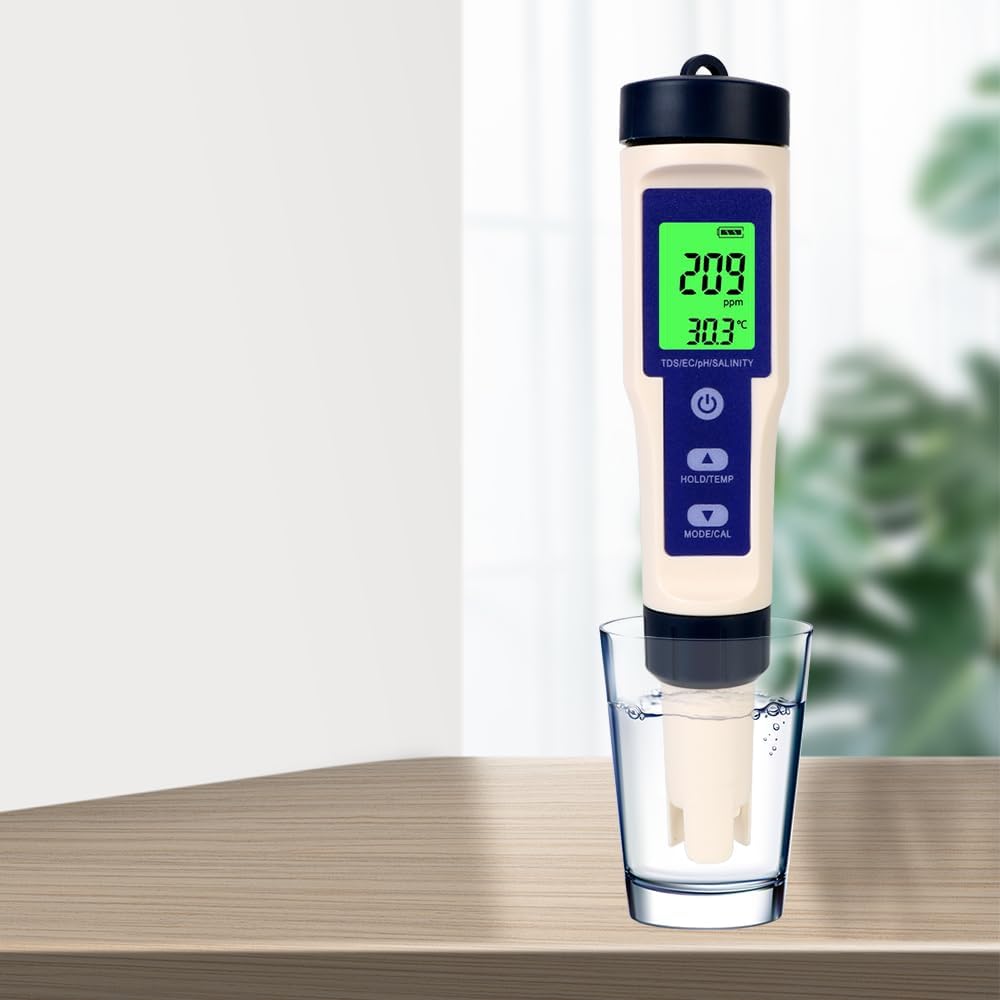
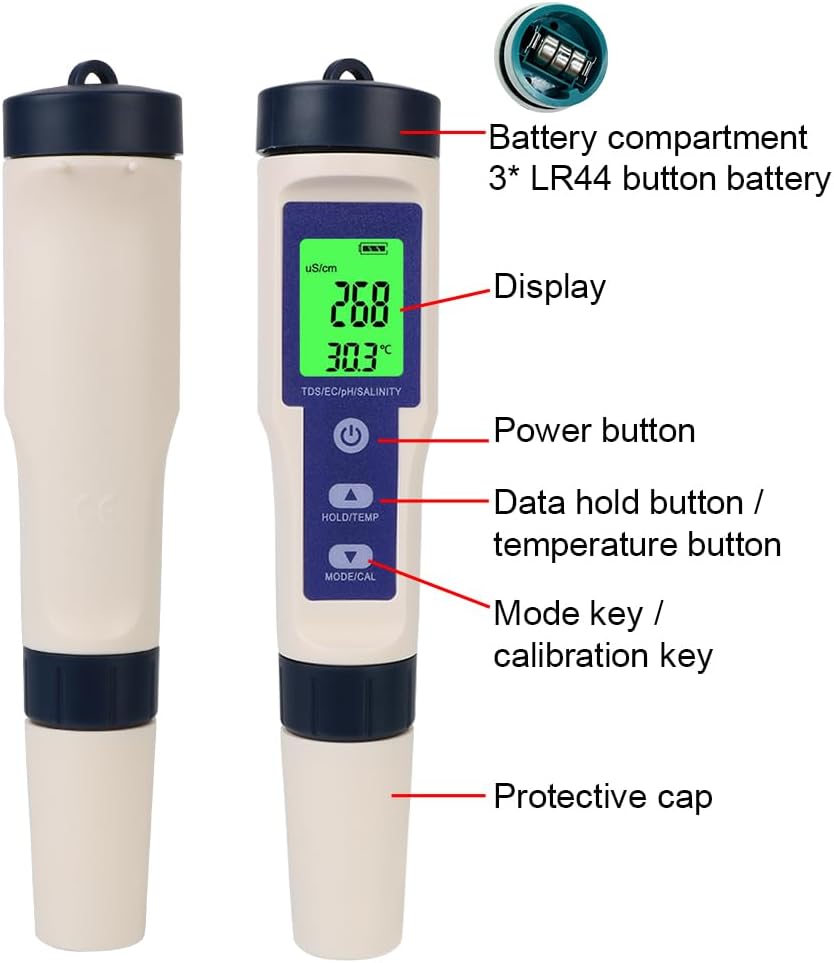
This 5 in 1 ph meter could be widely used in all water quality testing situations, Water Purification Applications, Aquaculture, Hydroponic, Pool & Spa, Water Treatment, and so on.
𝐏𝐥𝐚𝐧𝐭 𝐆𝐫𝐨𝐰:
Behind every thriving plant is a gardener who cares for her carefully. Through this 5 in 1 PH tester, you can easily grasp the environmental factors of plant growth.
𝐀𝐪𝐮𝐚𝐫𝐢𝐮𝐦 𝐓𝐞𝐬𝐭 𝐓𝐨𝐨𝐥:
Detecting water parameters accurately such as nitrates and pH levels are fast and easy with this Aquarium test meter. With just a single ph pen already enables you to test your water accurately and keep your tank clean and maintain a safe environment for your dearest water pets.
𝐒𝐩𝐞𝐜𝐢𝐟𝐢𝐜𝐚𝐭𝐢𝐨𝐧𝐬:
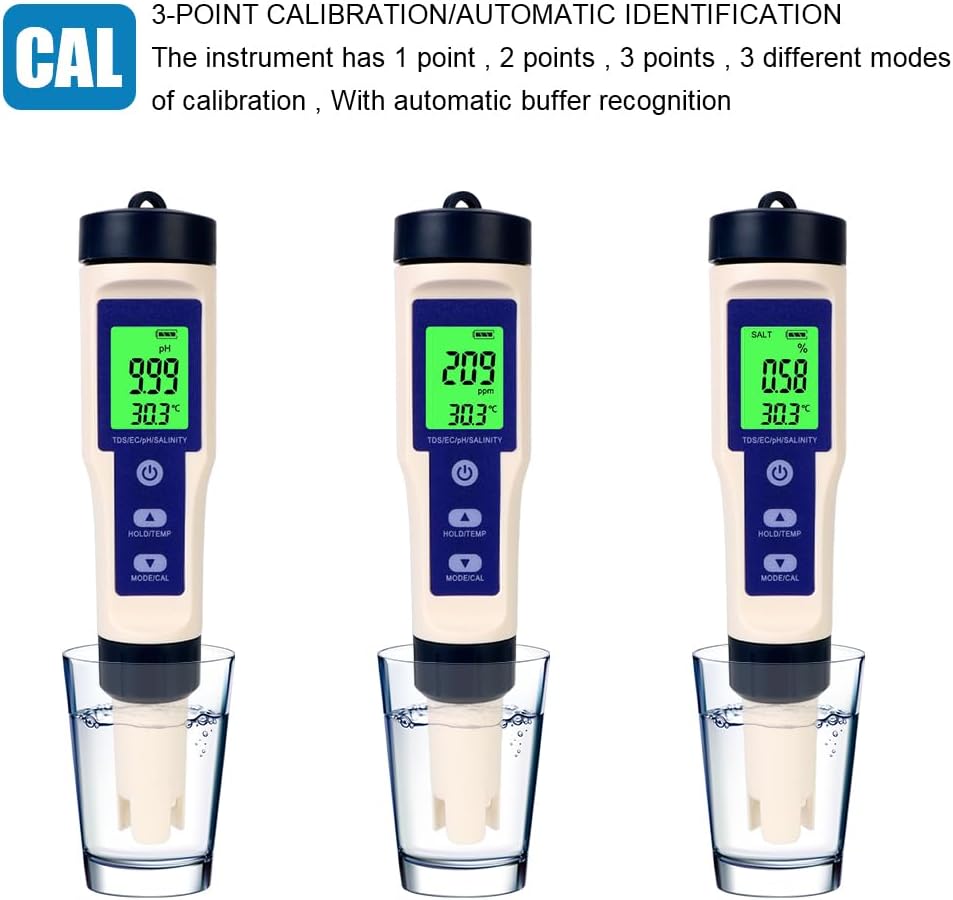
𝐏𝐇 𝐭𝐞𝐬𝐭 𝐫𝐚𝐧𝐠𝐞: 0-14 PH, Accuracy: ± 0.05 PH
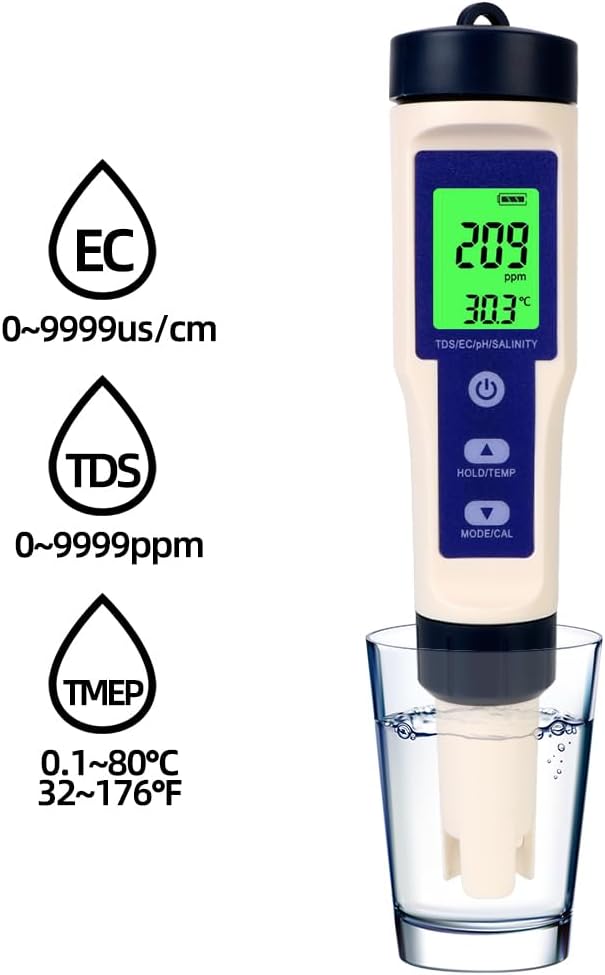
𝐓𝐃𝐒 𝐭𝐞𝐬𝐭 𝐫𝐚𝐧𝐠𝐞: 0 - 200000 ppm (parts per million) , 10.1 -100 ppt (part per trillion), Accuracy: ± 2% F.S
𝐂𝐨𝐧𝐝𝐮𝐜𝐭𝐢𝐯𝐢𝐭𝐲 𝐭𝐞𝐬𝐭 𝐫𝐚𝐧𝐠𝐞: 0 - 200000 µs/cm, 10.1 - 200 ms/cm, Accuracy: ± 2% F.S
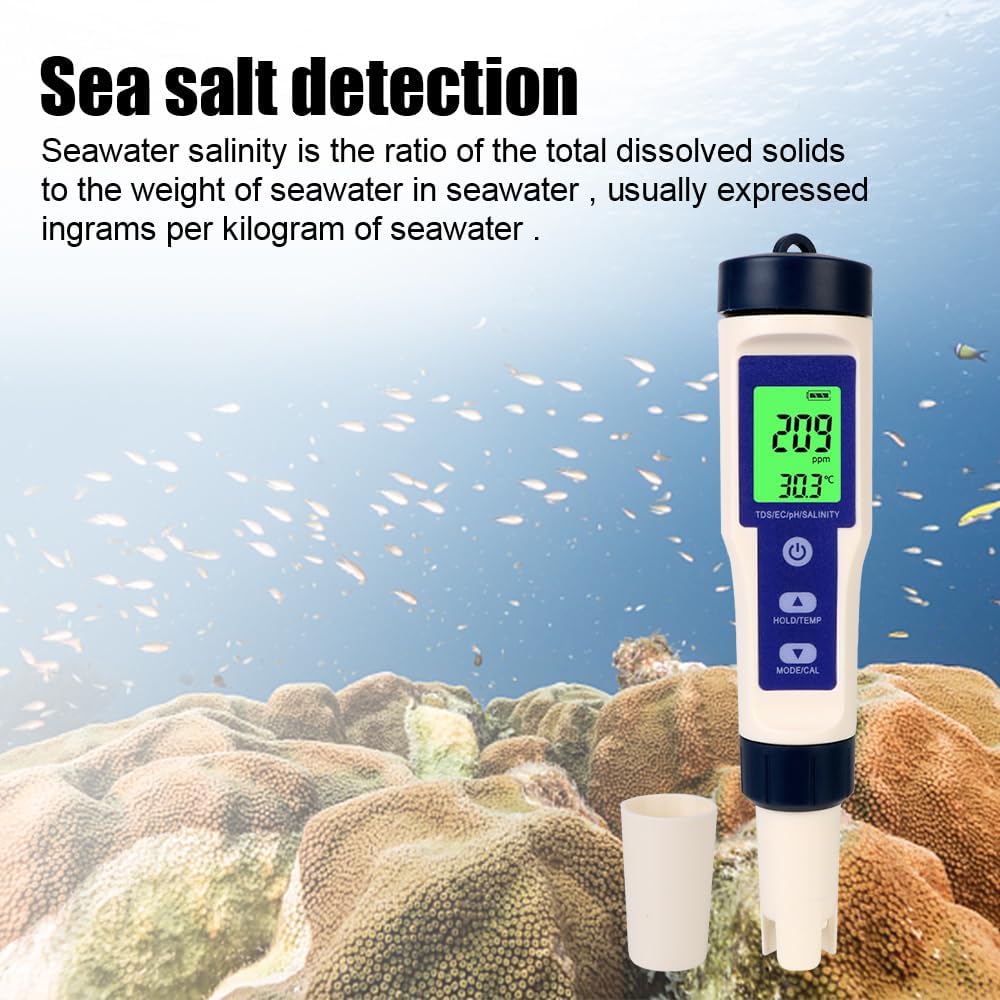
𝐒𝐚𝐥𝐢𝐧𝐢𝐭𝐲 𝐭𝐞𝐬𝐭 𝐫𝐚𝐧𝐠𝐞: 0.01%-25%, 0-10000 ppm, 10.1-200 pptt, Accuracy: 0.01%-5%(± 0.1%) , 5.1%-25%(± 0.1%) , ± 2% F.S
𝐓𝐞𝐦𝐩𝐞𝐫𝐚𝐭𝐮𝐫𝐞 𝐭𝐞𝐬𝐭 𝐫𝐚𝐧𝐠𝐞: Degrees Celsius: 0 - 60°C, Fahrenheit: 32 - 140°F
Net Weight:3.2oz
Size:7.2 x 1.5 x 1.5in
𝐏𝐚𝐜𝐤𝐚𝐠𝐞 𝐈𝐧𝐜𝐥𝐮𝐝𝐢𝐧𝐠:
1x TDS Meter
1x Manual
1x Color Box
3 x Packs of pH calibration powder
 Farmalab Probiotics Extra Strength for Pigeons, 100 Tablets, Immune Support and Digestive Health
SAR 89
Farmalab Probiotics Extra Strength for Pigeons, 100 Tablets, Immune Support and Digestive Health
SAR 89
 3-in-1 Steam Pet Brush for Cats & Dogs – Self-Cleaning Grooming Comb with Spray Mist, Massage & Shedding, Rechargeable USB, Anti-Static, Foldable Handle – Kakhi
SAR 47
3-in-1 Steam Pet Brush for Cats & Dogs – Self-Cleaning Grooming Comb with Spray Mist, Massage & Shedding, Rechargeable USB, Anti-Static, Foldable Handle – Kakhi
SAR 47
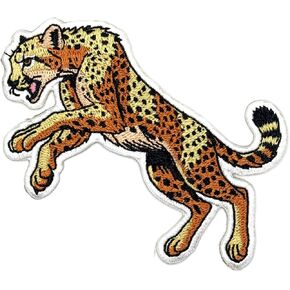 3.5" Cheetah Iron On Patch - Embroidered Leopard Jaguar Animals Applique Appliques Iron On Sew On Patches for Holes, Clothing, Jeans, Hat, Backpacks, Clothes
SAR 47
3.5" Cheetah Iron On Patch - Embroidered Leopard Jaguar Animals Applique Appliques Iron On Sew On Patches for Holes, Clothing, Jeans, Hat, Backpacks, Clothes
SAR 47
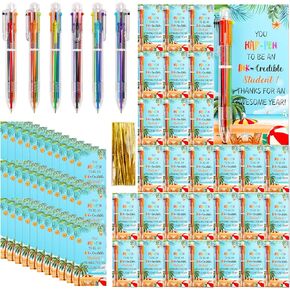 30 Set End of Year Student Gifts from Teacher 6 in 1 Multicolor Ballpoint Pen Blessing Cards Retractable Ballpoint Pens Preschool Kindergarten Graduation Gifts Classroom Prizes School Supplies
SAR 94
30 Set End of Year Student Gifts from Teacher 6 in 1 Multicolor Ballpoint Pen Blessing Cards Retractable Ballpoint Pens Preschool Kindergarten Graduation Gifts Classroom Prizes School Supplies
SAR 94