- Shopping, made easy.
- /
- Get the app!
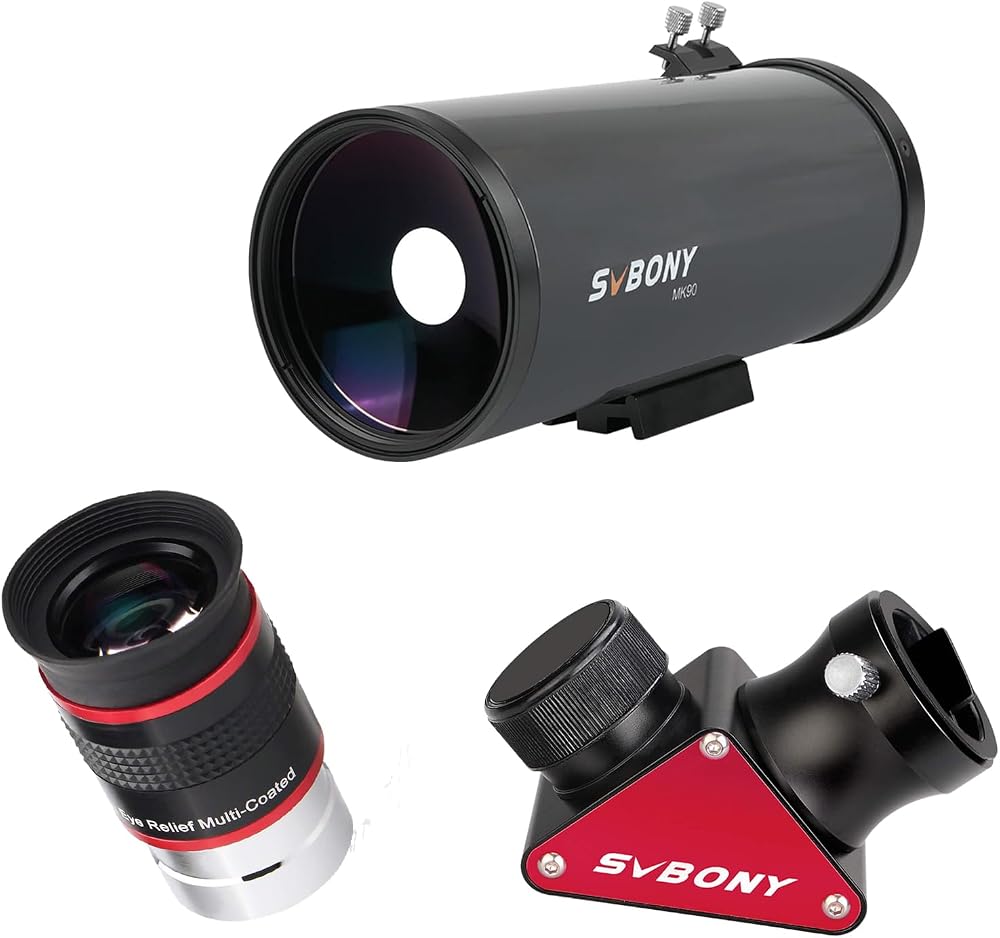
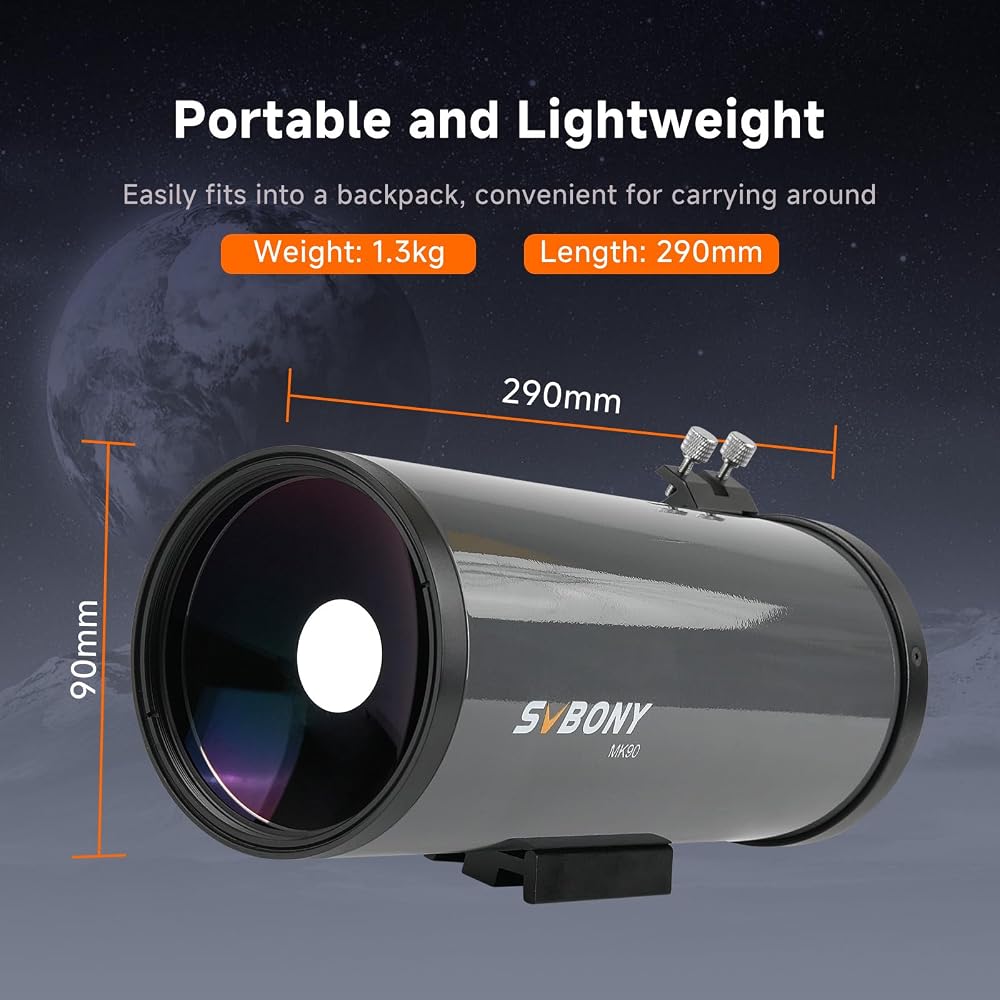
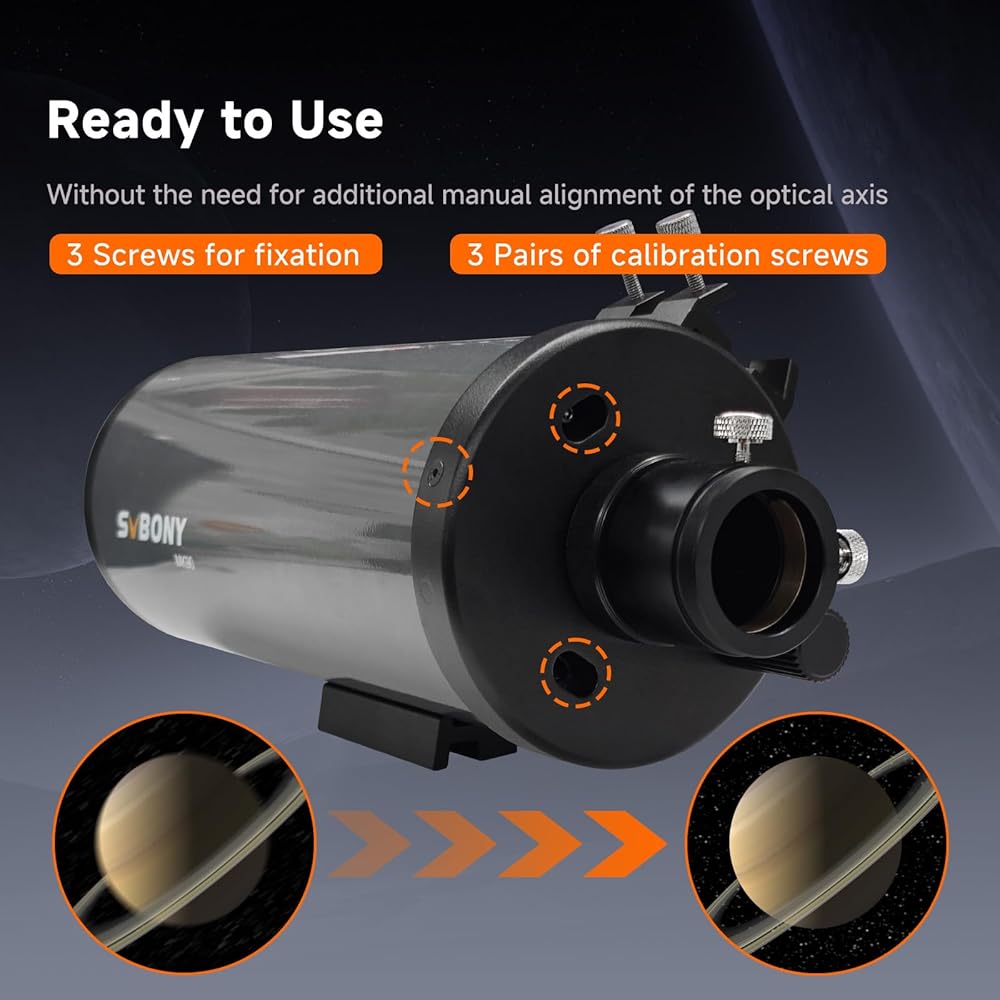
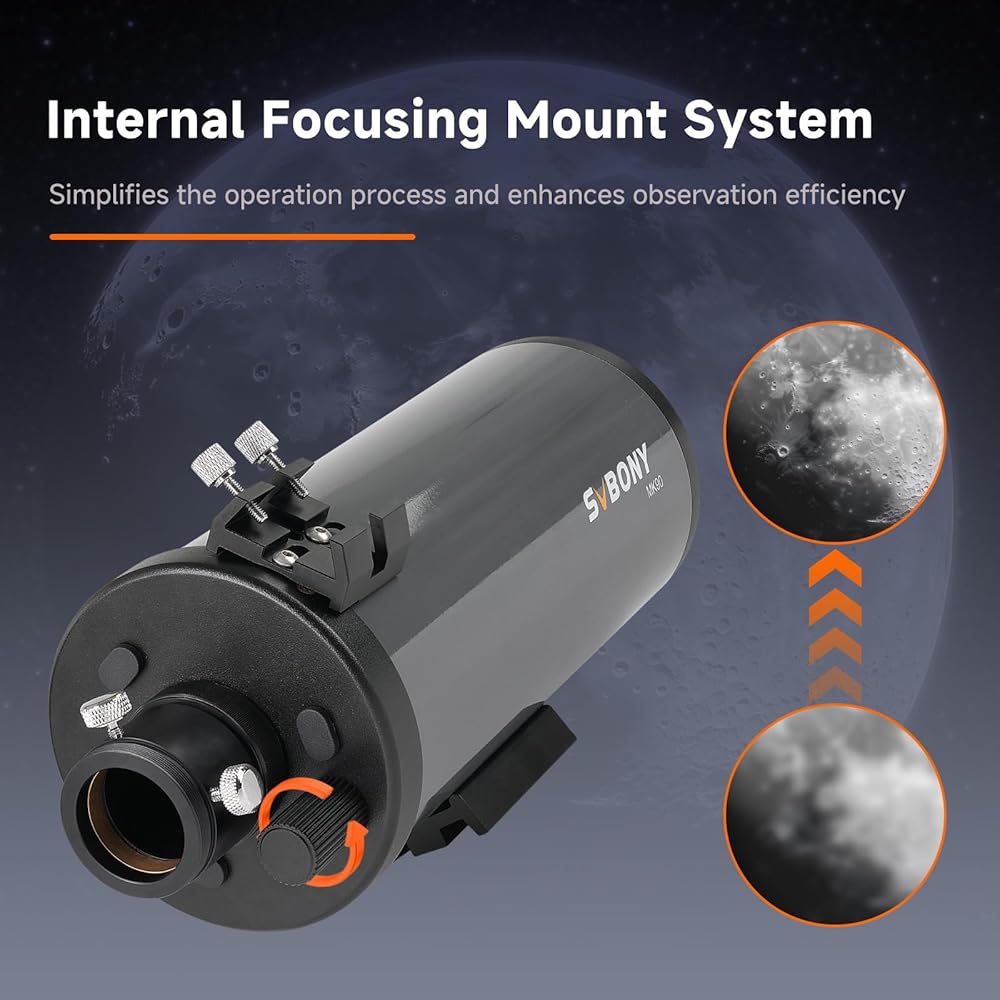
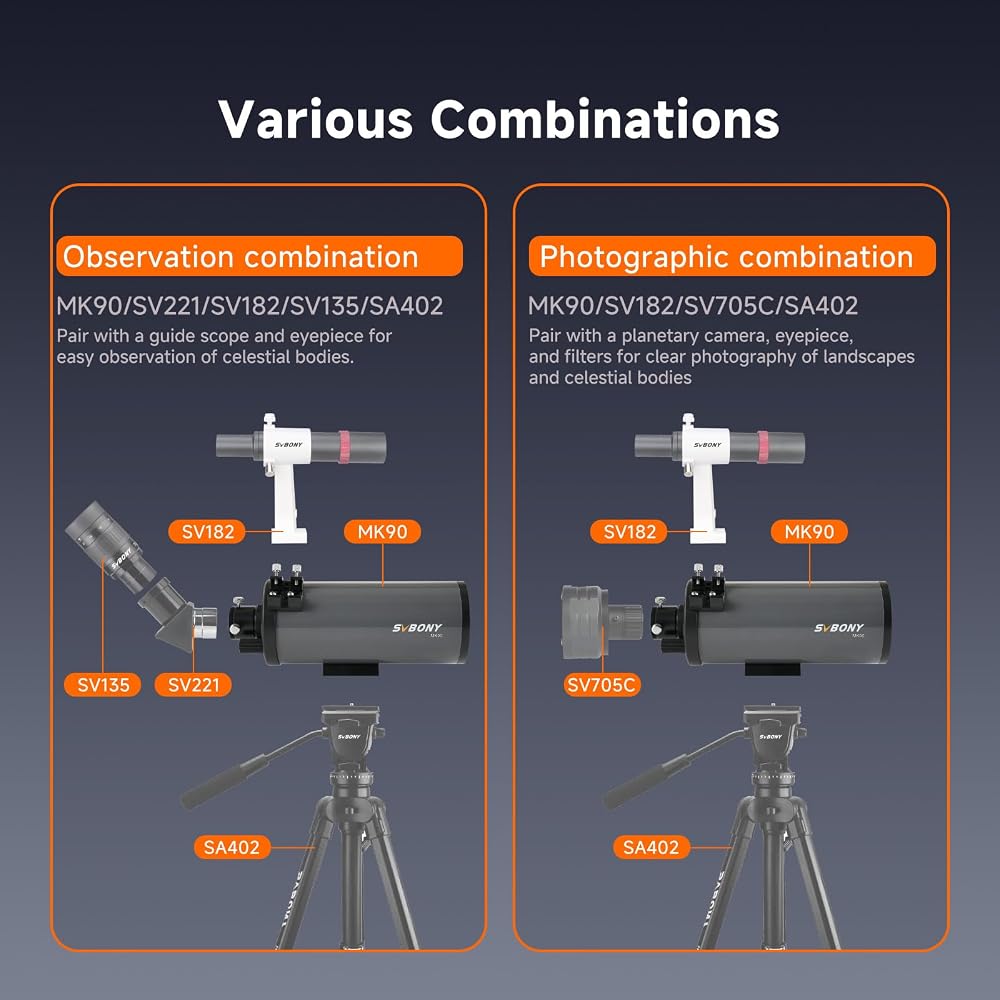
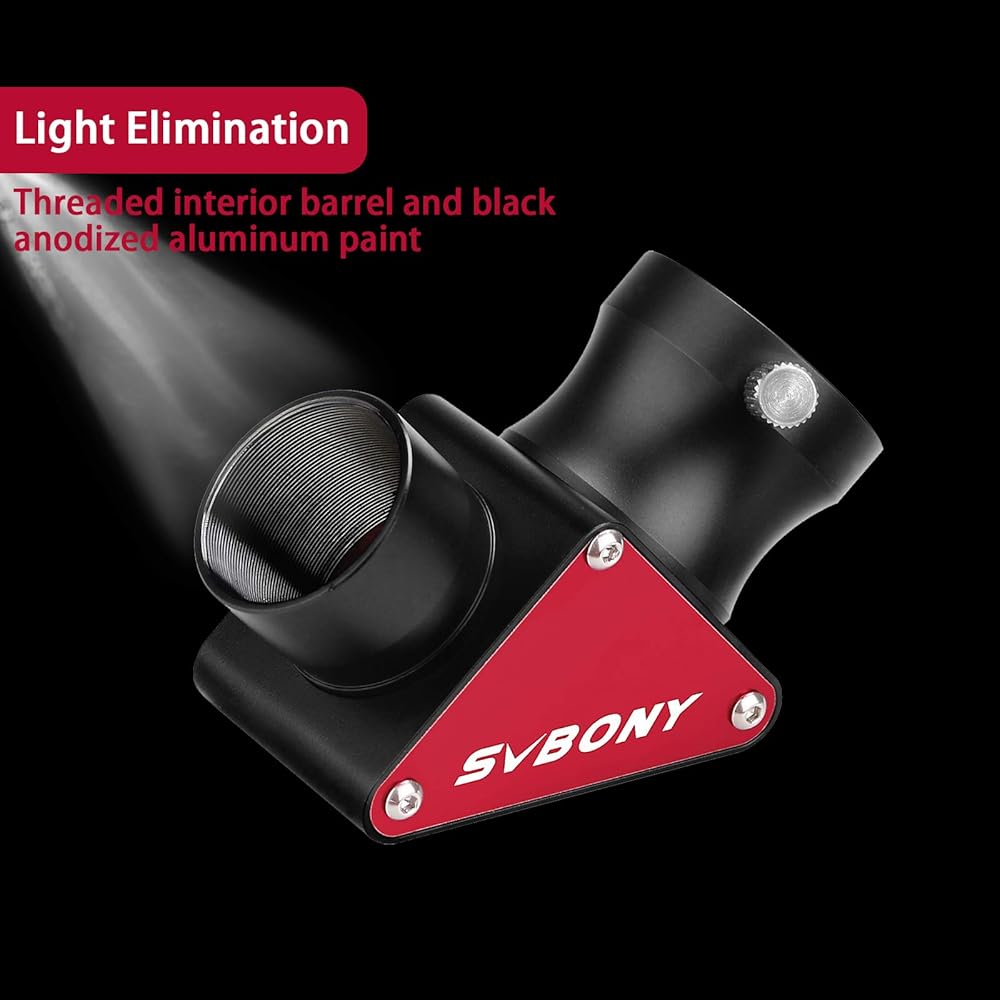
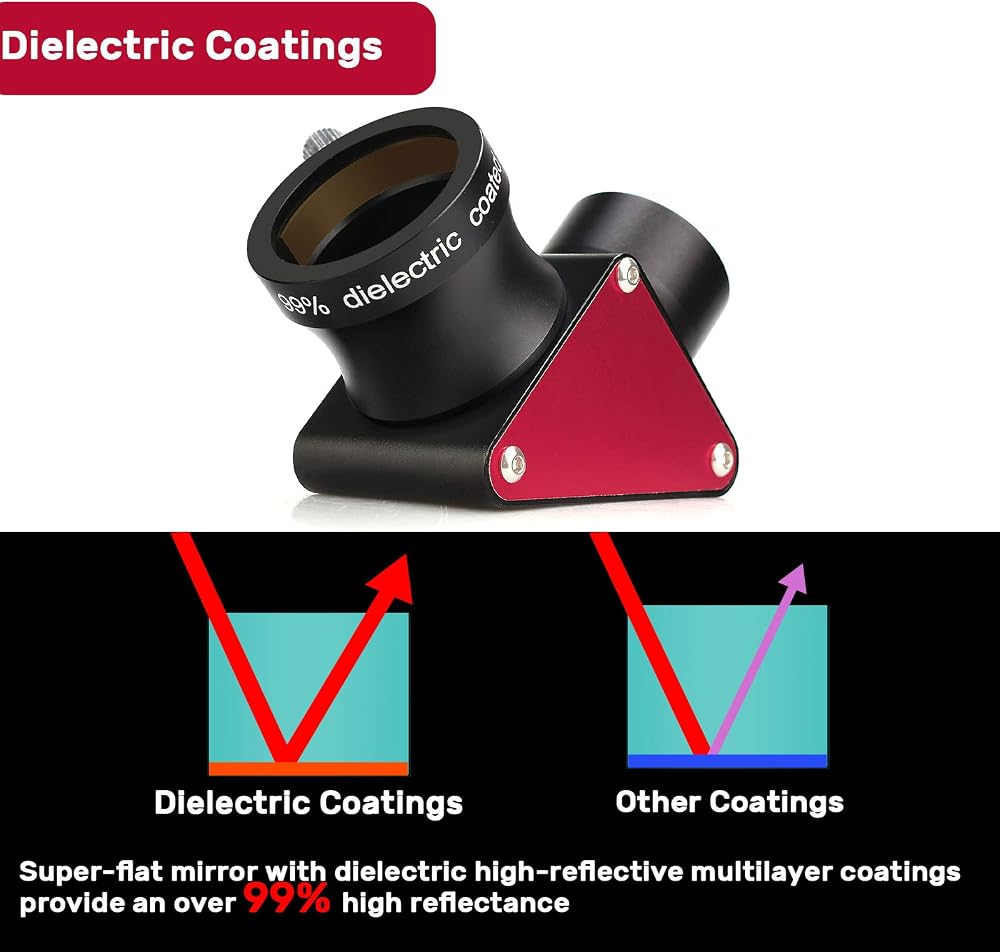
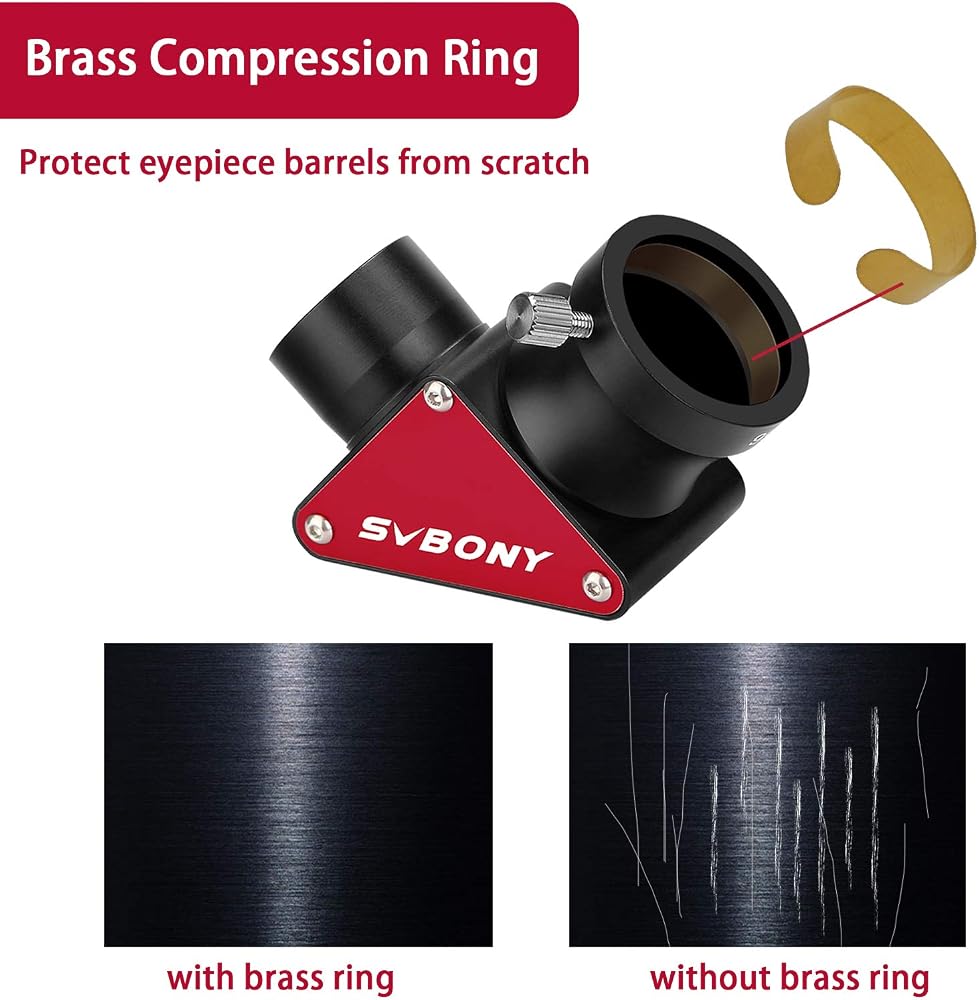
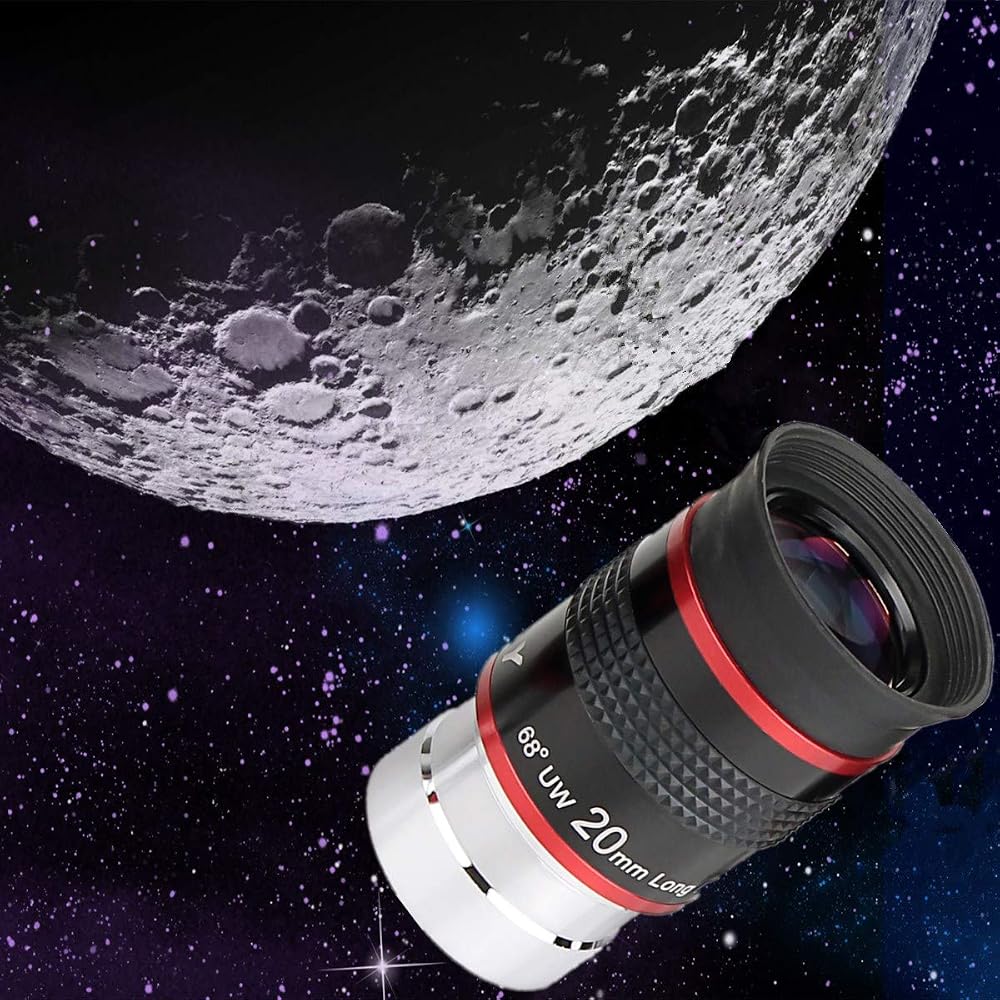
The SVBONY MK90 features a convex meniscus lens instead of a traditional Schmidt corrector plate, enhancing contrast and eliminating the need for periodic collimation, instant readiness for stargazing; each astronomical photography telescope undergoes precise optical axis alignment before leaving the factory; 3 screws for fixation; 3 pairs of calibration screws; enjoy immediately easy to use. SVBONY SV188P Dielectric Mirror Star Diagonal, 90 Degree Mirror Diagonal, 99% Reflectivity Dielectric Coatings with Brass Compression Rings. Dielectric coatings; super flat mirror with dielectric coatings to reduce reflected light loss; provide an over 99% reflective surface; good for astronomical viewing. This 1.25-inch eyepiece is fully multi-coated for maximum contrast and resolution; black anodized aluminum housings; internally blackened eyepiece to eliminate light scattering and contrast. 68 degree field of view; provides a wide field of view; 66° wide-angle eyepiece is especially useful for locating celestial objects; appreciating star fields; and observing larger deep-sky targets like nebulae and star clusters.
 -8%
SVBONY SV192 Dew Heater Strip 480 mm Lens Heater Warmer for Telescope DSLR Camera Lens Outer Diameter Below 152mm
SAR 125
-8%
SVBONY SV192 Dew Heater Strip 480 mm Lens Heater Warmer for Telescope DSLR Camera Lens Outer Diameter Below 152mm
SAR 125
 -25%
SVBONY Red Laser Collimator with 2 inch Adapter Bundle with 10mm Telescope Eyepiece Wide Angle 62 Degree Aspheric Eyepiece for Astronomic Telescopes
SAR 157
-25%
SVBONY Red Laser Collimator with 2 inch Adapter Bundle with 10mm Telescope Eyepiece Wide Angle 62 Degree Aspheric Eyepiece for Astronomic Telescopes
SAR 157
 -26%
SVBONY Barlow Lens 5X, Bundle with SVBONY Moon Filter 1.25 inches Planetary Filter and SVBONY Universal Cell Phone Adapter Mount
SAR 190
-26%
SVBONY Barlow Lens 5X, Bundle with SVBONY Moon Filter 1.25 inches Planetary Filter and SVBONY Universal Cell Phone Adapter Mount
SAR 190
 -20%
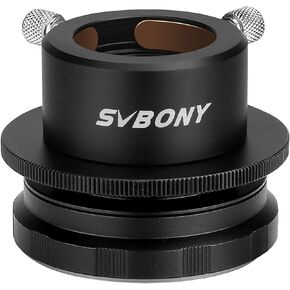
SVBONY SV149 Camera Lens Adapter, for Nikon AF Cameras to 1.25 inch Eyepiece M42 CCD Adapter, for Photography Guiding
SAR 109
-20%
SVBONY SV149 Camera Lens Adapter, for Nikon AF Cameras to 1.25 inch Eyepiece M42 CCD Adapter, for Photography Guiding
SAR 109