- Shopping, made easy.
- /
- Get the app!
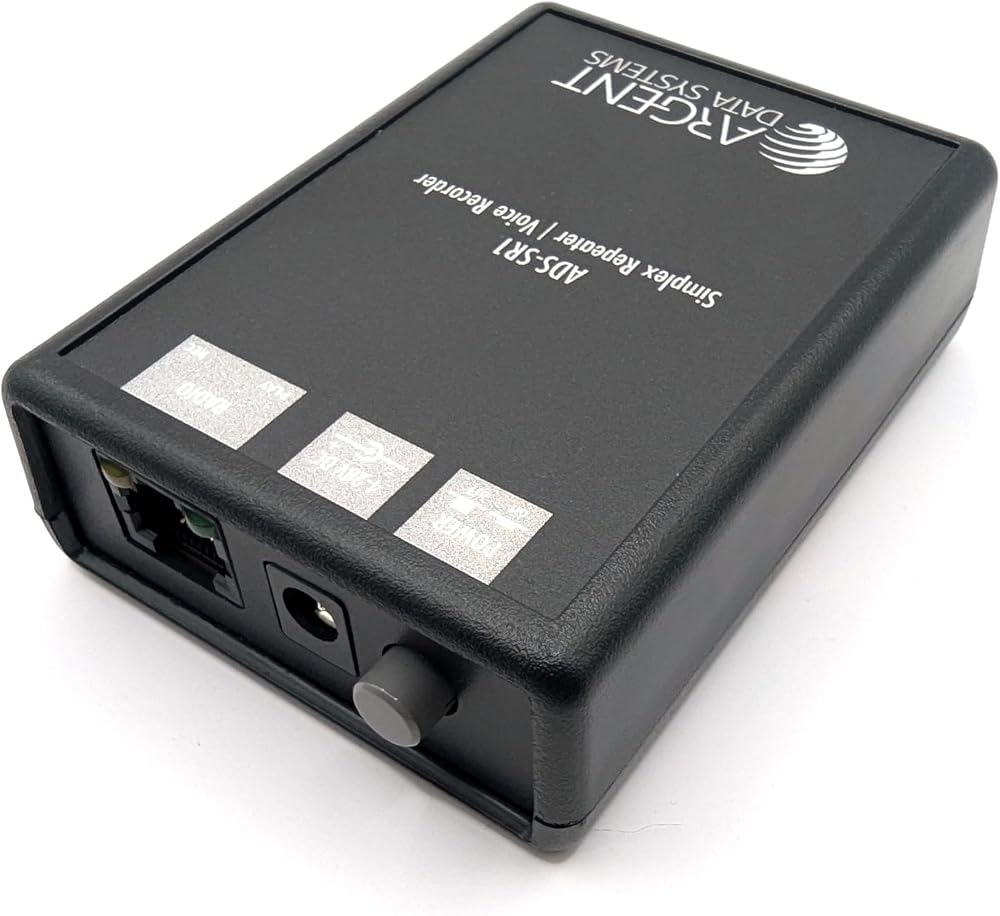
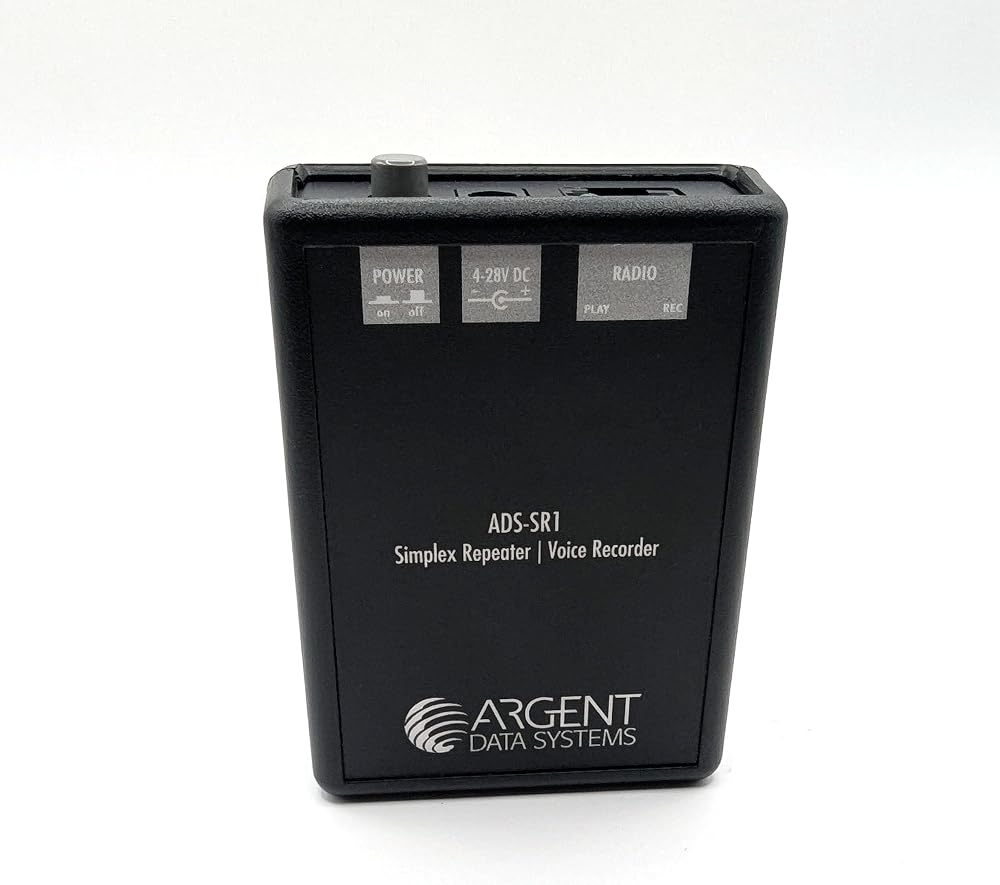
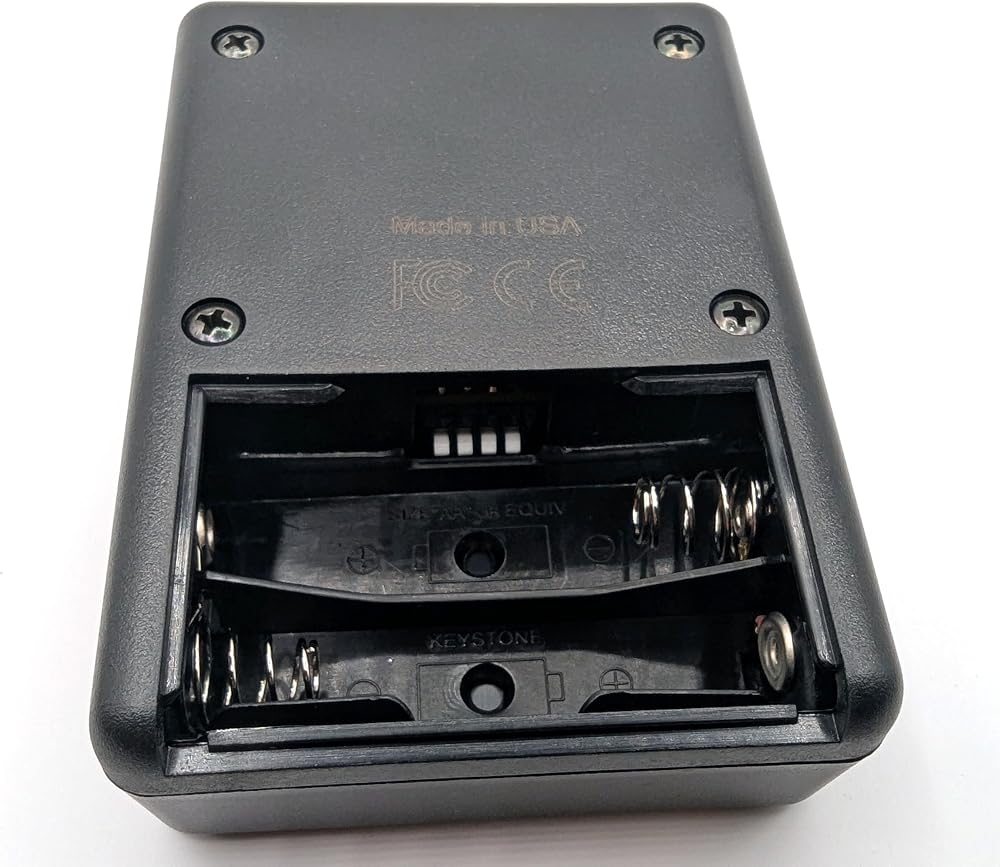
The ADS-SR1 is an advanced multi-function simplex repeater controller that works with virtually any handheld, base, or mobile radio. It features exceptional voice recording quality and higher capacity than any comparable device on the market.
A simplex repeater records incoming transmissions and retransmits them on the same frequency. This has the effect of doubling the time required to transmit a message, but while a traditional repeater typically costs thousands of dollars and might be semi-portable at best, a simplex repeater can be set up inexpensively with a single handheld radio and operated from batteries. This makes it perfect for disaster response, home or campground use, and any place where radio range needs to be extended but the cost and complexity of a traditional repeater can't be justified. Additionally, the unique ‘say again' repeat-on-demand feature of the ADS-SR1 allows it to be operated in silent mode, repeating transmissions only when requested. This can be used to repeat a missed transmission or to check for missed calls, even hours or days after the last transmission was heard by the repeater.
Up to 10 announcements can be stored on the device. Each message can be set to transmit at a specified interval, and a time offset setting allows beacons to be staggered or rotated. Intervals can be from a few seconds up to twelve hours. One message can also be configured to play in response to an incoming transmission.
The ADS-SR1's voice mail function operates like a telephone answering machine, allowing users to record messages for later retrieval. Up to 20 incoming messages can be recorded, and a separate voice mail access code lets multiple users retrieve messages without having to share the repeater's regular security code.
The ADS-SR1 is not a radio and does not receive or transmit RF signals directly. It connects to your radio via the speaker and microphone connections. Because the unit operates on audio signals, it can be used with any radio that has suitable speaker and microphone or accessory connections, regardless of frequency band or modulation.
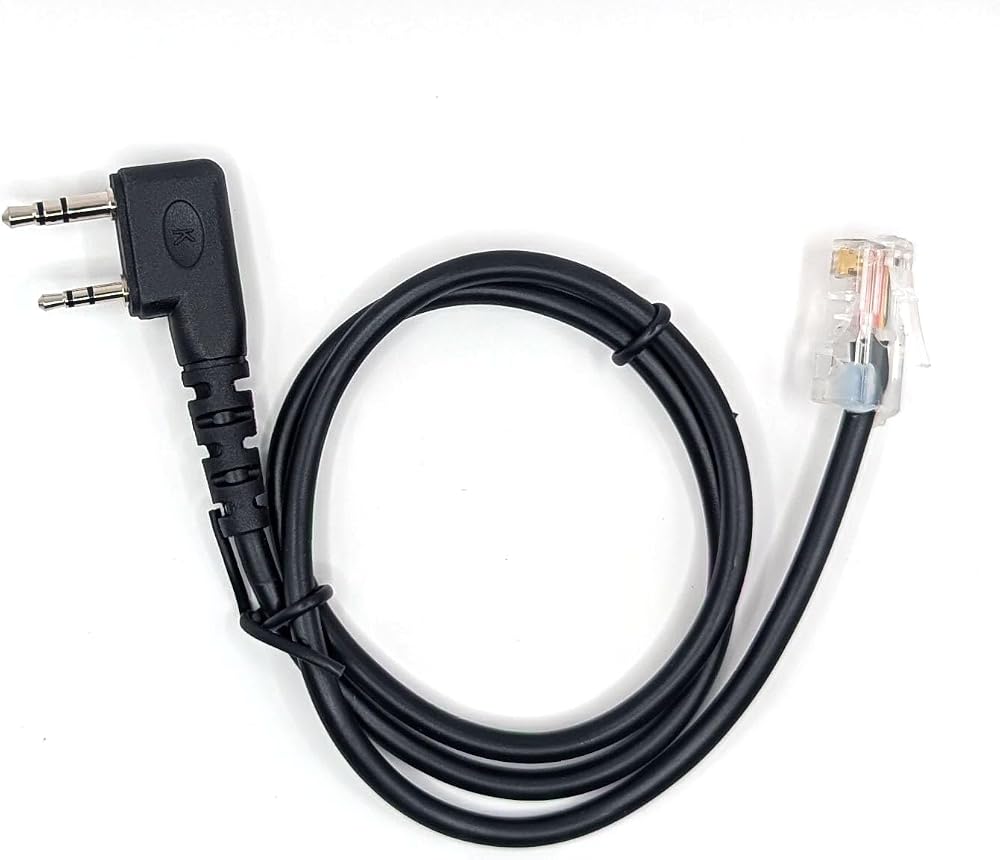
A "K" style cable is included to connect the ADS-SR1 to many popular handheld radios using a Kenwood-compatible 2-prong plug. Compatible radios include the Kenwood TH-F6A, TH-K2AT, Ba*feng UV-5R, UV-B5, UV-82, Wouxun KG-UV3D, TYT MD-380, Anytone AT-D878-UV, and many others. Other cables are available for purchase separately.
The ADS-SR1 can transmit periodic identification information using Morse code or a stored voice message.
A common alternative application for the unit is to link a radio network to a PA system. By connecting the unit's audio output to an input on the PA system, a user with a radio can activate the unit remotely and make an announcement without risking feedback.
 NETGEAR WiFi Mesh Range Extender EX7500 - Coverage up to 2300 sq.ft. and 45 devices with AC2200 Tri-Band Wireless Signal Booster & Repeater (up to 2200Mbps speed), plus Mesh Smart Roaming
SAR 287
NETGEAR WiFi Mesh Range Extender EX7500 - Coverage up to 2300 sq.ft. and 45 devices with AC2200 Tri-Band Wireless Signal Booster & Repeater (up to 2200Mbps speed), plus Mesh Smart Roaming
SAR 287
 -64%
Linksys AC750 Boost Dual-Band Wi-Fi Gigabit Range Extender/Repeater RE6300 (Renewed)
SAR 84
-64%
Linksys AC750 Boost Dual-Band Wi-Fi Gigabit Range Extender/Repeater RE6300 (Renewed)
SAR 84
 -66%
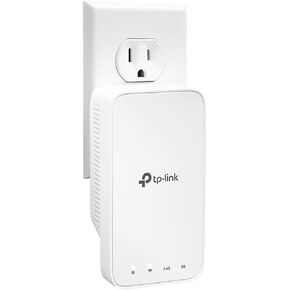
TP-Link | AC1200 WiFi Range Extender | Up to 1200Mbps | WiFi Extender, Repeater, WiFi Signal Booster | One Mesh | Easy Set-Up | Compact Designed Internet Booster (RE300) (Renewed)
SAR 89
-66%
TP-Link | AC1200 WiFi Range Extender | Up to 1200Mbps | WiFi Extender, Repeater, WiFi Signal Booster | One Mesh | Easy Set-Up | Compact Designed Internet Booster (RE300) (Renewed)
SAR 89
 Somfy RTS Repeater - Extend Signal Reach for RTS Blinds and Shades, Ideal for Large Spaces, Compatible with Situo, Telis, Tahoma & myLink Controls - Easy Setup, 1810791
SAR 1,165
Somfy RTS Repeater - Extend Signal Reach for RTS Blinds and Shades, Ideal for Large Spaces, Compatible with Situo, Telis, Tahoma & myLink Controls - Easy Setup, 1810791
SAR 1,165