- Shopping, made easy.
- /
- Get the app!
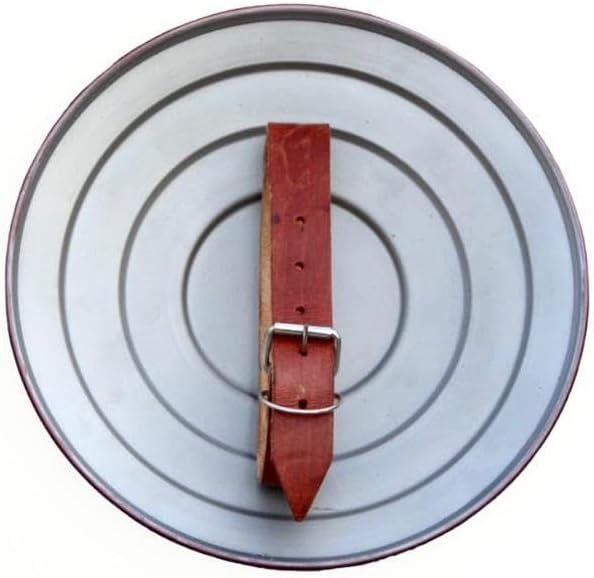
During the Early Medieval Period, the 'Hoplon' was the most widely utilized shield, crafted by the Greeks. This shield was circular, constructed from wood and bronze. It evolved from earlier designs that were entirely made of bronze. The purpose of medieval shields was to safeguard knights or soldiers from direct attacks by enemy weapons. In the Middle Ages, shields also served as bludgeoning tools. Knights practiced using shields as actual weapons at the Pell. These shields were typically oval or round, fashioned from lightweight yet durable wood and covered in leather. The edges were reinforced with metal fittings. Each shield featured a central hole that was fitted with a hand grip on the inside and a shield boss on the outside. Common weapons included the spear, sword, axe, and bow and arrow. While a shield is fundamentally a piece of armor rather than a weapon, this is why heavily armored knights seldom carried shields; similarly, hoplites did not wear armor on their torsos and upper legs, as the shield provided sufficient coverage for almost their entire body.
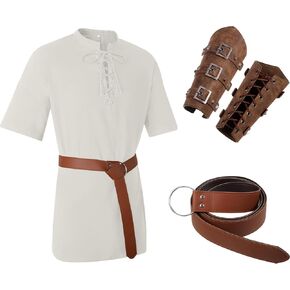 Jeyiour 3 Pcs Renaissance Costume Men Medieval Viking Tunic Knight Costume Faux Leather Arm Guards and Belt Viking Shirts
SAR 157
Jeyiour 3 Pcs Renaissance Costume Men Medieval Viking Tunic Knight Costume Faux Leather Arm Guards and Belt Viking Shirts
SAR 157
 One Casa Inflatable Costume Full Body Shark Air Blow up Funny Party Halloween Costume for Adult
SAR 240
One Casa Inflatable Costume Full Body Shark Air Blow up Funny Party Halloween Costume for Adult
SAR 240
 Missuhair Long Wavy Red Wig for Women Halloween Costume 32 Inches Red Hair Wig for Girls Cosplay Party Wig
SAR 131
Missuhair Long Wavy Red Wig for Women Halloween Costume 32 Inches Red Hair Wig for Girls Cosplay Party Wig
SAR 131
 Ztl Cute Cat Fox Long Fur Ears Hair Clip Anime Cosplay Party Costume Headwear
SAR 47
Ztl Cute Cat Fox Long Fur Ears Hair Clip Anime Cosplay Party Costume Headwear
SAR 47