- Shopping, made easy.
- /
- Get the app!
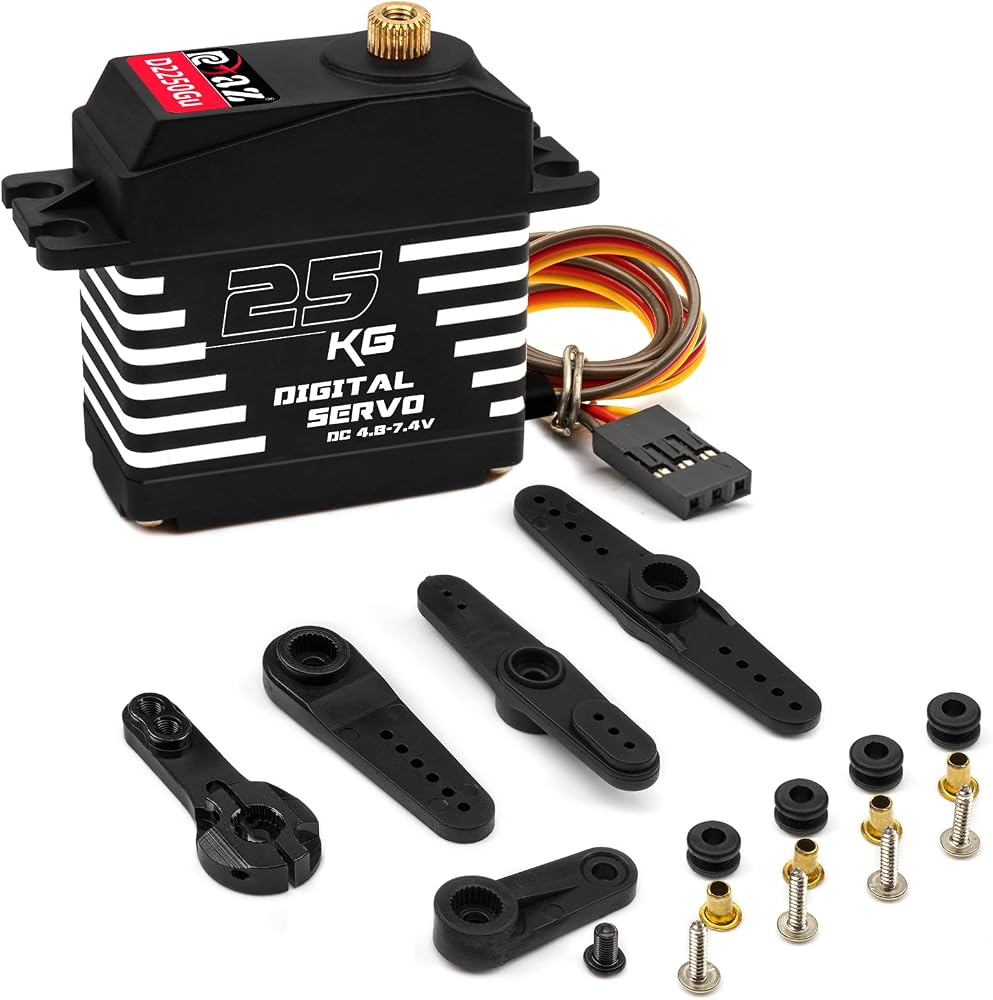
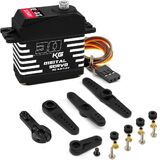
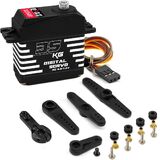
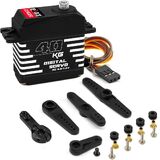
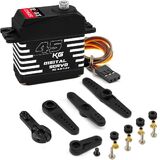
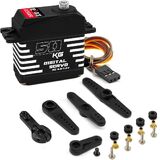
Two things separate the heavy end of this family from the mid tiers: how much the unit can pull, and whether that pull still arrives on time. Plenty of servos sell the first number and quietly lose the second. Torque. 45kg at the end of a steering linkage or a robot arm is sized for builds that carry a load rather than swing free: a heavy-duty off-road chassis, a joint holding a tool, a mechanism that stays loaded through the whole run. Response. The motor is coreless. The rotor has far less mass to accelerate than an iron-core armature, so a position change starts and stops in less time at the same voltage and without the cogging feel at small inputs. Pairing 45kg with a coreless motor is how the extra torque avoids turning into a slower answer. Case. The center section is a single machined aluminum piece. It stiffens the structure so the gear train is not moving inside a flexing shell, and it spreads heat during a sustained high-load run. Heat is what quietly turns a strong servo into a vague one after twenty minutes. Mounting. The 54.2 x 20 x 46 pattern is kept, so this drops into chassis and robot frames already built around a standard-size servo. The 25T spline takes the horns sold for this case, and the JR lead seats in the 3-pin receiver channel. Power. Input runs 4.8 to 8.4V, the widest in this family, so one unit covers a 6V receiver pack and an 8.4V high-voltage build. Confirm what your BEC outputs before you connect. Where it fits. Heavy-duty off-road builds, large robot joints and mechanisms that keep a load on the linkage for the whole run. Choosing a tier. A 1/8 basher wants 30KG with the CNC case at lower cost. A 1/5 gasser that prefers an iron-core feel wants 35KG. This tier is for builds that want both big torque and a fast answer. Install note: centre the horn before you bolt it on, then set endpoint travel in your radio so the linkage never drives past its stop.
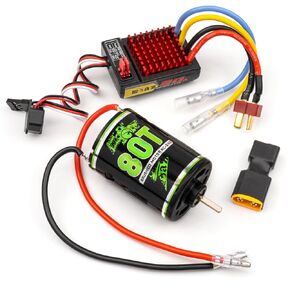 Brushed Power Combo 540 80T 3.175MM Motor 60/320A ESC BEC 6V/2A Splash-Proof for 1/10 RC Crawler Car Axial SCX10 AXI03007 90046 TRX4 D90 Monster Truck
SAR 167
 RC Motor 550 65T Brushed Motor Splash-Proof for 1/10 Traxxas Trx4 Slash ARRMA Granite Senton Axial Redcat HSP HPI Crawler Off-Road,Racing,Drifting,Highway Slow High Speed Car (65T)
SAR 100
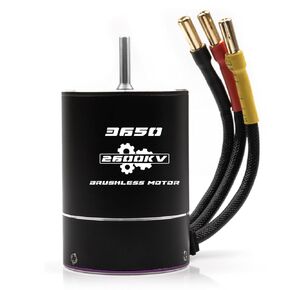 550 3650 Brushless Motor 3.175mm Shaft 1/10 2600KV Waterproof for 1:10 Scale RC Climb Slow Linear Car TRX4 SCX10 (2600KV)
SAR 136
 -5%
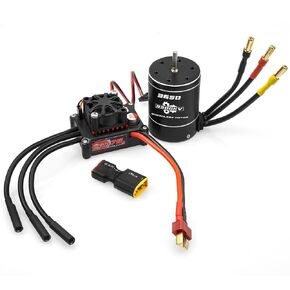
2-3S Splash-Proof Brushless Power Combo 75/480A BEC 6V/2A ESC 3650 3.175mm Shaft 3300KV for Traxxas Maxx Slash Rustler 4X4 VXL ARRMA Senton Granite 3S BLX Losi, High-Speed Car(3300, RPM)
SAR 292

 Saudi Arabia