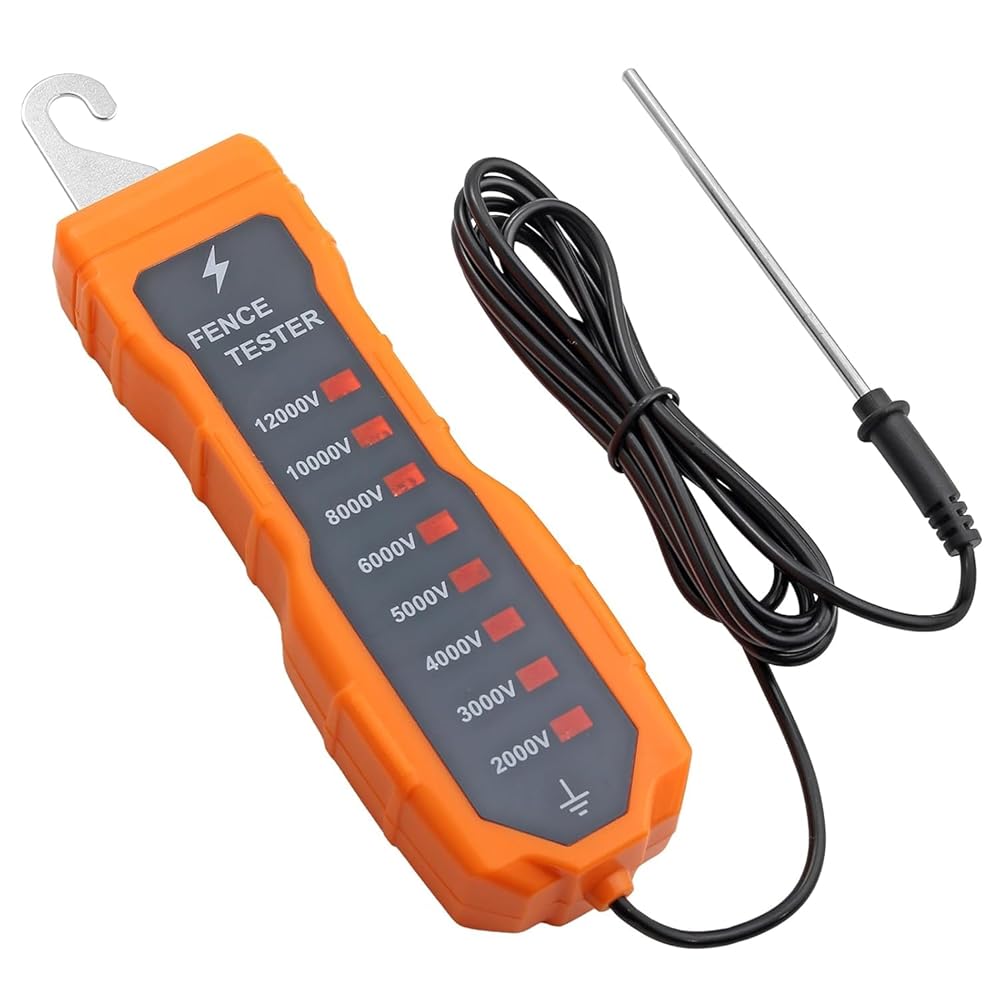
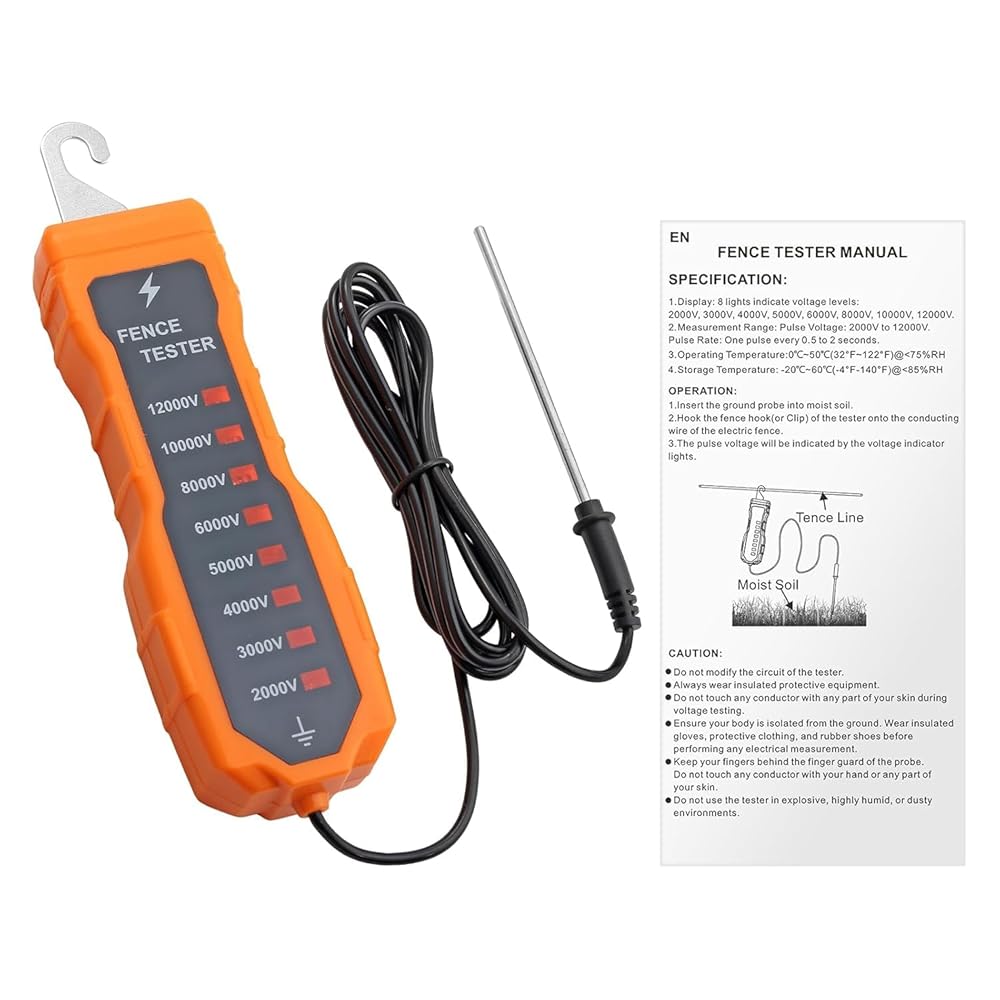
Neoteck 2000-12000V Electric Fence Voltage Tester Fence Fault Finder with 8 Neon Indicator Lights Portable Fence Tester Suitable for Troubleshoot Faults of Ranch and Farm Fences
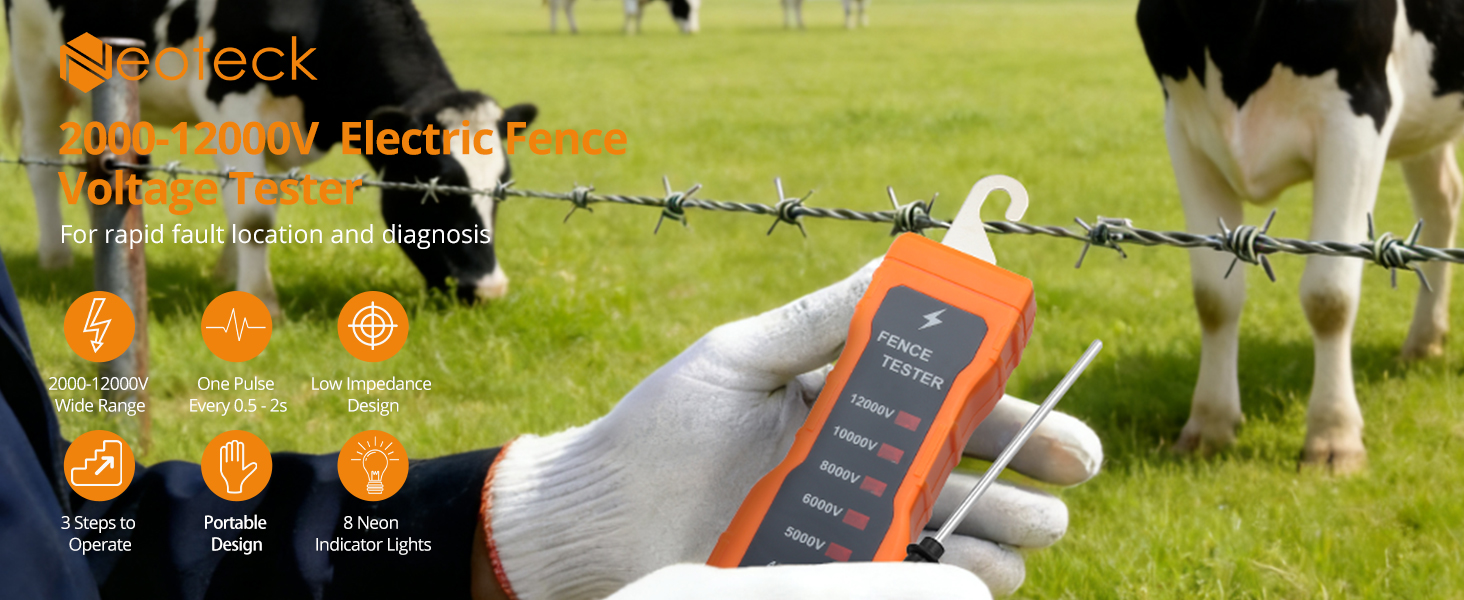
12KV Precision Electric Fence Voltage Tester:Neoteck fence tester with 2000V to 12000V measurement range,every 0.5-2s pulse frequency, accurately determine its voltage level,promptly detect voltage attenuation caused by vegetation short circuits or aging of the lines. The fence tester features a low-impedance design, enabling precise voltage level identification, which facilitates daily maintenance and troubleshooting of fence lines
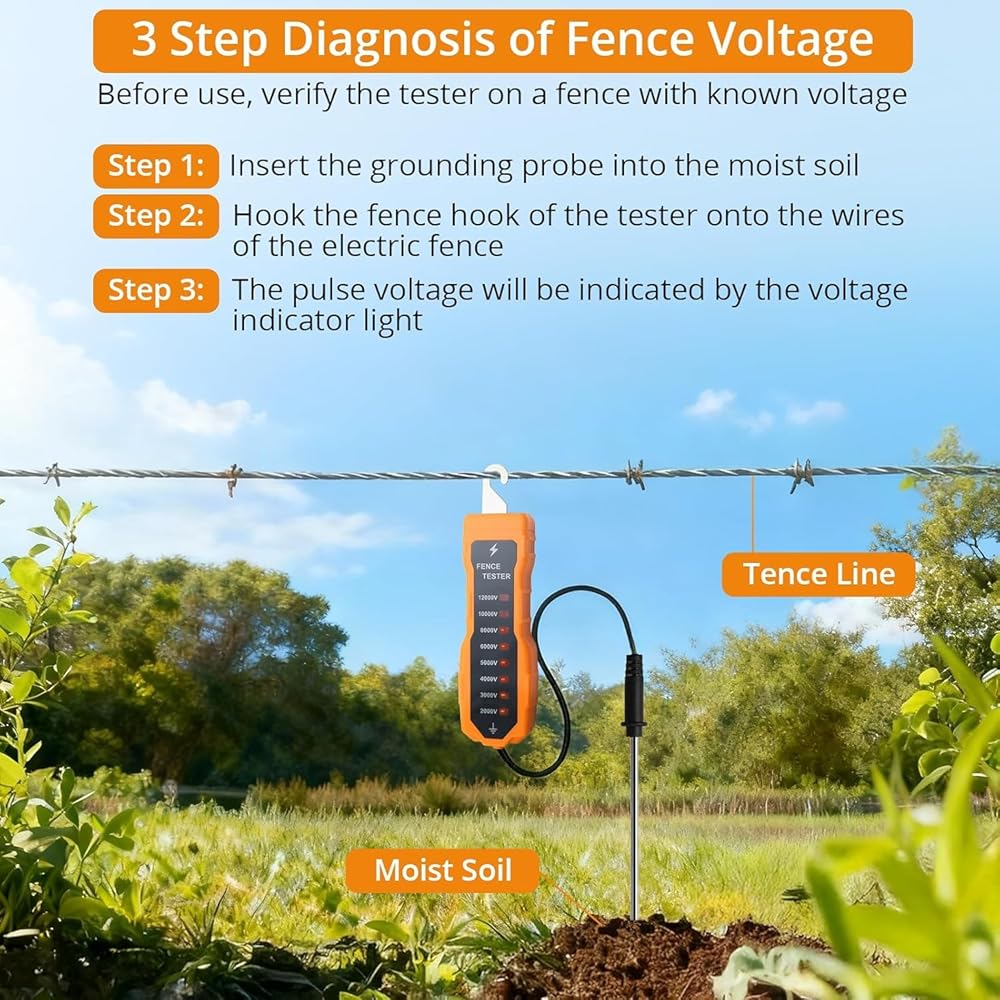
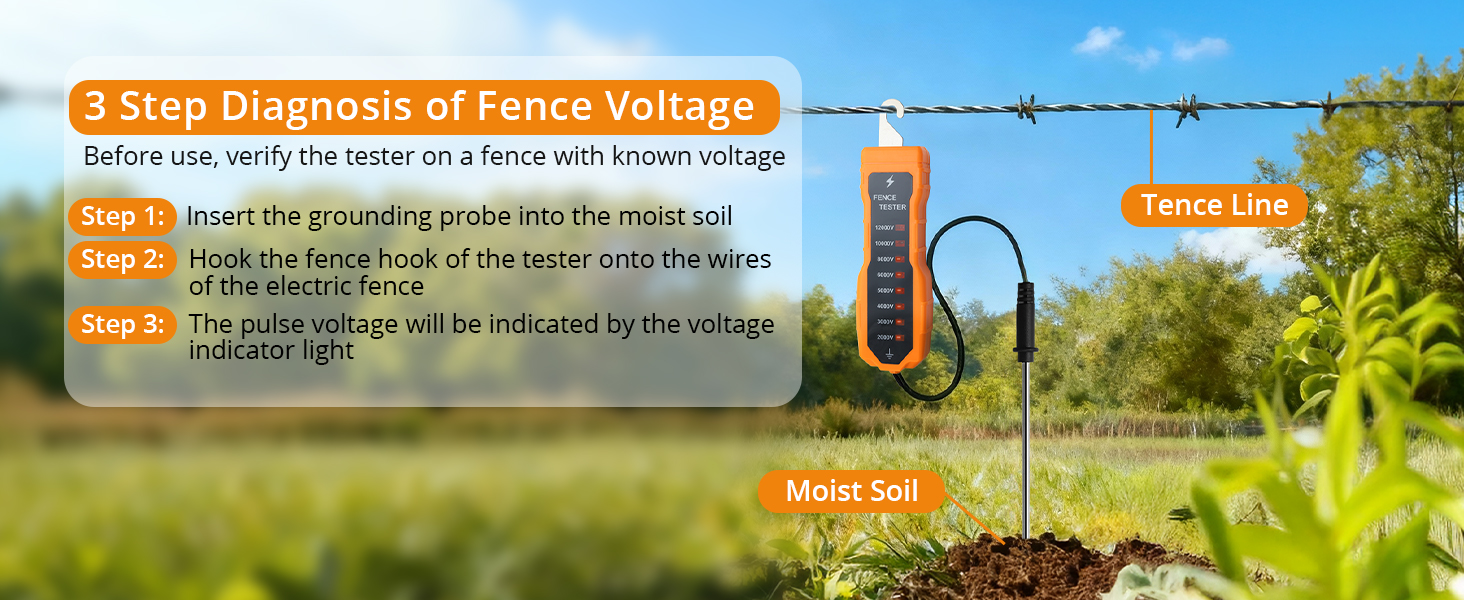
Easy To Use: To use the fence tester, simply hang the top metal ring hook on the wire or fence and insert the probe into the ground,the operation is convenient. The fence voltage checker requires an operating environment of 0°C to 50°C with 75% relative humidity, and storage conditions of -20°C to 60°C with less than 85% relative humidity.It can withstand cold climates, making daily inspections and fence voltage diagnostics fast, easy, and reliable in any season
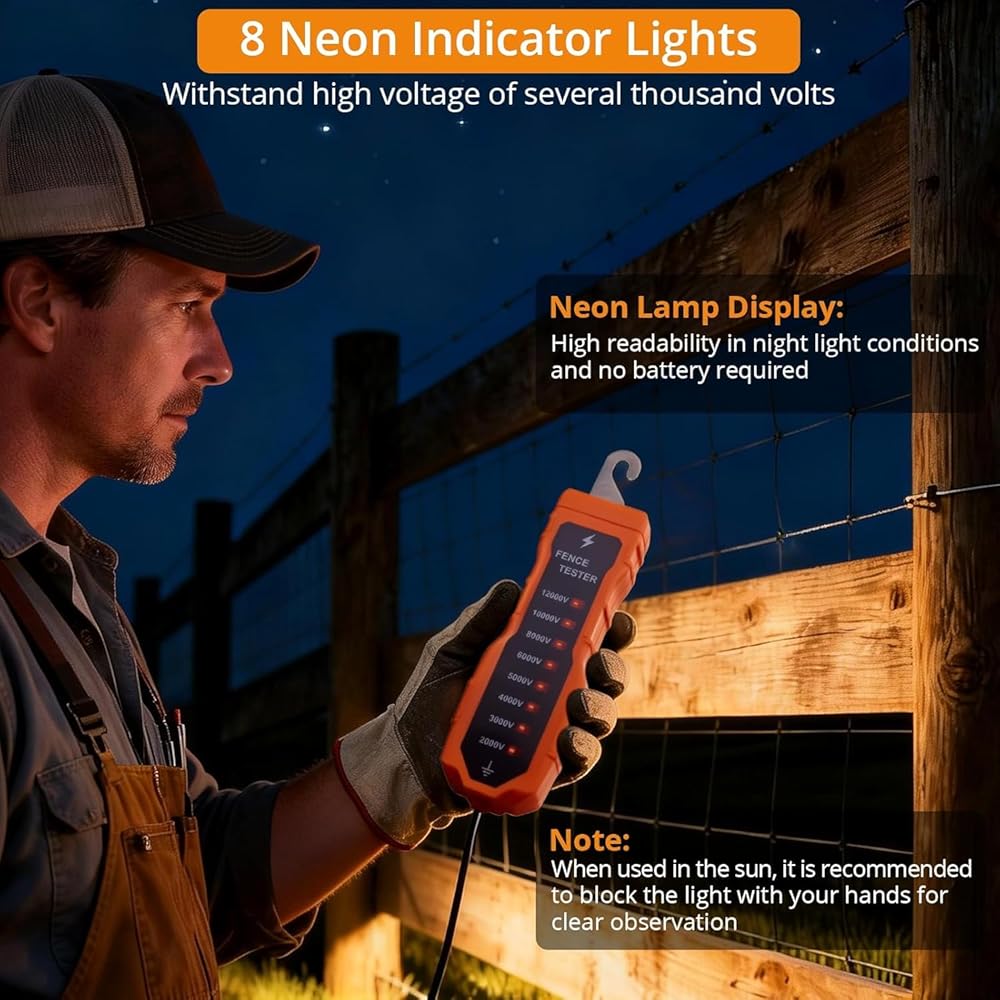
8 Neon Indicator Lights:Neoteck electric fence fault finder with 8 neon indicator lights. These lights can withstand thousands of volts and offer better readability in shaded conditions.Fence tester operates without batteries, and the neon lights have a lifespan of up to 20,000 uses, saving time and reducing the hassle of battery replacement.Please note,under bright sunlight, shading the lights with your hand is recommended for optimal visibility
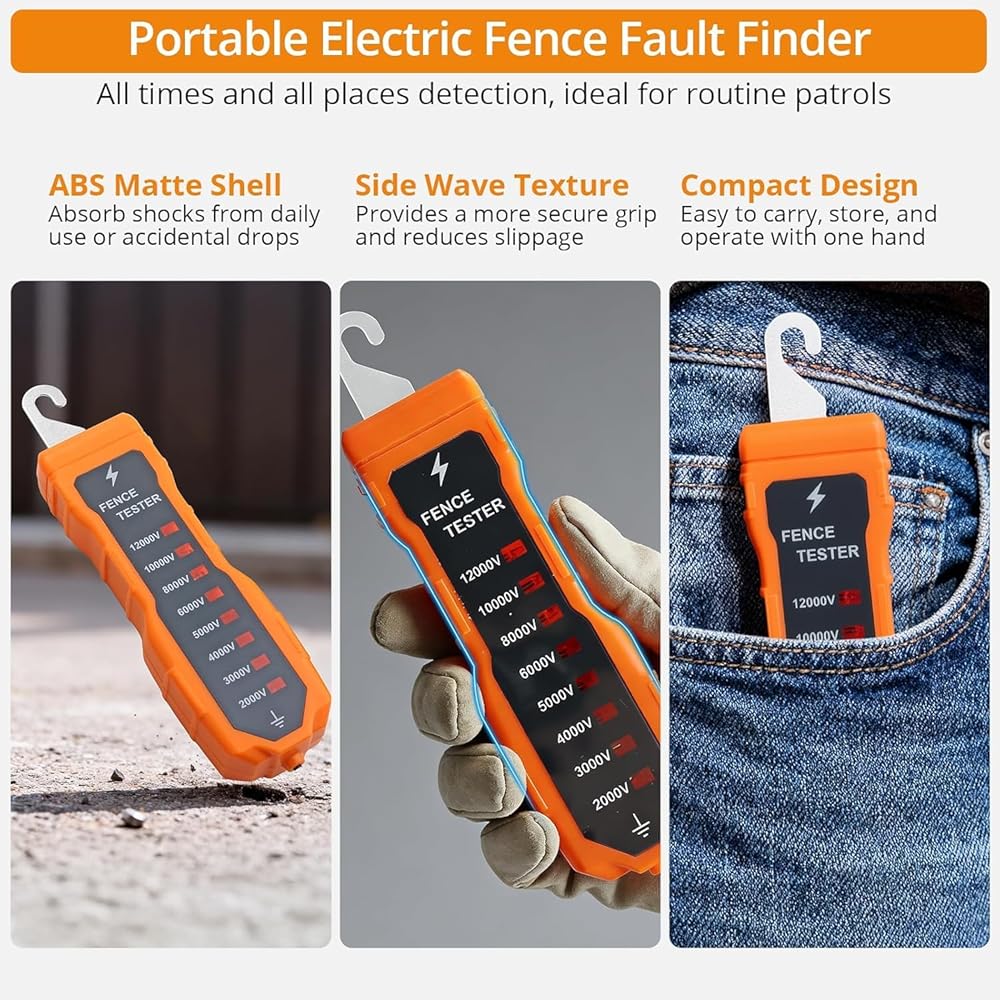
Anti-Slip and Sturdy: This fence voltage checker features a side panel with a wave-textured design and a matte ABS material casing, providing a firm, non-slip grip and reducing finger fatigue. At the same time, the fence tester is compact and can be carried in a pocket, making it convenient for on-the-go troubleshooting,ideal for daily patrols and inspections
Usage Precautions: It is recommended to verify the electric fence voltage tester's working condition using an electronic fence with a known voltage before use. In low-voltage environments, strong light exposure may make the lights difficult to observe, which is a normal phenomenon.Before conducting any electrical measurements,ensure that your body is isolated from the ground, and wear insulated gloves, protective clothing, and rubber shoes
 Neoteck 24V 12V Car Battery Tester with 1.97ft Cable, 100-2000 CCA Load Tester Automotive Alternator Tester Auto Battery Analyzer, Battery Capacity Tester for Cars Trucks Ship SUV RV
SAR 77
Neoteck 24V 12V Car Battery Tester with 1.97ft Cable, 100-2000 CCA Load Tester Automotive Alternator Tester Auto Battery Analyzer, Battery Capacity Tester for Cars Trucks Ship SUV RV
SAR 77
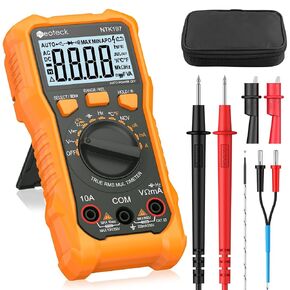 Neoteck 2000 Counts Digital Multimeter Voltmeter Tester with NCV, LCD for AC/DC Voltage&Current, Resistance, Capacitance, Live Wire, Frequency, Temperature, Duty Cycle, Continuity, Diode Measuring
SAR 105
Neoteck 2000 Counts Digital Multimeter Voltmeter Tester with NCV, LCD for AC/DC Voltage&Current, Resistance, Capacitance, Live Wire, Frequency, Temperature, Duty Cycle, Continuity, Diode Measuring
SAR 105
 Neoteck Pocket Manual Ranging Digital Multimeter with Test Leads, Backlight LCD, Volt Amp Ohm hFE (DC Amplification) Test NPN PNP Transistor Diodes Audible Continuity Tester - Orange Case
SAR 68
Neoteck Pocket Manual Ranging Digital Multimeter with Test Leads, Backlight LCD, Volt Amp Ohm hFE (DC Amplification) Test NPN PNP Transistor Diodes Audible Continuity Tester - Orange Case
SAR 68
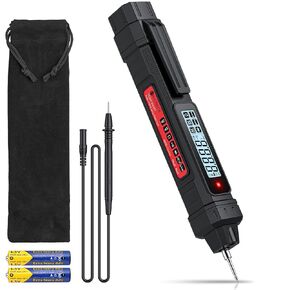 Neoteck 2 in 1 Pen Type Digital Multimeter Non-Contact Voltage Tester 6000 Counts Intelligent Multimeter with LCD Display for AC/DC Voltage Resistance Diode Continuity Capacitance Frequency
SAR 76
Neoteck 2 in 1 Pen Type Digital Multimeter Non-Contact Voltage Tester 6000 Counts Intelligent Multimeter with LCD Display for AC/DC Voltage Resistance Diode Continuity Capacitance Frequency
SAR 76