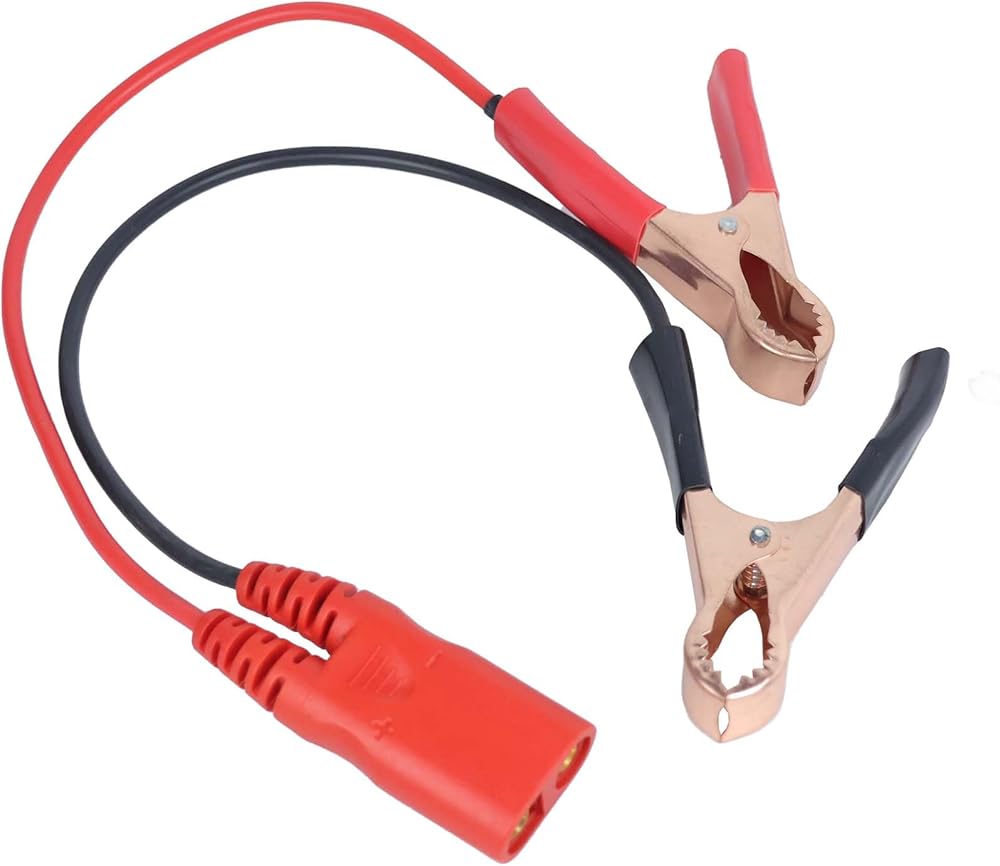
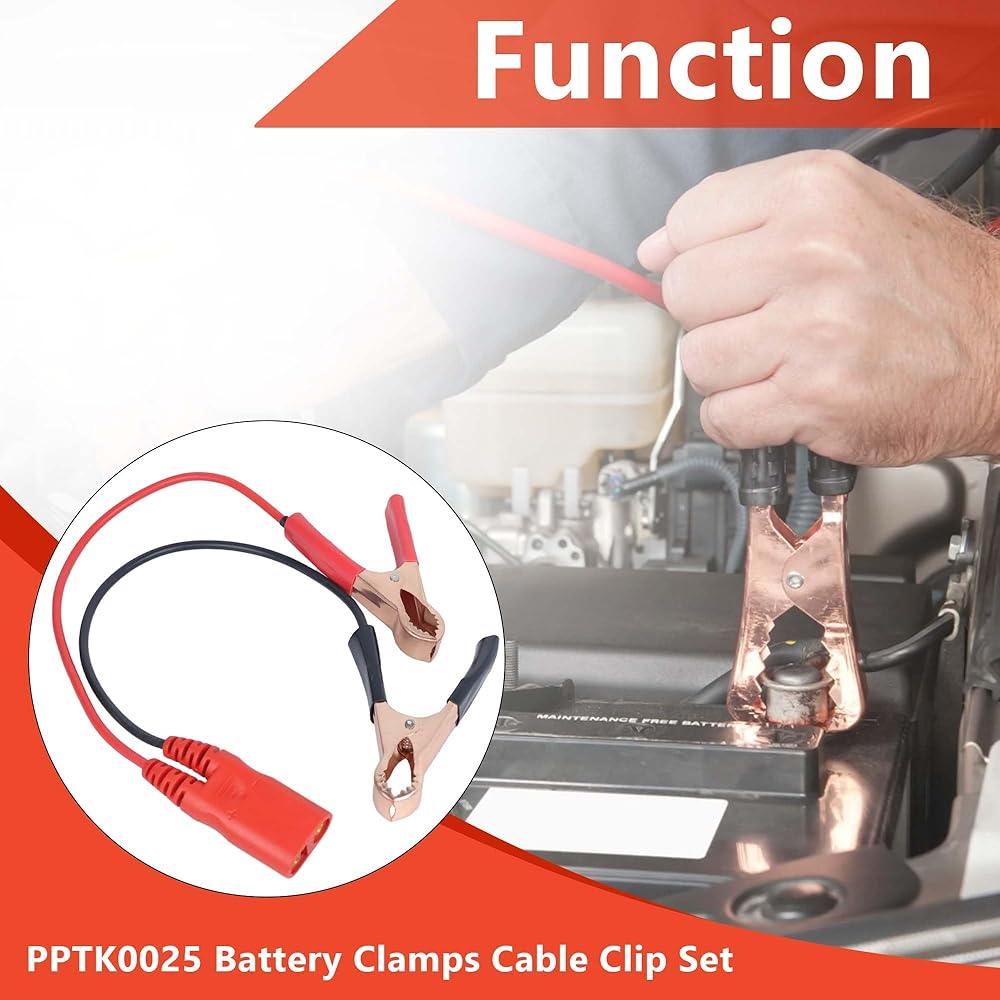
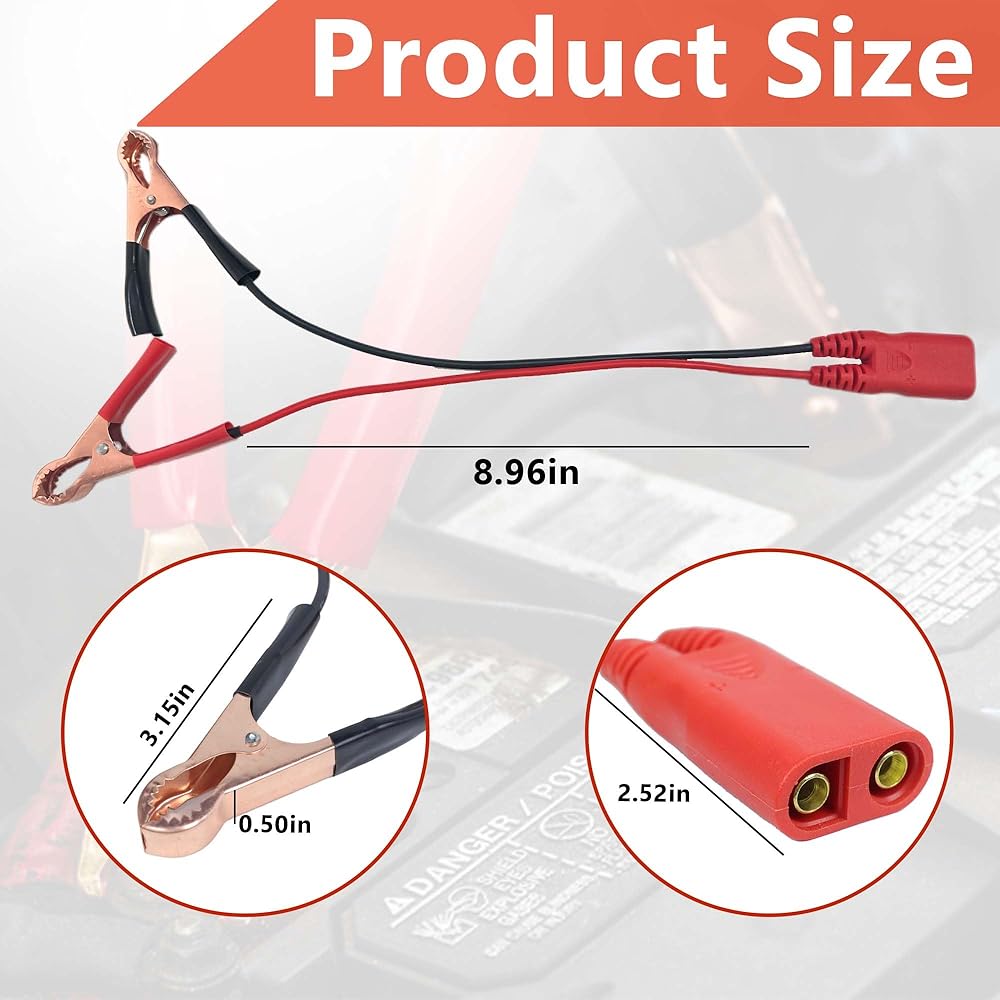
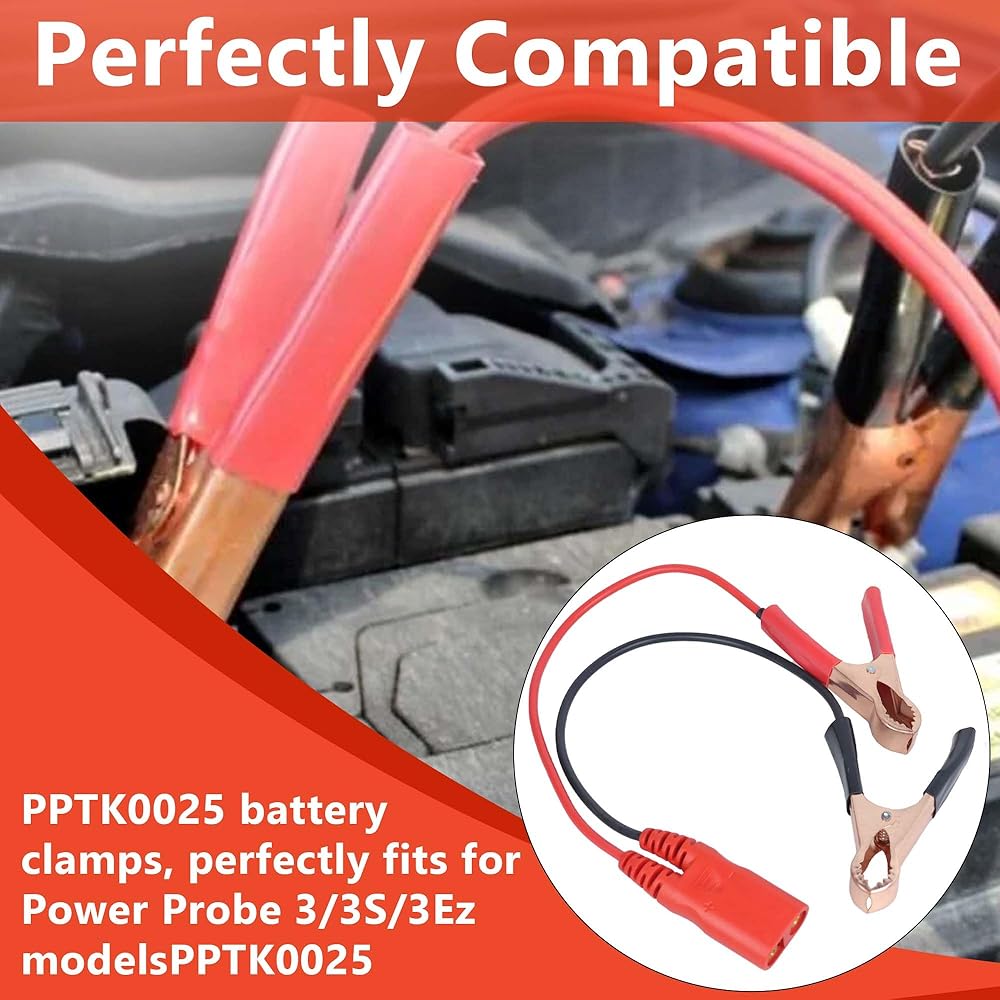
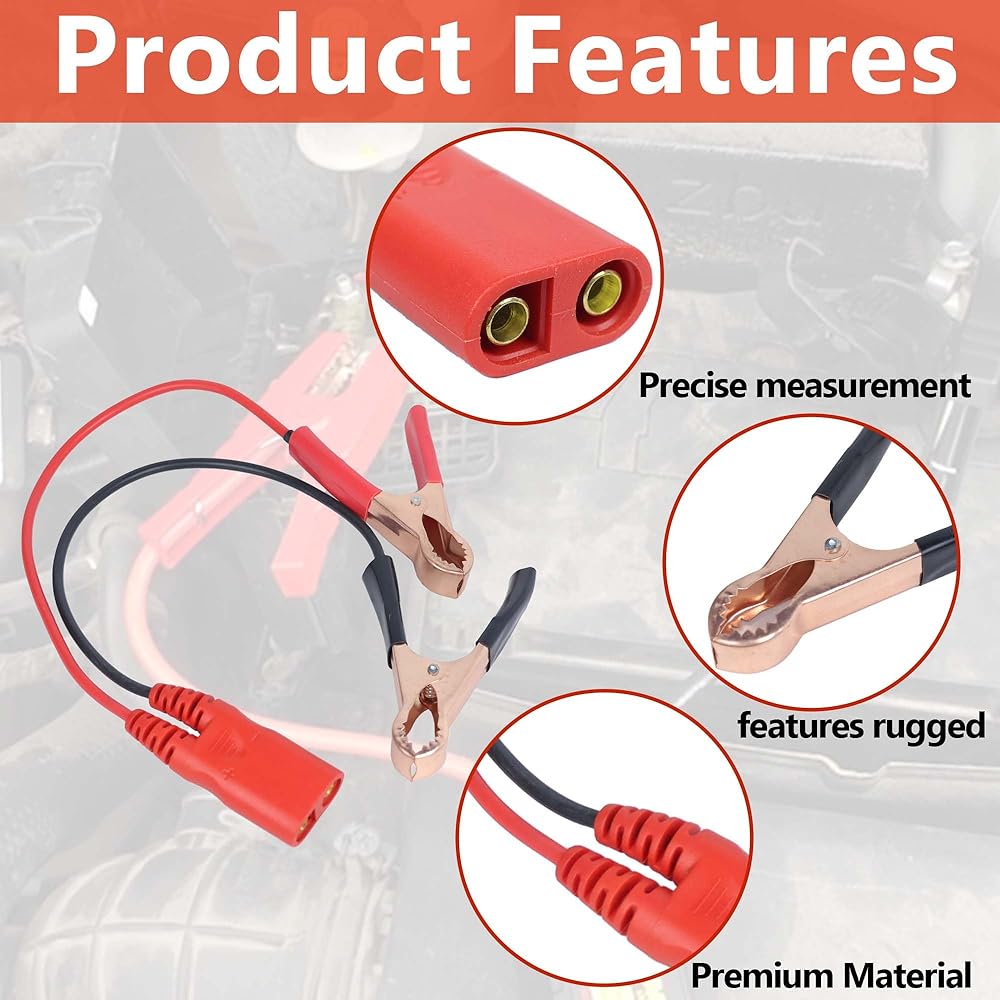
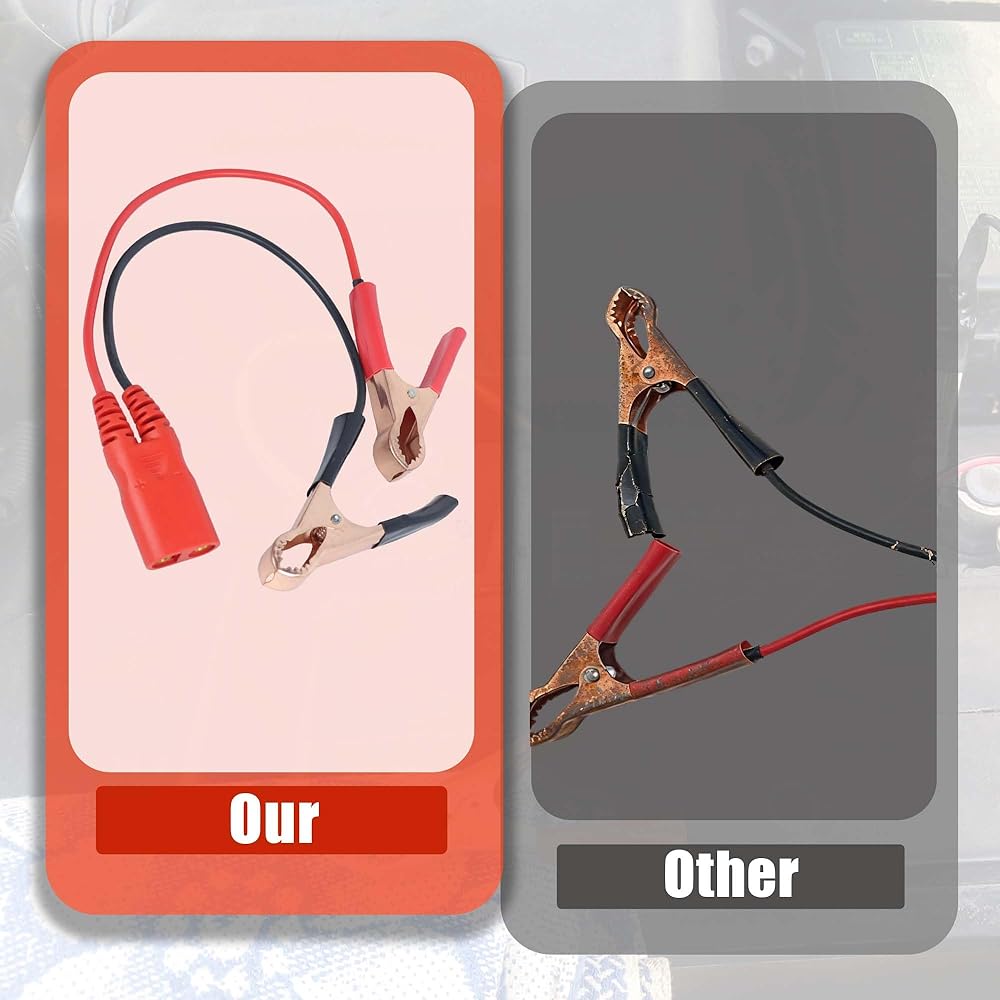
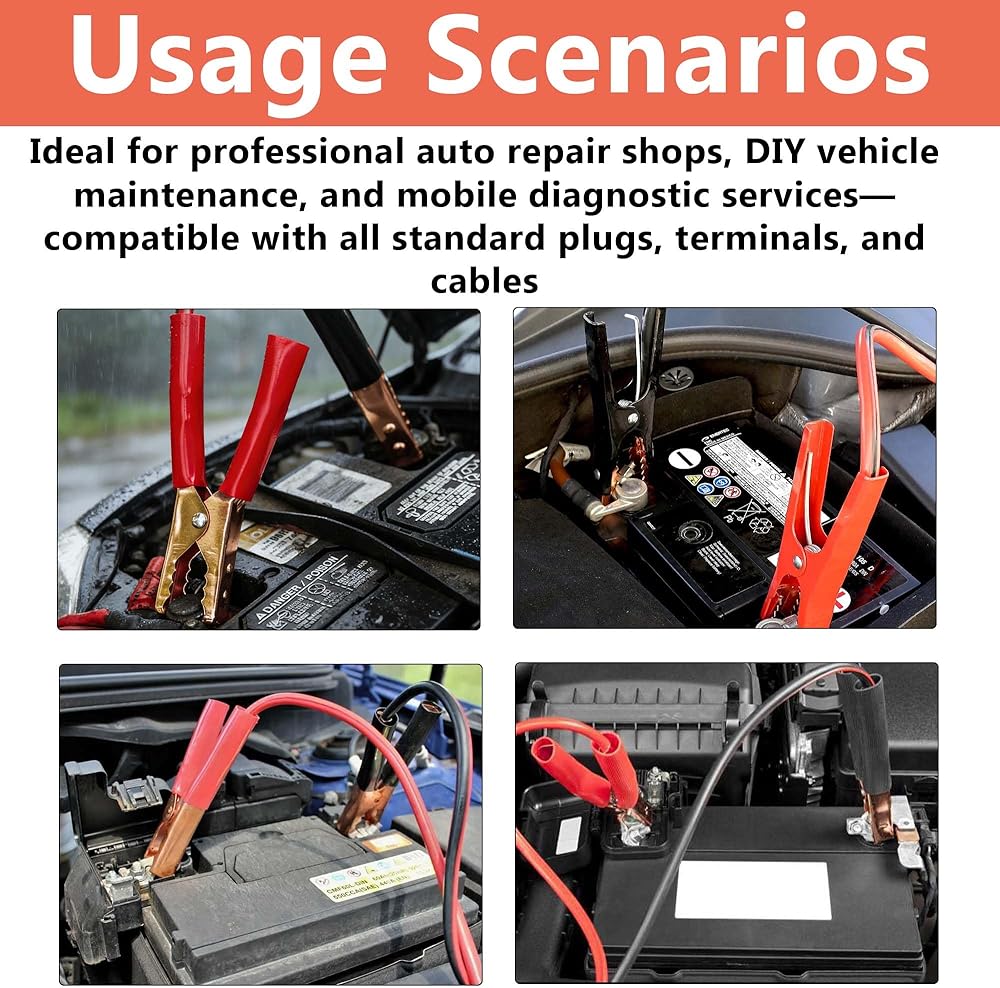
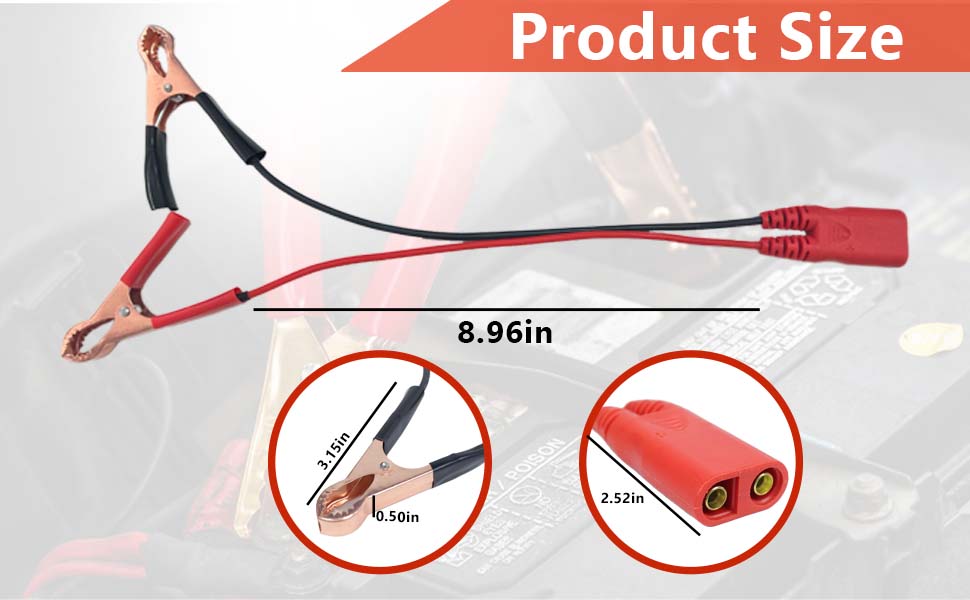
1.Insufficient Clamping Force:Signs: Fails to grip battery terminals tightly; detaches with a light pull.Risks: Poor contact leads to inaccurate voltage readings and intermittent connections, resulting in costly misdiagnosis of electrical issues.
2.Cracked or Melted Insulation:Signs: Cracks, chips, or deformation on plastic/rubber handles (often caused by overheating).Risks: Exposed metal parts pose an electric shock hazard (especially in damp conditions) and a high risk of short circuits. Short circuits can blow fuses or even damage your vehicle's ECU—leading to expensive repairs.
3.Severe Corrosion or Oxidation:Signs: White/green corrosion buildup or black discoloration on metal clamp heads. Risks: Corrosion creates a high-resistance layer that blocks current flow, causing voltage drops and severely inaccurate test results. Example: Your battery may read 12.6V, but the corroded clip only delivers 11V to your diagnostic tool—completely misleading your diagnosis.
4.Deformed or Broken Metal Clamp Head:Signs: Bent, broken, or misaligned "alligator teeth" that cannot close properly.Risks: Unable to establish a reliable electrical connection—rendering the clip completely useless. Immediate replacement is mandatory.

 AUTOSAVER88 Front Complete Struts Shocks Assembly Compatible with 2011-2014 Ford Edge, 2011-2014 Lincoln MKX
SAR 821
AUTOSAVER88 Front Complete Struts Shocks Assembly Compatible with 2011-2014 Ford Edge, 2011-2014 Lincoln MKX
SAR 821
 PM Auto Rear Brake Pads For 2011-2019 Ford Explorer, Set of 4 Ceramic Brake Pads
SAR 116
PM Auto Rear Brake Pads For 2011-2019 Ford Explorer, Set of 4 Ceramic Brake Pads
SAR 116
 A/C Evaporator Rear for 2009-2023 Chevrolet Traverse (PG-1292429)
SAR 298
A/C Evaporator Rear for 2009-2023 Chevrolet Traverse (PG-1292429)
SAR 298
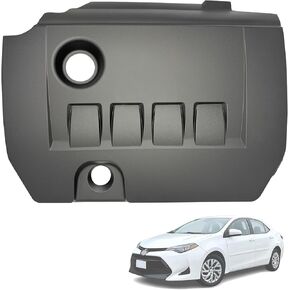 Engine Intake Manifold Cover Fit for Toyota Corolla 2009-2019 & Camry 2011-2016 for Lexus RX300 1999-2003 & RX330 2004-2006 & RX350 2007-2018 Engine Top Cylinder Head Cover Replace (Black1)
SAR 517
Engine Intake Manifold Cover Fit for Toyota Corolla 2009-2019 & Camry 2011-2016 for Lexus RX300 1999-2003 & RX330 2004-2006 & RX350 2007-2018 Engine Top Cylinder Head Cover Replace (Black1)
SAR 517