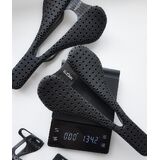
Cutting-Edge Technology: Setka boasts the lightest saddle on the market with a 3D-printed pad, crafted by Carbon Inc. in the USA using Digital Light Synthesis for unparalleled mechanical properties and finish.
In the realm of cycling saddles, there are two standard rail sizes: 7x7 (round) and 7x9 (oval), along with several different seatpost clamp designs. Therefore, one of the most common questions we receive is, "Will my BJORN fit my seatpost?" BJORN is equipped with the typical oval carbon rails (7x9)
Exceptional Comfort: Utilizing 3D printing technology, Setka integrates a flexible yet complex pad structure with a carbon shell, delivering unmatched saddle comfort without compromising weight.
Innovative Design: Setka's base is crafted from carbon with a triangular reinforcement pattern for added durability. Rails are securely inserted into reinforced slots, offering reliability without excess weight.
Optimal Performance: Setka guarantees peak performance in all riding conditions, thanks to its advanced design that eliminates pressure points and provides tailored support where needed.
Advanced Manufacturing: Setka's 3D-printed pad is a testament to cutting-edge manufacturing techniques, offering exceptional resolution and mechanical properties for unparalleled comfort and performance.
Redefining Comfort: Experience a new level of comfort with Setka's innovative design, which combines advanced materials and ergonomic considerations for an unmatched riding experience.
Reliable Construction: Setka's reinforced carbon base and securely inserted rails provide a reliable foundation for riders, offering peace of mind without sacrificing performance.
Unmatched Lightweight Performance: With Setka, riders can enjoy the ultimate combination of lightweight design and superior comfort, making it the ideal choice for cyclists seeking peak performance on every ride.
Pressure Point Relief: The design of Setka ensures even weight distribution, preventing pressure points during long rides. Its front pad offers soft tissue relief in aggressive riding positions, while the rear provides essential support during uphill climbs.
 Bike Storage Frame Bag 121469 Bicycle Top Tube Triangle Bag Water Resistant Cycling Pack Bike Pouch Storage Bag (122057)
SAR 123
Bike Storage Frame Bag 121469 Bicycle Top Tube Triangle Bag Water Resistant Cycling Pack Bike Pouch Storage Bag (122057)
SAR 123
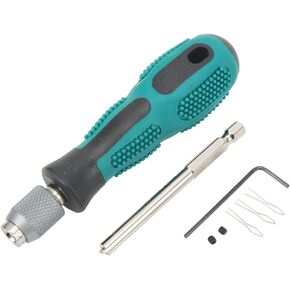 Bicycle Spoke Nipple Screwdriver Bike Nipple Driver Tool Wheel Spoke Nipple Connection Tool for MTB, Road Mountain Bicycle Spoke Nipple Insertion Driver Bicycle Rim Spoke Screwdriver with Handle
SAR 81
Bicycle Spoke Nipple Screwdriver Bike Nipple Driver Tool Wheel Spoke Nipple Connection Tool for MTB, Road Mountain Bicycle Spoke Nipple Insertion Driver Bicycle Rim Spoke Screwdriver with Handle
SAR 81
 Yuauy Bicycle Flywheel Washer Spacer Cassette Headset Gasket Hub Bottom Bracket Bike Cycling Flywheel Axle for MTB Road Bike 1mm 1.5mm 1.85mm 2mm 2.18mm 2.35mm 2.5mm (7 pcs) Red
SAR 53
Yuauy Bicycle Flywheel Washer Spacer Cassette Headset Gasket Hub Bottom Bracket Bike Cycling Flywheel Axle for MTB Road Bike 1mm 1.5mm 1.85mm 2mm 2.18mm 2.35mm 2.5mm (7 pcs) Red
SAR 53
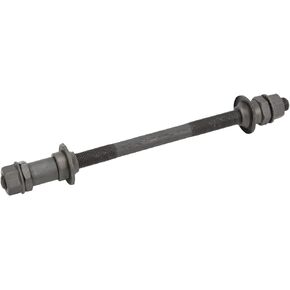 Bicycle Hollow Shaft,Front & Rear Axle Hollow Shaft,Rear Solid Shaft Bicycle Replacement Parts Bike Hub Shaft
SAR 0
Bicycle Hollow Shaft,Front & Rear Axle Hollow Shaft,Rear Solid Shaft Bicycle Replacement Parts Bike Hub Shaft
SAR 0