- التسوق ، اصبح سهلا.
- /
- احصل على التطبيق!
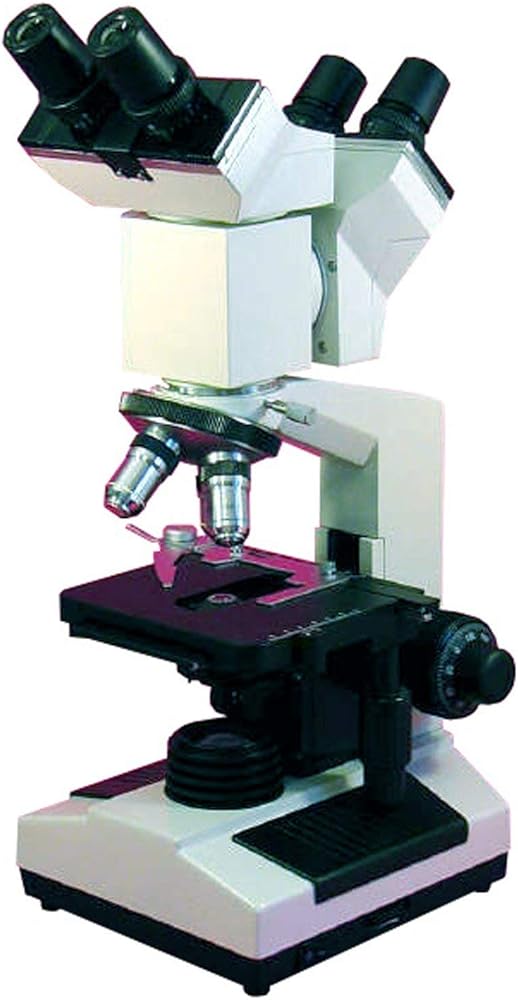
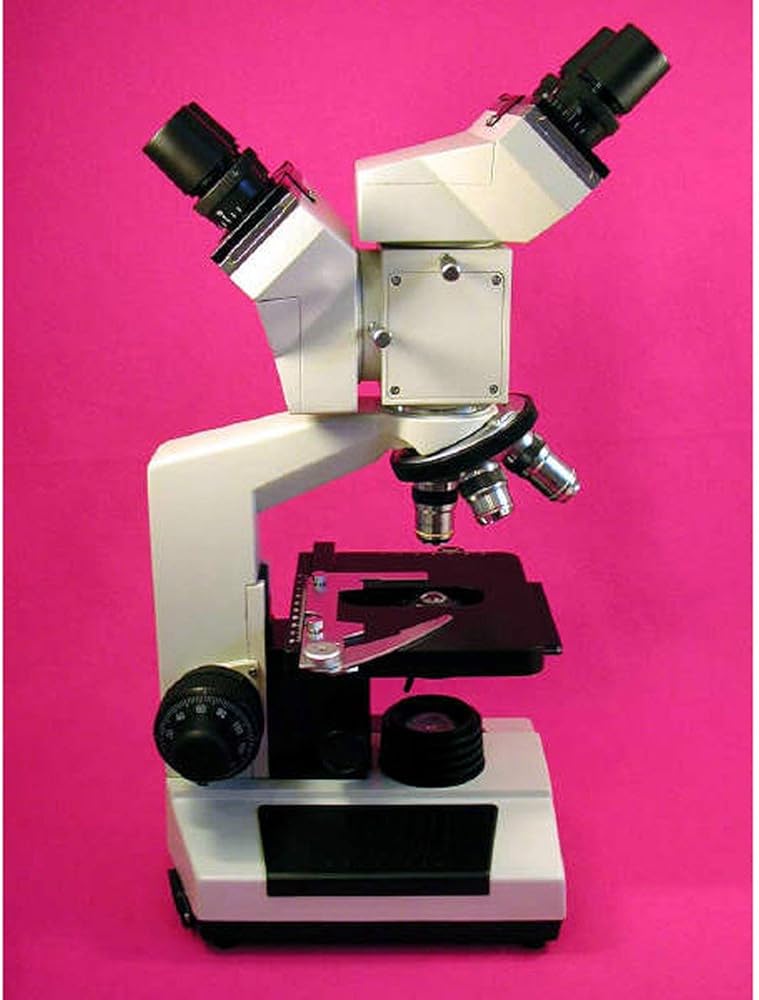
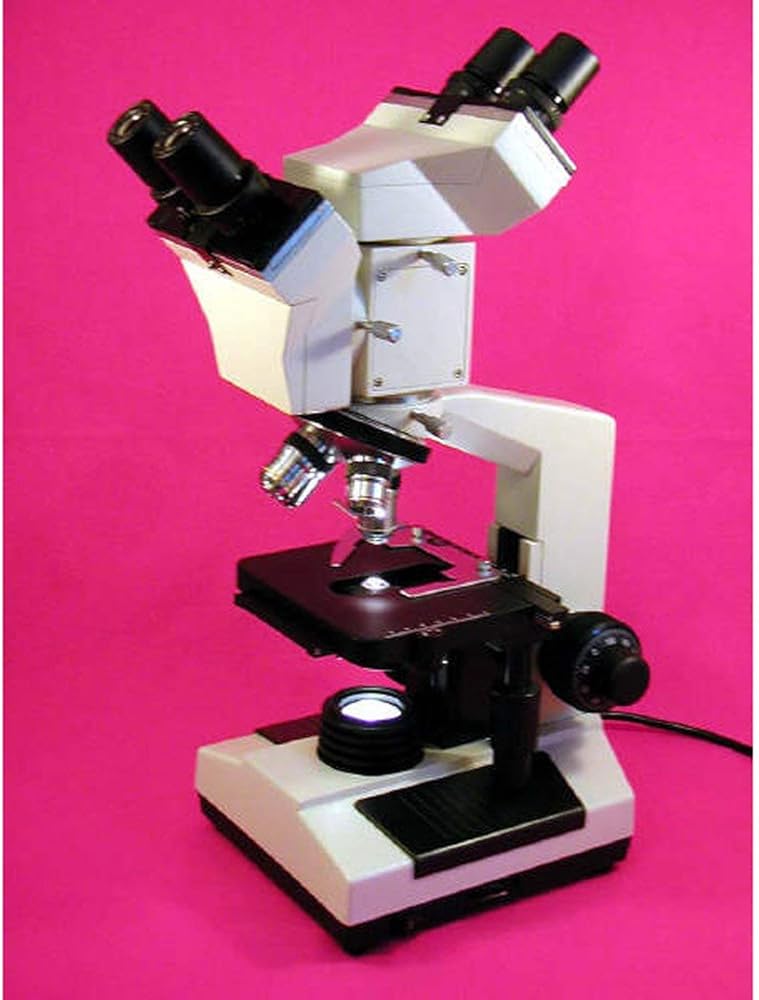
The AmScope D200A dual-view compound binocular microscope has two pairs each of 10x widefield and 16x widefield eyepieces, a forward-facing nosepiece with four DIN achromatic objectives, Brightfield variable-intensity halogen illumination, a 1.25 NA Abbe condenser, a mechanical stage, and anti-mold surfaces to preserve optics in high-humidity environments. The binocular viewing head has two pairs of WF10x and two pairs of WF16x eyepieces for simultaneous independent binocular viewing, a fixed 45-degree vertical inclination to reduce eye and neck strain, and a 360-degree rotation capability to provide a more comprehensive view and enable sharing. Dioptric adjustment accommodates individual eye-strength differences, and a revolving pointer identifies features for students, or can be used in digital microscopy when taking photographs or displaying images on a whiteboard or projector. The forward-facing revolving nosepiece has 4x, 10x, 40xS, and 100xS (oil) DIN achromatic objectives that provide color correction of magnified images. The 40xS objective is spring loaded to prevent slide damage when focusing. The 100xS spring-loaded oil objective provides increased resolution over a standard objective. A compound microscope is used for inspection and dissection of specimens when two-dimensional images are desired.
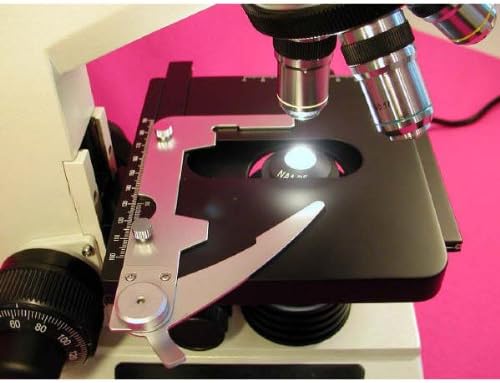
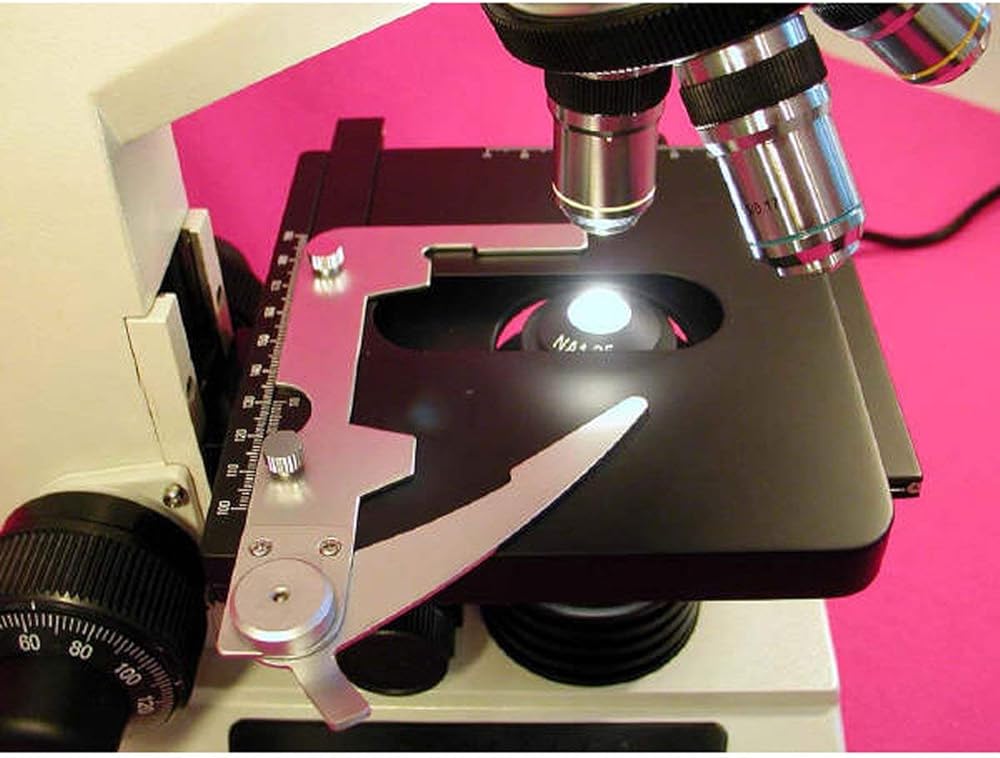
The microscope has lower (diascopic) Brightfield illumination that transmits light up through the specimen for enhanced visibility of translucent and transparent objects. Brightfield (BF) illumination allows the specimen to absorb light, resulting in a dark image on a light background. Variable intensity halogen illumination provides bright light in a concentrated path. The 1.25 NA Abbe condenser can be adjusted to control the distance of the light from the stage and has an iris diaphragm to optimize the amount of light illuminating the specimen. The measuring mechanical stage has 1mm stage divisions and locks the slide into place, providing precise slide manipulation along the X- and Y-axis to allow coordinates to be recorded, and enabling the viewer to return to a specific location on the slide. An upper stage stop prevents the stage or specimen from coming into contact with the objectives. The stage is 5-1/2 x 5-1/2 inches (140 x 140mm) and has a traveling range of 2-3/4 x 1-3/4 inches (70 x 45mm). Bilateral nested coarse and fine focus has a focusing range of 1-3/16" (30mm) and fine focus divisions of 0.002mm (0.0000787"). Tension adjustment ensures specimen stays focused during viewing. The solid-metal frame has a stain-resistant enamel finish for durability.
SpecificationsHeadCompound dual-view binocularEyepiecesWF10x, WF16xObjectives4X, 10x, 40xS, 100xS (oil) DIN achromaticStageMechanicalLighting configurationTransmitted (lower)CondenserAbbe, 1.25 NADiaphragmIris diaphragmLight sourceHalogen, 6V/20W, variable intensityIllumination typeBrightfieldPower115VDimensions15 x 7-1/2 x 5-1/8 inches (H x W x D)Weight10lb.
H is height, the vertical distance from the lowest to highest point; W is width, the horizontal distance from left to right; D is depth, the horizontal distance from front to back.
Microscopes are instruments used to enhance the resolution of an object or image. Types include compound, stereo, or digital. Compound microscopes use a compound optical system with an objective lens and an eyepiece. Stereo microscopes show object depth in a three-dimensional image. Digital microscopes are used to display an image on a monitor, rather than looking through a lens. Microscopes can have monocular (one), binocular (two), or trinocular (three) eyepieces, with varying magnification abilities. Magnification ability refers to the size of an image. Resolution, also known as resolvant power, refers to the clarity of the image. The interaction between field of view (FOV), numerical aperture (NA), and working distance (WD) determines resolution. Microscopes can control magnification through a fixed focus, or through a range of adjustments. They can also utilize LED, fluorescent, and mirror light sources to help control viewing capabilities. Microscopes are widely used in education, lab research, biology, metallurgy, engineering, chemistry, manufacturing, and in the medical, forensic science, and veterinary industries.
United Scope manufactures microscopy equipment and accessories under the brand name AmScope. The company, founded in 1996, is headquartered in Irvine, CA.
What's in the Box?AmScope D200A microscope with mechanical stage
WF10x eyepieces, two pairs
WF16x eyepieces, two pairs
4x DIN achromatic objective
10x DIN achromatic objective
40xS DIN achromatic objective
100xS (oil) DIN achromatic objective
(2) Color filters
Spare bulb
Dust cover
Instructions
 AmScope ME600TZC مجهر معدني ثلاثي العينيات، تكبير 50X-2500X، عدسات PL10x وPL25x ذات نطاق واسع للغاية، خطة إنفينيتي لأهداف مسافة العمل الطويلة، مكثف كوهلر، برايتفيلد/داركفيلد/إضاءة هالوجين مستقطبة مع
SAR 52,843
AmScope ME600TZC مجهر معدني ثلاثي العينيات، تكبير 50X-2500X، عدسات PL10x وPL25x ذات نطاق واسع للغاية، خطة إنفينيتي لأهداف مسافة العمل الطويلة، مكثف كوهلر، برايتفيلد/داركفيلد/إضاءة هالوجين مستقطبة مع
SAR 52,843
 AmScope T340B-LED-8M مجهر مركب ثلاثي العينيات رقمي Siedentopf، تكبير 40X-2000X، برايتفيلد، عدسات WF10x وWF20x، إضاءة LED، مكثف آبي، مرحلة ميكانيكية مزدوجة الطبقة، يتضمن كاميرا 8 ميجابكسل مع عدسة تخفيض وبرامج
SAR 3,257
AmScope T340B-LED-8M مجهر مركب ثلاثي العينيات رقمي Siedentopf، تكبير 40X-2000X، برايتفيلد، عدسات WF10x وWF20x، إضاءة LED، مكثف آبي، مرحلة ميكانيكية مزدوجة الطبقة، يتضمن كاميرا 8 ميجابكسل مع عدسة تخفيض وبرامج
SAR 3,257
 AmScope IN300TC مجهر ثلاثي العينيات مقلوب لمسافة عمل طويلة، 40x-1000x، عدسات WH10x وWH25x، أهداف تباين الطور، إضاءة هالوجين 30 وات، مكثف NA Abbe 0.3، مرحلة ميكانيكية، 110 فولت
SAR 13,853
AmScope IN300TC مجهر ثلاثي العينيات مقلوب لمسافة عمل طويلة، 40x-1000x، عدسات WH10x وWH25x، أهداف تباين الطور، إضاءة هالوجين 30 وات، مكثف NA Abbe 0.3، مرحلة ميكانيكية، 110 فولت
SAR 13,853
 AmScope ME600TZB مجهر معدني ثلاثي العينيات، تكبير 50X-2000X، عدسات PL10x وPL20x ذات نطاق واسع للغاية، خطة إنفينيتي لأهداف مسافة العمل الطويلة، مكثف كوهلر، برايتفيلد/داركفيلد/إضاءة هالوجين مستقطبة مع
SAR 52,787
AmScope ME600TZB مجهر معدني ثلاثي العينيات، تكبير 50X-2000X، عدسات PL10x وPL20x ذات نطاق واسع للغاية، خطة إنفينيتي لأهداف مسافة العمل الطويلة، مكثف كوهلر، برايتفيلد/داركفيلد/إضاءة هالوجين مستقطبة مع
SAR 52,787